Quick answer: Pricing strategy guide for Vancouver condo sellers in 2026's oversupply market, where the GVR condo benchmark is $708,200 (down 6.8% YoY), sales-to-active ratio sits at 14.1%, and 2,500 developer-held unsold units add competitive pressure. Covers comparable analysis, price positioning, staging, and when to hold versus sell.
With 2,500 unsold condos across Metro Vancouver and prices down nearly 7% year-over-year, selling a condo in 2026 requires a different playbook. Here's how to price yours to actually sell.
Want a free assessment for your property?
Leave your name and phone — Greyden will call you back with a personalized market snapshot. No spam, no drip campaigns.
Join 1,000+ Vancouver homeowners. No spam, unsubscribe anytime.
I’m going to be honest with you: if you’re selling a condo in Metro Vancouver right now, the market is not on your side. Benchmark condo prices are down 6.8% year-over-year. There are roughly 2,500 unsold developer units sitting empty across the region. And your buyer has options — a lot of them.
That doesn’t mean you can’t sell. I’ve helped condo owners close deals through every kind of market over the past 20 years. But it does mean the margin for error on pricing is razor-thin. Overprice by even 3-4%, and your listing goes stale. Underprice and you leave money on the table you won’t get back.
Here’s how I’d approach pricing a condo for sale in spring 2026.
Where the Condo Market Actually Stands Right Now
Before we talk strategy, you need to understand what you’re working with. The numbers from GVR’s February 2026 report paint a clear picture:
| Metric | February 2026 | Year-over-Year Change |
|---|---|---|
| Apartment benchmark price | $708,200 | -6.8% |
| Apartment sales | 824 units | -15.6% |
| Sales-to-active ratio (apartments) | 14.1% | Buyer’s market territory |
| Total active listings (all types) | 13,545 | +37% above 10-year average |
| Total residential sales | 1,648 | -28.7% below 10-year average |
Source: GVR Monthly Market Report, February 2026
That 14.1% sales-to-active ratio for condos is technically in balanced territory (the buyer’s market threshold is below 12%), but just barely. And the broader story — sales nearly 29% below the 10-year average, active listings 37% above it — tells you which direction the pressure is running.
The one modest bright spot: month-over-month, benchmark prices ticked up 0.5% from January. That suggests we may have found something of a floor, at least temporarily. But a floor is not a bounce.
The Three Forces Working Against Condo Sellers
1. Record New Supply Is Competing With Your Resale Unit
Metro Vancouver completed 30,855 housing units in 2025 — the highest number on record going back to 1990. A huge share of those are condos. Many were presold years ago during the low-rate boom and are now completing into a market that looks nothing like the one buyers signed up for.
The result: roughly 2,500 completed condos sitting unsold in developer hands, according to CMHC data. That’s doubled from the previous year and is the highest level in 24 years. And some of those developers are willing to negotiate on price, throw in free parking, or cover closing costs to move units.
When you list your resale condo, you’re not just competing with other resale sellers. You’re competing with developers sitting on brand-new inventory and enough financial pain to cut deals.
2. Buyers Have Slowed Down — a Lot
Only 824 apartment units sold across all of Metro Vancouver in February. That’s a 15.6% drop from the same month last year, which wasn’t exactly a hot market either. Overall residential sales came in 28.7% below the 10-year seasonal average, according to GVR.
Why? Trade uncertainty from U.S. tariffs has rattled consumer confidence. The B.C. government’s initial assessment projected tariffs could result in a $69 billion cumulative economic loss and 124,000 jobs lost by 2028. That kind of headline makes people cautious, and cautious people don’t make $700,000 purchases.
The Bank of Canada held its overnight rate at 2.25% in January, and the C.D. Howe Institute recommended holding at that level through March 2027. So the rate relief buyers were hoping for? It may already be priced in.
3. The Price Comparison Problem
Here’s something I see trip up sellers constantly. Your condo may be worth less than you think because the comparables have shifted.
West Side condo benchmarks sit at $789,000, down 6.1% year-over-year. East Side benchmarks are at $653,700, down 5.5%. Those are the numbers your buyer’s agent is pulling up when they evaluate your asking price. If your list price is based on what your neighbour sold for in 2024, you’re already too high.
Area benchmarks sourced from GVR February 2026 data via Rain City Properties analysis.
How to Price Your Condo to Actually Sell
Start With the Freshest Comparables — Not the Best Ones
The single biggest pricing mistake I see: sellers cherry-picking the highest comp from six months ago. That’s a trap.
In a declining market, the most relevant comparable is the most recent one. Pull sold data from the last 60 days, not 90 or 120. If a unit identical to yours in the same building sold for $680,000 in February, your starting point is $680,000 — not $720,000 because someone on a higher floor got that eight months ago.
I also look at what’s currently active and not selling. If there are three competing units in your price range that have been sitting for 30+ days, that tells you the market is saying those prices are too high. Price below them, not at them.
The 2-3% Rule in a Declining Market
In my experience, the right list price in a buyer’s market is 2-3% below where you think the market is, not 2-3% above it.
Here’s why. When inventory is high and sales are slow, buyers are looking at 10, 15, 20 condos. They’re comparison-shopping constantly. The listings that get traction are the ones that look like good value relative to the competition. The listings that sit are the ones priced optimistically.
I’d rather see you list at $689,000 and get three showings in the first week than list at $725,000, sit for 45 days, then do a price reduction that makes buyers wonder what’s wrong with the unit. Stale listings breed suspicion.
Price to the Buyer’s Budget, Not Your Equity
Buyers don’t care what you paid or what you owe. They care what they qualify for.
At today’s rates (roughly 4.5-5% on a five-year fixed), a household earning $120,000 per year qualifies for approximately $550,000-600,000 in mortgage, which means they’re shopping in the $680,000-$750,000 range with a 20% down payment. Price your unit to land squarely in a common qualification bracket, and you’ll show up in more searches.
Mortgage estimate based on approximate 4.5-5% five-year fixed rate, 25-year amortization, 20% down payment. For illustration only — buyers should verify with their mortgage broker.
Know Your Competition — Especially the New Builds
Before you list, I want you to look at what developers are offering in your area. Are they throwing in free parking ($40,000-$60,000 value)? Covering closing costs? Offering upgraded finishes? Those incentives effectively reduce the buyer’s all-in cost and set the bar for your resale unit.
Your resale condo has some advantages over a new build: it’s move-in ready, the strata has a track record you can review, and there’s no completion risk. But you need to price those advantages realistically. A buyer choosing between a brand-new unit with developer incentives and your 8-year-old unit with original finishes is going to do the math.
When a Price Reduction Is Better Than Waiting
Here’s a pattern I’ve seen too many times: a seller lists at $749,000, gets minimal interest for three weeks, then their agent suggests waiting “for spring to pick up.” They wait another month. Nothing changes. By day 60, they do a $20,000 reduction. By day 75, another $15,000. They eventually sell at $705,000 after 90 days on market.
If they’d listed at $715,000 from day one, they probably would have sold in 20 days for close to asking. The extra 70 days cost them stress, carrying costs, and likely money.
My rule of thumb: if you haven’t had a showing request in 10 days, or you’ve had showings but zero offers after three weeks, your price is wrong. Not the staging, not the photos, not the market. The price.
When you do reduce, make it meaningful. A $5,000 reduction on a $700,000 condo is noise. Buyers won’t even notice it. Drop $15,000-25,000 so the change actually puts you into a new search bracket and gets fresh eyes on the listing.
If things have really stalled, the cancel-and-relist strategy is worth considering — but only if you’re also adjusting the price.
Should You Even Sell Right Now?
This is a question I get asked every week, and I think it deserves an honest answer.
Royal LePage forecasts Vancouver condo prices dropping another 3% through Q4 2026. Re/Max calls 2026 a “transition year, not a turnaround.” If those forecasts are right, waiting six months doesn’t necessarily get you a better price — it might get you a worse one.
Sell now if:
- You need to relocate for work or family reasons
- Your carrying costs (mortgage, strata fees, taxes) are straining your budget
- You’re an investor and the unit is cash-flow negative with no near-term upside
- You’re completing a presale and can’t carry the mortgage long-term
- You want to use the equity for a different property type (townhouse, detached) where prices are also soft
Consider holding if:
- You can comfortably carry the costs for 18-24 months
- You’re living in the unit (no carrying cost pressure beyond your normal housing expense)
- Your building has something specific coming — like a major renovation completion or new transit station opening
- You bought pre-2020 and still have substantial equity even at today’s prices
There’s no universal right answer. But I will say this: the worst outcome I see is sellers who can’t decide, list at an aspirational price, sit on the market for months, and end up selling for less than they would have if they’d priced correctly from day one.
Staging and Presentation Matter More When Supply Is High
In a seller’s market, you can get away with average photos and a lived-in look. Not right now.
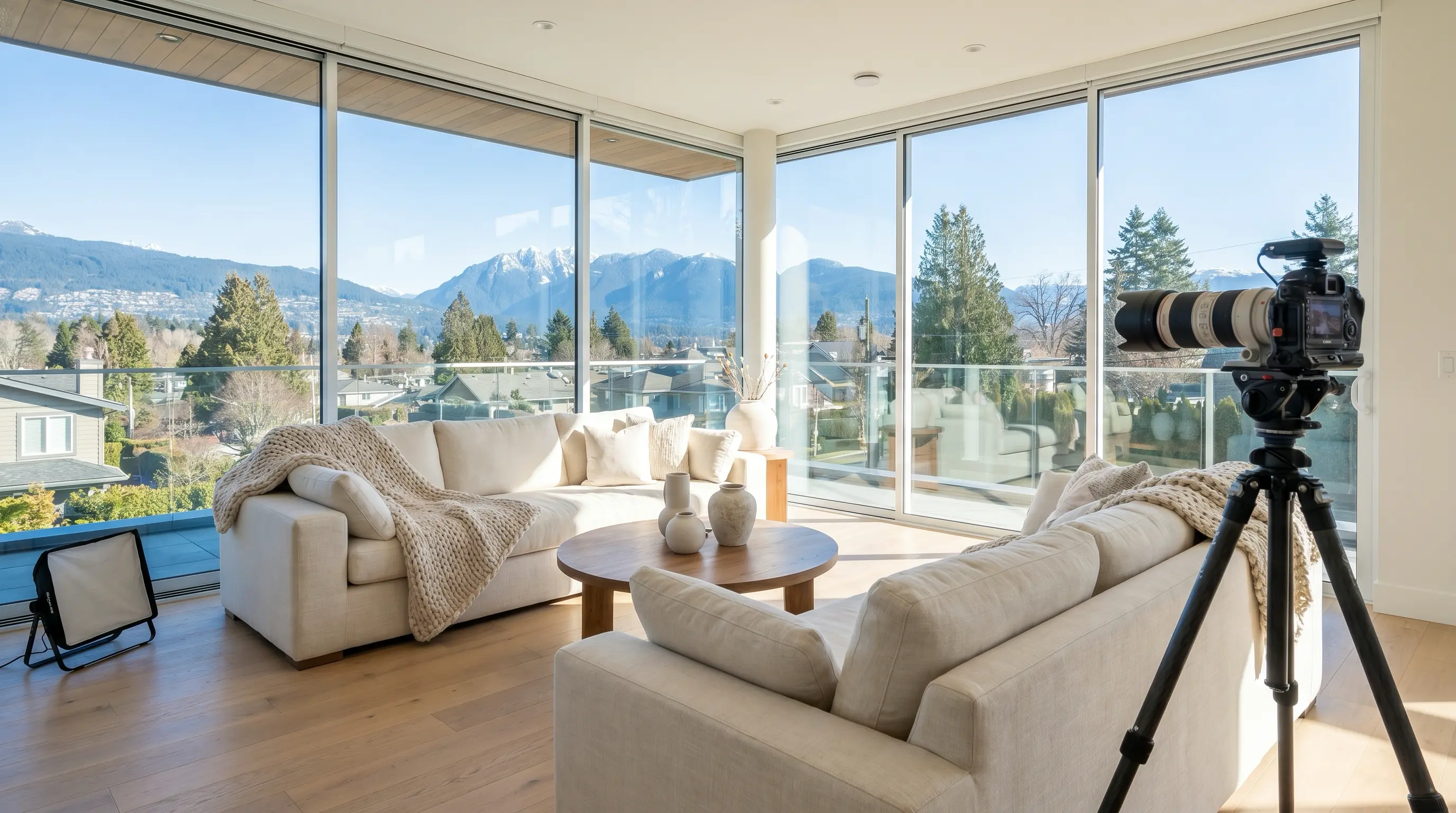
When buyers are browsing 20 condos in their price range, the ones with professional staging and photography get the showings. The ones with cellphone photos and personal clutter get skipped. I’ve seen well-staged units outsell comparable unstaged units in the same building by 3-5%.
A few specifics that matter in 2026’s market:
- Professional photography is non-negotiable. This is the absolute minimum. If your agent isn’t including this, find a different agent.
- Virtual staging works for vacant units. It costs $200-400 per room and makes an empty space feel livable. Worth it every time.
- Declutter ruthlessly. Buyers in a soft market are looking for reasons to say no. Don’t give them one.
- Fix the small stuff. Scuffed baseboards, dripping faucets, burnt-out bulbs. In a competitive market, buyers overlook these. Right now, they’re counting them.
Your Building’s Strata Situation Can Make or Break the Sale
One thing that’s changed in the last two years: buyers and their agents are scrutinizing strata depreciation reports more carefully than ever. A building with a healthy contingency reserve fund and no upcoming special assessments is significantly easier to sell than one with deferred maintenance and a $30,000 levy on the horizon.
If your strata recently completed major repairs — envelope, plumbing, elevator — that’s actually a selling point. Lead with it. “All major systems updated” is one of the most persuasive things you can say to a cautious buyer.
If your building has problems, address them honestly in your listing disclosure. Buyers will find out anyway during due diligence, and discovering bad news at the subject removal stage kills deals.
Key Takeaways
- The Metro Vancouver condo benchmark is $708,200, down 6.8% year-over-year, with a 14.1% sales-to-active ratio and 2,500 unsold developer units adding supply pressure
- Price based on the last 60 days of comparable sales, not the best sale from six months ago — and consider pricing 2-3% below where you think the market sits
- If your listing hasn’t generated offers within three weeks, the price is likely too high — make meaningful reductions of $15,000-25,000 to reach new search brackets
- Staging, professional photography, and strata health all matter more in a buyer’s market where supply gives purchasers plenty of alternatives
Frequently Asked Questions
How much have Vancouver condo prices dropped in 2026?
The Metro Vancouver condo benchmark price is $708,200 as of February 2026, a 6.8% decline from February 2025 according to GVR. West Side condos are at $789,000 (down 6.1% YoY) and East Side condos at $653,700 (down 5.5% YoY). Royal LePage expects a further 3% decline through Q4 2026.
Is it a buyer’s or seller’s market for Vancouver condos right now?
It’s a buyer’s market. The apartment sales-to-active ratio was 14.1% in February 2026, near the buyer’s market threshold of 12%. With 13,545 active listings across Metro Vancouver (37% above the 10-year average) and sales nearly 29% below the seasonal average, buyers have considerable selection and negotiating power.
Should I sell my Vancouver condo now or wait for the market to recover?
That depends on your financial situation and timeline. Industry forecasts from Royal LePage and Re/Max suggest conditions won’t materially improve through late 2026. If you need to sell, pricing correctly now will likely net you more than overpricing and chasing the market down over months. If you can comfortably hold for 18-24 months, waiting is reasonable — but there’s no guarantee of a significant price recovery by then.
How should I compete with new condo developments offering incentives?
Acknowledge the competition and price accordingly. Your resale unit has advantages over new builds — established strata history, no completion risk, move-in ready condition — but those advantages have limits. If developers nearby are offering free parking or closing-cost credits worth $40,000-60,000, your resale pricing needs to reflect that competitive landscape.
How long does it take to sell a condo in Vancouver right now?
With correct pricing, well-staged units in desirable buildings are still selling within 3-4 weeks. Overpriced listings are sitting for 60-90+ days. The gap between correctly priced and over-priced has widened significantly in 2026’s softer market. The single biggest factor in your days-on-market is your list price relative to current comparables.
Sources
- GVR Monthly Market Report, February 2026
- CMHC data on unsold Vancouver condos — CBC News
- Metro Vancouver record housing completions 2025 — Daily Hive
- Royal LePage 2026 Housing Market Forecast
- Bank of Canada rate announcement, January 2026
- C.D. Howe Institute Monetary Policy Council, March 2026
- B.C. economic assessment of Trump’s tariff threat — BC Gov News
Data sourced March 12, 2026. Market conditions change frequently. Verify current figures before making financial decisions.
Next Steps: Work with Rain City Properties
Selling a condo in this market isn’t impossible — but it requires the right pricing strategy from day one. I’ve been navigating Vancouver’s ups and downs for 20 years, and I’ve helped condo sellers in tough markets get to the closing table without leaving months of carrying costs and stress on the floor.
If you’re thinking about listing your condo, let’s look at the recent comparables in your building and your specific competitive landscape before you set a price. A 30-minute conversation can save you months of sitting on the market.
Contact Greyden Douglas directly at (604) 218-2289 or book a call to discuss your Vancouver real estate goals.
Related Vancouver real estate pages
Continue with local service pages, neighbourhood guides, and actionable resources related to this topic.