Quick answer: Practical buying strategy guide for Vancouver's spring 2026 market, where sales sit 28.7% below the 10-year average and active listings are 37% above normal. Covers negotiation tactics, the return of subject-to clauses, identifying motivated sellers, and when to make aggressive offers versus fair ones.
Metro Vancouver home sales are running 28.7% below the 10-year average with active listings 37% above normal. Here is how to take full advantage of buyer-friendly conditions that have not existed since the mid-2000s.
Want a free assessment for your property?
Leave your name and phone — Greyden will call you back with a personalized market snapshot. No spam, no drip campaigns.
Join 1,000+ Vancouver homeowners. No spam, unsubscribe anytime.
If you have been waiting for a better time to buy in Vancouver, I need you to pay attention right now. This is not a drill and it is not hype. The February 2026 numbers from Greater Vancouver Realtors confirmed what I have been telling my clients since last fall: we are in the slowest market in roughly twenty years. Sales came in at 1,648 — that is 28.7% below the 10-year seasonal average. Active listings sat at 13,545, a full 37% above the 10-year average. As GVR’s economics director Andrew Lis put it, “The pace of sales running well-below long-term averages are no longer a surprise.”
Twenty years ago, before the 2006-2007 run-up, was the last time buyers had this kind of leverage. And most people either do not realize it or are too scared to act on it. Let me lay out exactly how to make this market work in your favor.
Understanding What “Slowest Market in 20 Years” Actually Means
Numbers without context are just noise. So let me put the current stats in perspective.
The sales-to-active listings ratio for Metro Vancouver in February 2026 was 12.6% (GVR data). The industry standard says a ratio below 12% is a buyer’s market, 12-20% is balanced, and above 20% favors sellers. We are sitting right at that buyer’s market threshold, and for condos specifically, the ratio is well below 12%.
What does that feel like on the ground? I am seeing properties sit for 40, 60, even 90 days without offers. Open houses that used to draw 30 groups are getting 5. Listing agents who used to set offer dates with confidence are now calling my office asking if my clients are interested. The power dynamic has completely flipped.
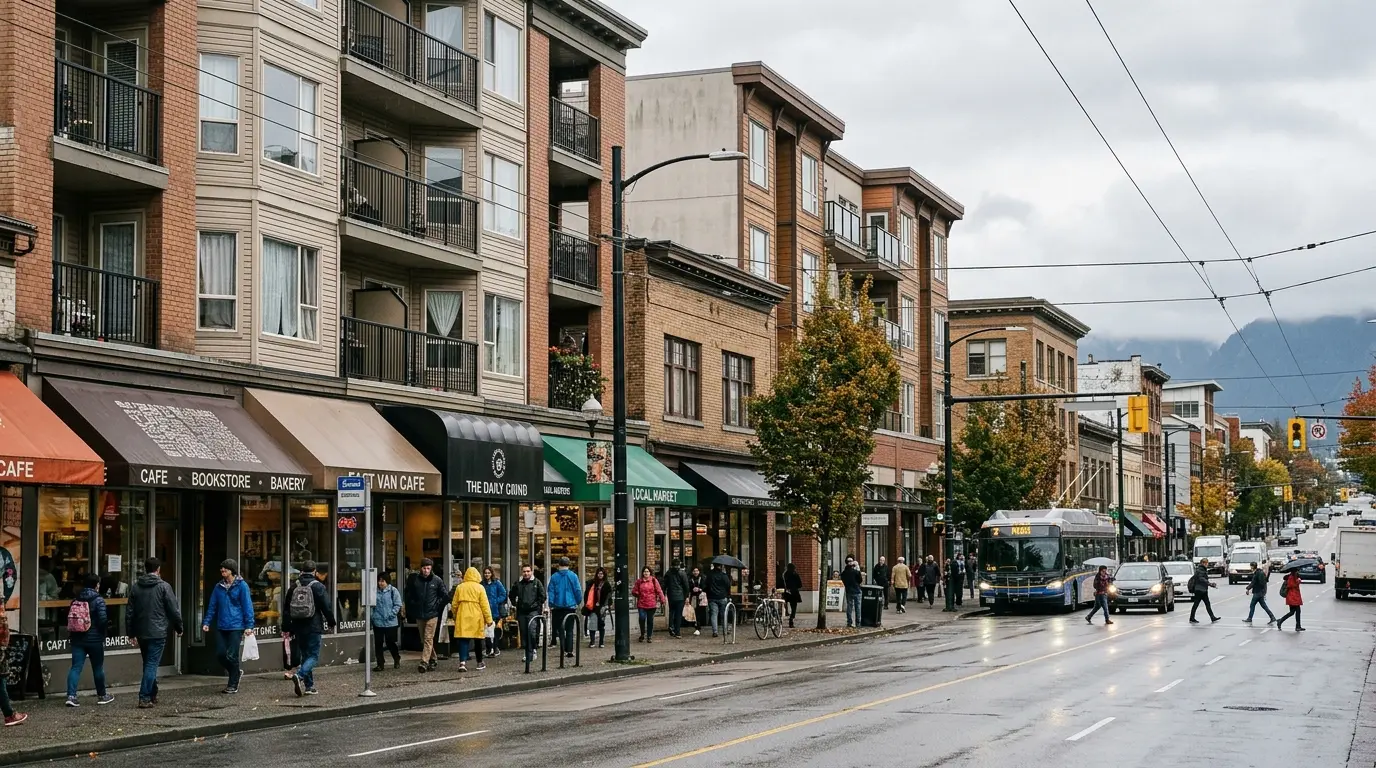
This is not 2022 anymore, when a good property in Kitsilano would get eight offers in four days. Today, a good property in Kitsilano might sit for three weeks before a single offer comes in. And that gap between seller expectations and buyer behavior is where opportunity lives.
Tactic 1: Subject Clauses Are Back — Use Them
For the better part of five years, making a competitive offer in Vancouver meant waiving your subjects. No financing condition. No inspection condition. Just a price and a hope that nothing was wrong with the property. I watched buyers take on enormous risk because the alternative was losing every bidding war.
Those days are over.
In this market, you should include every subject clause that protects you. Specifically:
Subject to financing (5-7 business days). Even if you are pre-approved, this gives you time to get formal approval on the specific property. Lenders sometimes balk at certain buildings, certain strata situations, or certain unit types. You want that safety net.
Subject to inspection (5-7 business days). I cannot tell you how many times a home inspection has uncovered $30,000-$80,000 in issues that were invisible during showings. In a slow market, there is zero reason to skip this. Any seller who refuses a subject-to-inspection clause in March 2026 is either unreasonable or hiding something.
Subject to review of strata documents (for condos/townhouses). This is where you find the special assessments, the upcoming envelope repairs, the litigation against the developer. I have seen strata documents kill deals that looked perfect on paper. Take 48-72 hours to have these reviewed properly.
Subject to review of title and property disclosure statement. Standard, but do not skip it.
Will including subjects make your offer less competitive? In theory, yes. A clean offer is always more attractive than a conditional one. But when you are the only offer on the table — which is increasingly common — the seller does not have the luxury of demanding clean offers. They need your offer. Period.
Tactic 2: Learn to Read Price Reductions
One of the most useful skills in a buyer’s market is tracking price reductions. When a seller reduces their asking price, they are sending a signal. And how many times they reduce, by how much, and how quickly tells you a lot about their motivation.
First price reduction after 2-3 weeks: This is a standard adjustment. The seller and their agent tested the market, got little interest, and are correcting. They are still somewhat optimistic. Your offer should be at or slightly below the new price.
Second price reduction after 4-6 weeks: Now you are dealing with a seller who is getting anxious. They have been on the market for over a month, probably had very few showings, and the carrying costs are adding up. This is where you start to have real leverage. Offer 5-8% below the most recent asking price and see what happens.
Third price reduction or major single cut (8%+ drop): This seller wants out. Maybe they have already bought another property. Maybe there is a divorce, a job relocation, or an estate situation. Whatever the reason, they are highly motivated. This is where I have seen my clients negotiate 10-15% below original list in the current market.
I track price histories for every property my clients consider. The free apps do not always show this cleanly. A good agent should be pulling this data from the MLS and walking you through the pricing trajectory.
Tactic 3: Know When to Be Aggressive (and When Not to Be)
Here is where a lot of buyers get it wrong. They hear “buyer’s market” and think every property is a lowball opportunity. That is a mistake.
Be aggressive when:
- The property has been listed for 45+ days with no price reduction
- There have been multiple price reductions already
- The listing photos are mediocre and the marketing is lazy (suggests a disengaged listing agent)
- The property has condition issues that will scare off other buyers (you can use these as negotiating chips)
- The seller is clearly motivated (estate sale, relocation, pre-sale assignment trying to get out)
Be fair when:
- The property just listed in the past 1-2 weeks and is priced reasonably
- It is a genuinely unique property (rare lot, exceptional view, heritage character) that will attract competition even in a slow market
- The listing agent has a strong track record and likely priced it well
- You actually love the property and would be devastated to lose it over a few thousand dollars
I have watched buyers lose properties they genuinely wanted because they got greedy with a lowball offer on a fairly-priced listing, and another buyer stepped in with a reasonable offer while they were playing games. In a slow market, most properties have room for negotiation. But “room for negotiation” does not mean “discount everything by 15%.”
Tactic 4: Time Your Offer Strategically
Timing matters more than most people think. Here are the patterns I am seeing in spring 2026:
Monday through Wednesday are the best days to submit an offer. Sellers who have sat through a quiet weekend with zero showings or interest are psychologically more receptive to any offer that comes in early in the week. They have just spent two days staring at their phone wondering if they overpriced. Your Tuesday morning offer hits differently than the same offer on a Friday.
Watch for properties that go from “active” to “price change” on a Thursday or Friday. The agent is trying to generate fresh interest for the weekend. If you move fast and submit before the weekend showing rush, you might catch the seller before they see whether the price reduction generates new traffic.
End of month offers carry psychological weight. Sellers who have mortgages, property taxes, and strata fees due are more acutely aware of carrying costs when the first of the month approaches. A late-March offer on a property that has been sitting since January hits a seller who has just paid three months of double housing costs.
Tactic 5: Use the Inspection as a Second Negotiation
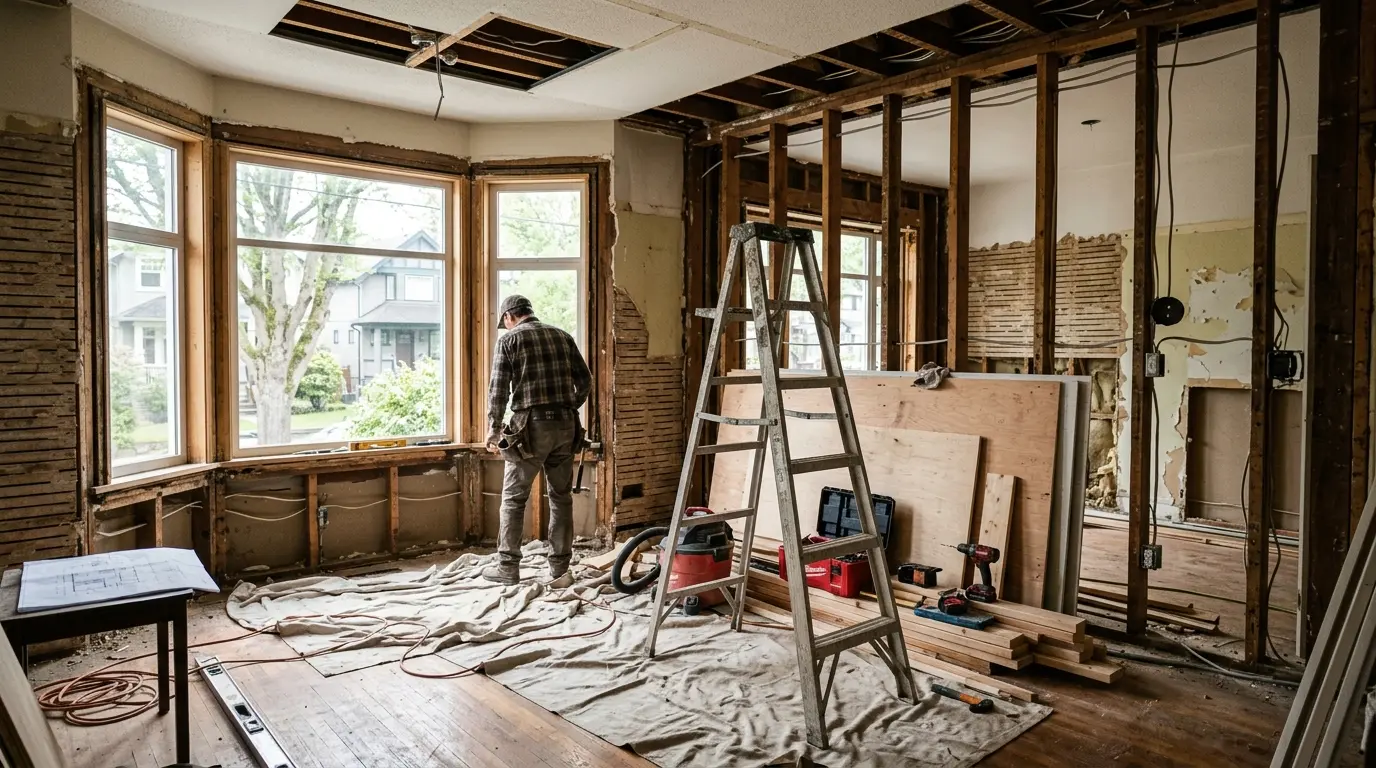
In a seller’s market, the inspection is just a formality — you are not going to renegotiate because the seller has backup offers. In a buyer’s market, the inspection is your second negotiation opportunity.
After your inspector identifies issues — and there are always issues — you have leverage to request one of three things:
- A price reduction reflecting the cost of repairs
- Completion of repairs before closing, at the seller’s expense
- A credit at closing for you to handle repairs on your own terms
I generally recommend option 1 or option 3. Asking sellers to complete repairs often results in the cheapest possible fix, done quickly and poorly. I would rather negotiate $15,000 off the price and hire my own contractor to do it properly after closing.
In the current market, I have seen inspection findings generate $10,000-$40,000 in additional price reductions on top of the negotiated sale price. Sellers who have been waiting months for a buyer are not going to blow up a deal over a leaky window or aging furnace. They will negotiate.
Tactic 6: Get Comfortable Walking Away
This might be the most important piece of advice I can give you. In a buyer’s market with 13,545 active listings across Metro Vancouver (GVR February 2026), there is almost always another option. If a seller will not negotiate reasonably, if the inspection reveals major problems, if the strata documents contain red flags — walk away. Another property will come along.
The emotional trap I see buyers fall into: they convince themselves that this specific unit, this specific house, is “the one.” Maybe it is. But more often, there are five other comparable properties within a 10-minute drive that would make them equally happy. The willingness to walk away is your greatest negotiating asset. Sellers can sense desperation, and they can also sense a buyer who genuinely does not need their property. The latter gets a better deal every single time.
What This Market Is Not
I want to be careful here. A slow market is not a distressed market. Vancouver is not Detroit in 2009. Home prices have softened — the composite benchmark is down 6.8% year-over-year — but we are talking about a decline from absurdly high levels to slightly less absurdly high levels. The median detached home in Vancouver still costs well over a million dollars.
This is a correction, not a collapse. And corrections are healthy. They create buying opportunities for people who were priced out during the frenzy, and they punish speculation and overleveraging. That is how markets are supposed to work.
Key Takeaways
- Metro Vancouver’s sales-to-active ratio of 12.6% puts us right at the buyer’s market threshold — the best conditions in roughly 20 years
- Subject clauses are fully back: include financing, inspection, and document review conditions on every offer
- Track price reduction patterns to identify motivated sellers — third reductions and major cuts signal high motivation
- Be aggressive on stale listings but fair on fresh, well-priced properties — losing a home you love over a few thousand dollars is not a winning strategy
- Use inspection findings as a second negotiation opportunity for $10,000-$40,000 in additional savings
- The willingness to walk away is your single most powerful negotiating tool in a market with 37% above-average inventory
Frequently Asked Questions
How much below asking price should I offer in Vancouver right now?
There is no universal number. It depends entirely on the property’s pricing history, how long it has been listed, and the seller’s motivation. For a fresh listing that is reasonably priced, I would start at 3-5% below asking. For something that has been sitting 60+ days with multiple price reductions, 8-12% below the current asking price is not unreasonable. I have seen a few deals close at 15% below original list in the past three months, though those involved properties with condition issues or difficult strata situations. The key is having your agent pull comparable recent sales so your offer is grounded in data, not just a guess.
Are offer dates still a thing in Vancouver in 2026?
Rarely, and when you see them, be skeptical. Some listing agents are still trying to manufacture urgency by setting offer dates, but the market is not cooperating. If a property sets an offer date and you are the only offer, you have enormous leverage. If you do not want to play the offer date game, you can always submit a pre-emptive offer — sometimes called a bully offer — before the set date. In today’s market, many sellers will seriously consider a strong pre-emptive offer rather than risk reaching the offer date with nothing on the table.
Should I buy now or wait for prices to drop more?
I get this question daily, and my honest answer: nobody knows where the bottom is. Prices could drop another 5% or they could stabilize here. What I do know is that the buying conditions right now — the negotiating leverage, the return of subject clauses, the selection of available properties — are exceptional and may not last. If interest rates drop further this year, sidelined buyers will flood back in and the leverage will shift. I would rather buy in a quiet market with strong negotiating power than in a busy market where you are fighting 10 other buyers for the same property.
Sources
- Greater Vancouver Realtors — February 2026 Monthly Statistics
- GVR Economics — Andrew Lis Market Commentary, February 2026
- Real Estate Board of Greater Vancouver — Sales-to-Active Listings Ratio Historical Data
Next Steps: Work with Rain City Properties
A buyer’s market only helps you if you know how to use it. The tactics above are a starting point, but every property and every negotiation is different. I have been buying and selling homes in Vancouver for twenty years, and I can tell you that the difference between a good deal and a great deal often comes down to knowing when to push, when to hold, and when to walk.
If you are thinking about buying this spring, let me help you build a strategy that fits your budget and your goals. No pressure, no obligation — just an honest conversation about what is realistic in today’s market.
Greyden Douglas Founder, Rain City Properties Phone: (604) 218-2289 Contact us to start your home search.
Related Vancouver real estate pages
Continue with local service pages, neighbourhood guides, and actionable resources related to this topic.