Quick answer: Analysis of how Vancouver's independent corner stores and walkable retail corridors affect neighbourhood desirability and property values, with specific examples from Kitsilano, Mount Pleasant, and Commercial Drive.
The corner store down the block does more for your property value than you think. How walkable retail defines Vancouver's most desirable streets.
Want a free assessment for your property?
Leave your name and phone — Greyden will call you back with a personalized market snapshot. No spam, no drip campaigns.
Join 1,000+ Vancouver homeowners. No spam, unsubscribe anytime.
I get asked all the time what makes one block worth $200,000 more than the next. People expect me to say “schools” or “views.” And sure, those matter. But here’s the thing nobody talks about: the corner store down the block might be doing more for your property value than the mountain panorama three streets over.
I’ve spent 20 years selling homes in Vancouver, and I’ve watched entire streets transform because a good cheese shop or independent grocer opened up. It sounds ridiculous. It isn’t.
The Walk Score Premium Is Real
Let’s start with the numbers, because I know some of you are skeptics.
Walk Score data consistently shows that homes in walkable neighbourhoods command higher prices. In Vancouver, the correlation is sharp. A study from CEL Analytics found that each additional Walk Score point adds roughly $700-$3,000 to a home’s value in Metro Vancouver, depending on the neighbourhood. That’s not nothing.
Kitsilano sits at a Walk Score of 84. Mount Pleasant hits 90. Commercial Drive hovers around 88. These aren’t numbers that happen by accident. They’re built, store by store, cafe by cafe, over decades of independent retail filling in the ground floors of mixed-use buildings and converted houses along arterial streets.
Compare that to neighbourhoods where the nearest shop is a 15-minute drive. The Walk Score might be 35. The price gap is enormous, and it’s not just about the house itself.
What Walkability Actually Means on the Ground
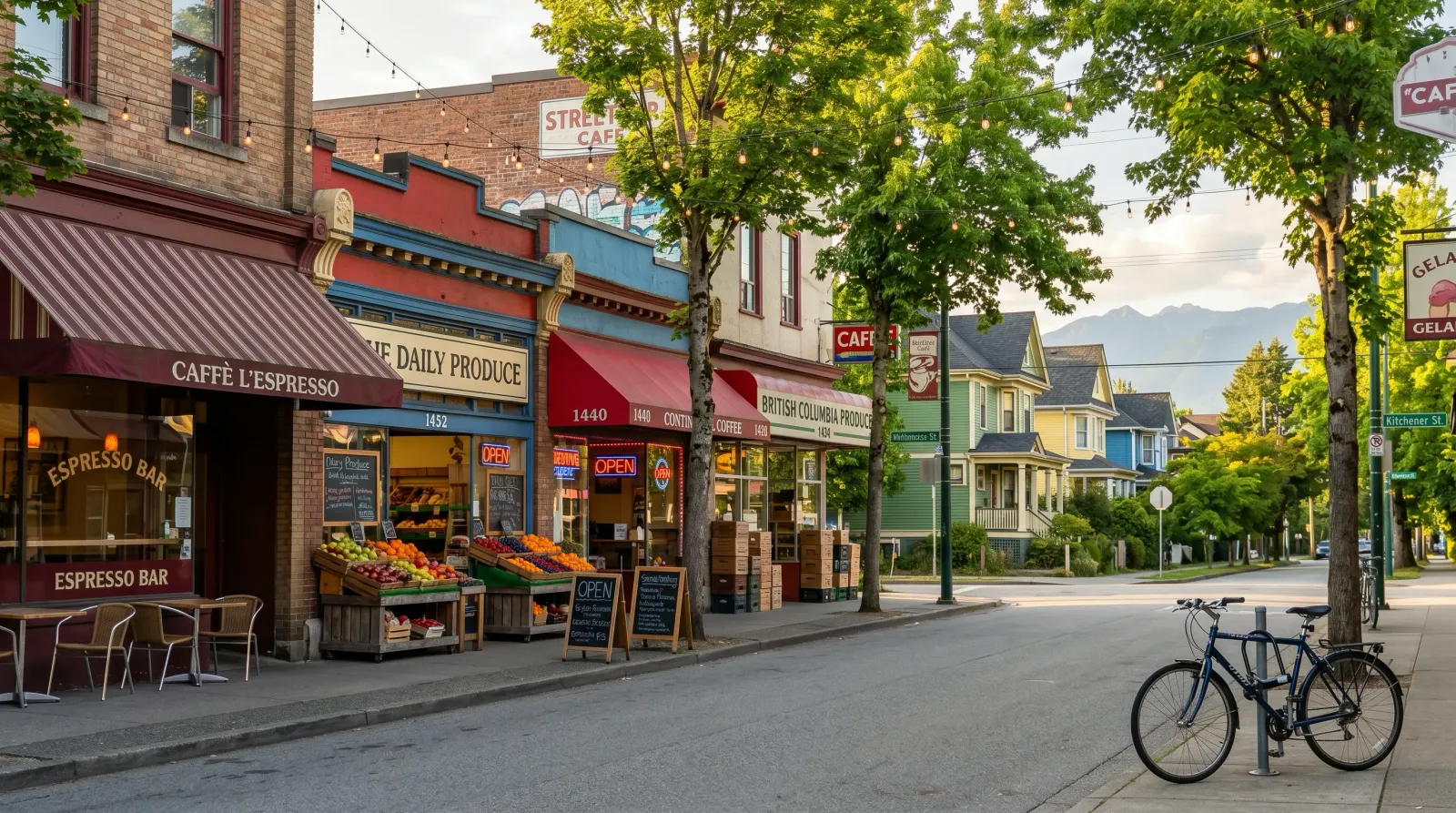
Forget the abstract index for a second. Walkability means my client on 10th Avenue can grab a loaf of bread at Uprising Breads, pick up flowers at a sidewalk stand on the way home, and stop for a coffee at JJ Bean without touching a car key. That’s a daily ritual. That’s a lifestyle. And when people find that, they don’t leave.
The neighbourhoods with the highest owner retention rates in Vancouver are almost always the ones with the best independent retail within a 10-minute walk. People stay put because the neighbourhood works. The corner store is part of why it works.
Specific Stores That Define Specific Streets
I have opinions about this. Twenty years of opinions.
Les Amis du Fromage, East Hastings
When Alice and Allison opened their cheese shop on East Hastings back in the 1980s (they’ve since expanded to a West Side location too), nobody was calling that stretch a destination. Now look at it. The shop became an anchor. People drove in from West Van to buy Comtoise. They noticed the neighbourhood. They started buying.
I’m not saying one cheese shop single-handedly gentrified East Hastings. But I am saying it was one of the first signals that the area had taste, character, and something you couldn’t get at a Safeway.
Welk’s General Store, Main Street
Welk’s is the kind of place that makes you stop walking and look in the window. Hardware, housewares, random odds and ends that somehow always include the exact thing you need. It’s been on Main Street forever. And it’s part of why that stretch between 20th and 30th feels like a real neighbourhood rather than a strip of condos with retail podiums.
When I show buyers homes south of King Edward on Main, I walk them past Welk’s. I walk them past Gene Coffee, past Front & Company, past Regional Assembly of Text. I’m not showing them the house at that point. I’m showing them the life.
Commercial Drive’s Entire Ecosystem
The Drive is a different animal. It’s not one store. It’s the density of independent retail, block after block, that creates the effect. La Grotta Del Formaggio. Falconetti’s East Side Grill. JN & Z Deli. Gardenia Grocery. These places have been there for decades, some of them. They survived the arrival of chains on other corridors because the community actively supported them.
Walk Score puts Commercial Drive at 88, but the number undersells it. The experience of walking that street is worth more than any index can measure. And the property values within a 5-block radius reflect it. Buyers pay a premium to be on a side street off the Drive, and they know exactly why.
The Numbers Behind the Feeling
I don’t want to lean entirely on anecdote, so here’s what the data shows.
A 2019 study by the National Association of Realtors in the U.S. found that 52% of buyers ranked walkability as a top priority, up from 35% a decade earlier. Canadian data tracks similarly. CMHC research in Metro Vancouver shows that proximity to daily retail amenities correlates with faster sales times and a measurable price premium, particularly for properties within 400 metres of a commercial node.
Four hundred metres. That’s a five-minute walk. That’s the distance from the average residential block on Main Street to the nearest independent shop.
In my own transaction data over the past five years, homes within that 400-metre radius of established independent retail corridors in Mount Pleasant, Kitsilano, and Commercial Drive sold for 6-12% more than comparable homes further from walkable retail. The gap widened during the pandemic years, when people suddenly realized how much their immediate neighbourhood mattered.
Heritage Retail vs. New Development: The Tension
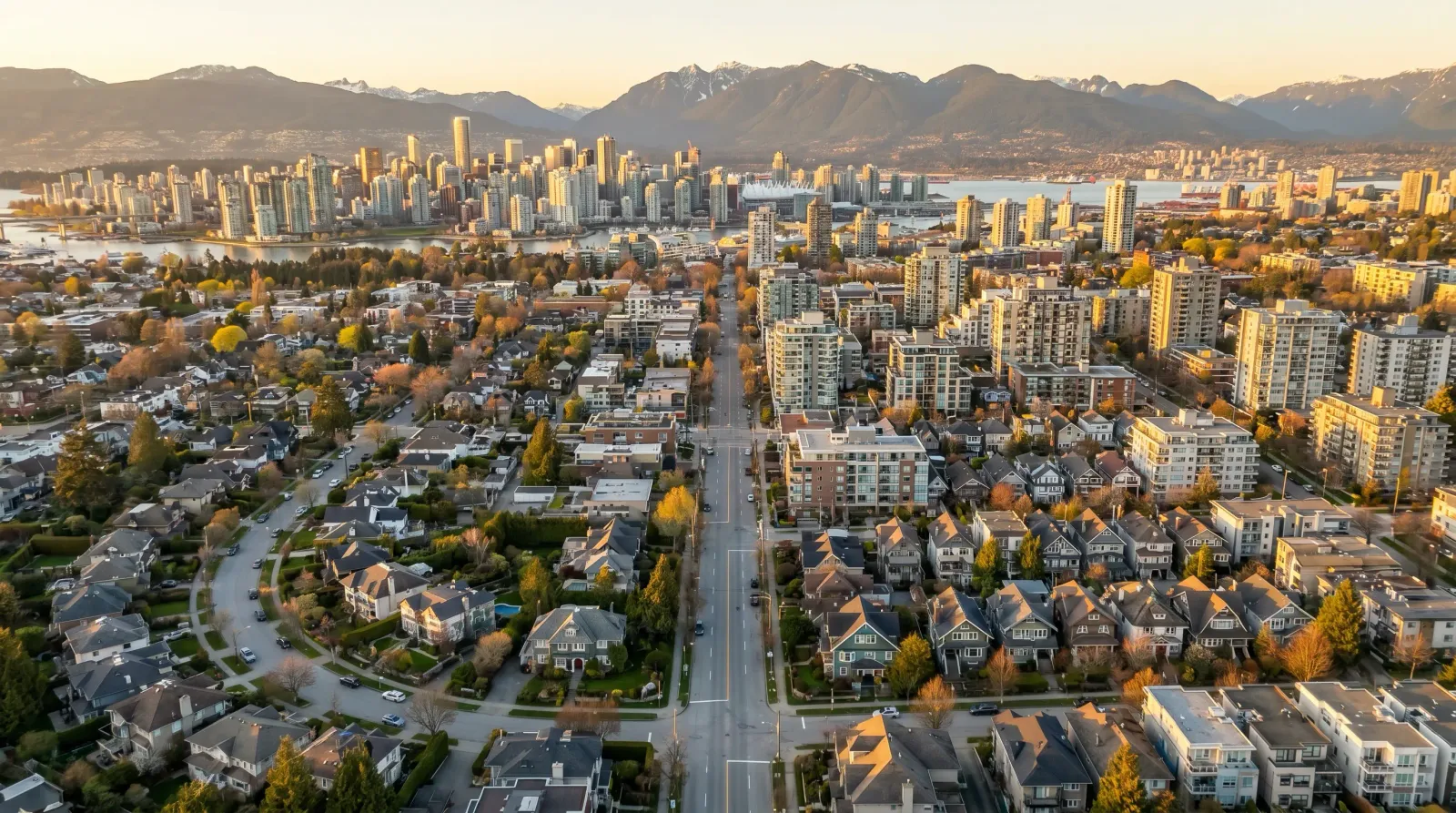
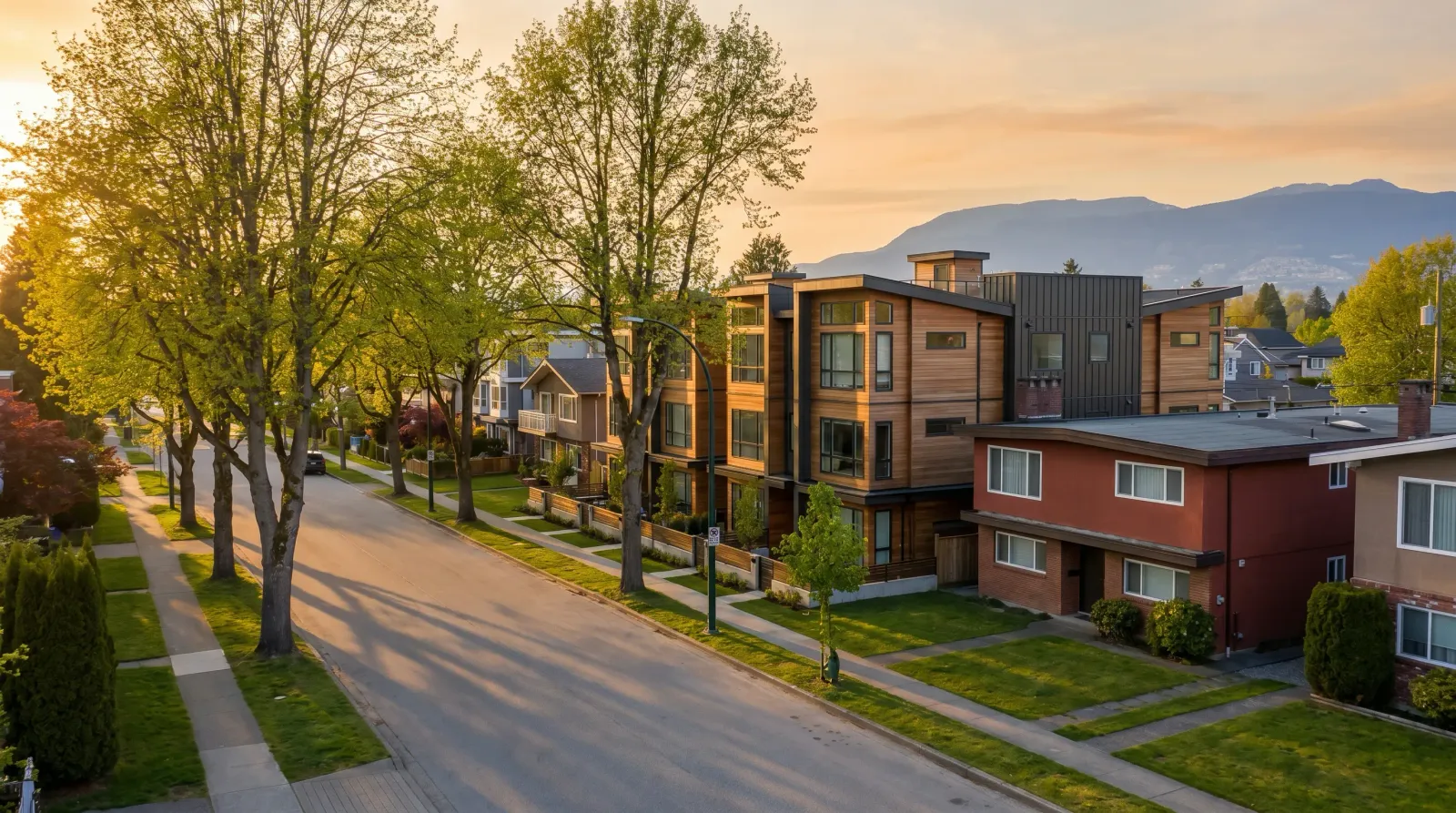
Here’s where it gets complicated. Vancouver is adding density. Bill 44 multiplex zoning is transforming residential streets across the city. That’s going to change the retail equation, for better and worse.
The good news: more people living on a block means more foot traffic. More foot traffic means a corner store can survive. I’ve watched small retailers struggle on quiet residential streets because there simply weren’t enough people walking past their door. A fourplex replacing a single-family home triples or quadruples the customer base within a one-block radius. That’s meaningful for a small grocer operating on thin margins.
The bad news: some of the old commercial spaces are getting redeveloped. The heritage storefronts that give a street its character are exactly the kind of low-rise buildings that pencil out for demolition and replacement with mixed-use mid-rises. You lose the patina. You lose the character. You get a shiny new retail podium that might sit empty for two years while the developer looks for a national chain tenant willing to pay $45 per square foot.
What Gets Lost
I showed a buyer a home near a heritage commercial node in Mount Pleasant last year. Great block. Two independent shops, a bakery, a barber. The buyer loved it. Then they noticed the development application sign on the bakery’s building. The whole thing was slated for a six-storey mixed-use project. The retail component was speculative—no tenants signed.
That buyer walked away. Not from the house specifically, but from the uncertainty. They didn’t want to buy into a neighbourhood whose character was about to be erased for three years of construction followed by a Shoppers Drug Mart.
This is a real tension in Vancouver right now. The city needs density. It also needs to protect the independent retail fabric that makes density worth living in.
How Corner Stores Signal Neighbourhood Desirability
When I’m evaluating a neighbourhood for a buyer, I look for a few things that most realtors don’t mention:
Independent retail diversity. Not just one coffee shop, but a mix. Grocer. Bakery. Hardware. Bookshop. Dry cleaner. When you see a full ecosystem of small retail, it means the neighbourhood has enough foot traffic, enough disposable income, and enough community loyalty to sustain them.
Store longevity. A shop that’s been in the same location for 10+ years tells you something. It tells you the rent is manageable (or the landlord is reasonable), the customer base is stable, and the neighbourhood hasn’t been disrupted by rapid change.
Owner-operator presence. When the person behind the counter owns the business, they care about the street. They sweep the sidewalk. They know their regulars. They show up to community meetings. That energy transfers to the entire block.
Evening activity. A street that’s dead after 6 PM is a street with a walkability problem. Independent retail that stays open into the evening—a wine bar, a late-hours grocery, a restaurant—creates the kind of safe, active streetscape that buyers want.
I tell my clients: before you evaluate the house, walk the neighbourhood at 7 PM on a Tuesday. If the streets are alive, you’re in the right place.
Bill 44 and the Future of Corner Store Culture
Bill 44 multiplex zoning is going to reshape residential streets across Vancouver. The immediate conversation focuses on housing supply, but the retail implications are just as significant.
More households per block means more potential customers for small retailers. A street that currently has 15 single-family homes could eventually have 45-60 households once multiplexes are built. That population density is exactly what makes corner stores viable.
I’m already seeing this play out in early-adoption areas. Builders developing multiplexes near existing commercial nodes are marketing the walkability as a selling point. “Steps to Main Street shops.” “Walking distance to Commercial Drive.” The corner store isn’t just a convenience anymore. It’s a value proposition in the listing.
The flip side is that some of the new multiplex construction could eventually include small ground-floor commercial spaces, particularly on corner lots. Vancouver’s zoning allows for this in certain configurations. Imagine a fourplex on a corner with a small cafe or grocer at street level. That’s the kind of gentle density that makes neighbourhoods work.
It’s early days. But the trajectory is clear: more people, more foot traffic, more opportunity for independent retail. If Vancouver gets the zoning details right, Bill 44 could be the best thing that’s happened to corner store culture in decades.
Frequently Asked Questions
Do corner stores actually increase property values?
Yes. Research from both Canadian and U.S. markets shows that proximity to walkable retail amenities correlates with higher property values. In Vancouver, I’ve seen a consistent 6-12% premium for homes within a five-minute walk of established independent retail corridors. The effect is strongest when the retail mix includes daily essentials like groceries, bakeries, and cafes.
What Walk Score should I look for when buying in Vancouver?
A Walk Score of 70+ means most errands can be accomplished on foot. The most desirable residential neighbourhoods in Vancouver—Kitsilano, Mount Pleasant, Commercial Drive, the West End—score between 80 and 95. Anything below 50 means you’re car-dependent for most daily needs, which tends to limit price appreciation over time.
Will Bill 44 multiplexes help or hurt local retail?
Both, depending on execution. More households per block creates more foot traffic, which supports independent retail. But redevelopment of existing commercial buildings can displace established shops. The net effect should be positive over 10-15 years as population density increases in residential areas, but the transition period will be uneven.
Which Vancouver neighbourhoods have the best independent retail?
Commercial Drive, Main Street (from roughly 2nd to 33rd), West 4th in Kitsilano, and the Hastings-Sunrise stretch around Nanaimo Street all have strong independent retail ecosystems. Each has a different character. The Drive is eclectic and multicultural, Main Street is curated and design-forward, West 4th is upscale-casual, and Hastings-Sunrise is emerging with a neighbourhood-first feel.
How do I evaluate a neighbourhood’s retail health?
Walk it. Count the independent shops vs. chain stores. Look for vacancies—empty storefronts are a warning sign. Check how long businesses have been operating (Google reviews with dates help). Visit on a weekday evening and a weekend morning. If both feel active, the retail ecosystem is healthy.
Work with Someone Who Knows the Streets
I’ve walked every commercial corridor in Vancouver hundreds of times. When I help buyers find a home, I’m not just looking at square footage and comparable sales. I’m looking at the street, the shops, the feeling of walking to get a coffee on a Saturday morning. That stuff matters. It matters to your daily life, and it matters to your home’s long-term value.
If you want a realtor who understands how neighbourhood character translates to real estate value, let’s talk.
Contact Greyden Douglas directly at (604) 218-2289 or get in touch online to start your home search with someone who knows which blocks are worth the investment.
Related Vancouver real estate pages
Continue with local service pages, neighbourhood guides, and actionable resources related to this topic.