Quick answer: Vancouver MLS listings contain nine specific details buyers commonly miss or misinterpret: photo angle and timing manipulation, square footage discrepancies between MLS and BC Assessment, days-on-market relisting tricks, listing description omissions, strata fee context, parking and storage allocations, age and renovation claims, lot dimensions and orientation, and listing history including price reductions and prior expired listings.
Listing photos lie. Square footage measurements differ from BC Assessment. The most important information is often what's NOT shown. Here's the buyer's checklist for reading a 2026 Vancouver MLS listing the way an experienced agent does.
Want a free assessment for your property?
Leave your name and phone — Greyden will call you back with a personalized market snapshot. No spam, no drip campaigns.
Join 1,000+ Vancouver homeowners. No spam, unsubscribe anytime.
A 1,200 sqft Vancouver condo listing might be 1,050 sqft by BC Assessment. A “fully renovated” kitchen might be paint and new hardware. A “1 parking + 1 storage” listing might be 1 parking allocated and 1 storage rented from the strata for $80/month — disclosed only on Form B. The photos might be six months old, taken with a wide-angle lens that turned a 9-foot living room into something that looks like 16 feet.
Vancouver MLS listings aren’t dishonest most of the time. They’re optimized — by people whose job is to make a property look its best, often working under tight time pressure and following industry-standard practices that emphasize the positive. That’s not a problem if you know how to read past it. It’s a big problem if you don’t.
Here are the nine details I check on every Vancouver listing my buyers send me, in the order I check them.
1. Days on Market — and Listing History
The first number I look at is days on market (DOM). In Vancouver’s 2026 market with apartment sales -10.7% YoY, DOM tells me everything about the seller’s negotiating position before I’ve looked at price or photos.
- 0–14 days: Honeymoon period. Seller is still hopeful. Negotiating leverage minimal.
- 14–30 days: First reality check. Seller starting to soften.
- 30–60 days: Seller is fully aware of weakness. Price reductions likely incoming.
- 60+ days: Strongest buyer position. 5–10% below asking is achievable on a clean offer.
But also check listing history on REW or Realtor.ca: did the property previously expire and relist? Some sellers cancel and relist to reset DOM. The cumulative DOM across multiple listings is the truth.
2. The MLS Square Footage vs BC Assessment Square Footage
Pull the property up on BC Assessment and compare its square footage to the MLS listing. They almost never match exactly. Differences of 50–200 sqft are normal — different measurement standards. Differences of 10% or more are worth investigating.
The two main reasons for big discrepancies:
- Unpermitted additions or finished basement areas — the seller’s measurement counts space that BC Assessment doesn’t recognize because it lacks permits
- Aggressive measurement — including patios, decks, garages, or storage in “living area”
If the discrepancy is large, ask for the iGuide measurement or formal floor plan, and ask whether all spaces have permits. This matters for resale (your future buyer will see the same gap), for insurance, and sometimes for property tax.
3. Photo Angle, Time of Day, and Selective Framing
Listing photos are the most-manipulated element of an MLS listing — and the manipulation is industry-standard, not sneaky. Here’s what to watch for:
- Wide-angle distortion. Real estate cameras typically shoot at 16–24mm equivalent. A 9-foot bedroom looks 14 feet wide on screen. Always rely on stated dimensions, not visual impression.
- Single time-of-day photos. Bright noon shots hide afternoon shade patterns and east-facing units that get morning sun only. Visit the unit at the time you’d actually use it.
- Missing photos of important rooms. No photo of the master closet, the basement, the second bathroom, or the laundry room? There’s usually a reason. Ask why.
- Exterior shots that crop out adjacent buildings. A listing shows a beautiful detached home but no shot of the neighbours? They might be a 6-unit multiplex, or a busy intersection.
- Missing yard or balcony shots. If outdoor space matters to you, missing photos of it usually means the outdoor space is small, dated, or sun-poor.
4. The Listing Description: What’s NOT Said
Read the description carefully for what isn’t there:
- “Bright” without photos showing actual sunlight = north-facing or shaded
- “Cozy” usually means small
- “Investor opportunity” usually means it needs work
- “Charming character” usually means original kitchen and bathrooms
- “Steps from transit” without naming the specific station = busy bus stop
- No mention of view = no view
- No mention of upgraded mechanical (windows, heating, electrical) on a 1980s+ unit = original systems
Industry words have meanings. Once you learn them, you can pull more from a description than the seller’s agent intended.
5. Strata Fees in Context (for Condos and Townhouses)
Strata fees aren’t bad or good in isolation — they need context.
Calculate strata fees per square foot per month. A 900 sqft condo with $480 strata is $0.53/sqft. The same fee on a 600 sqft unit is $0.80/sqft.
Vancouver-typical strata fee ranges:
- $0.30–$0.45/sqft: Newer building (post-2010), basic amenities
- $0.45–$0.65/sqft: Standard 1980s–2000s building, moderate amenities
- $0.65–$1.00/sqft: Older building, full amenities (gym, pool, concierge), or higher CRF contributions
- $1.00+/sqft: Concierge buildings, very old buildings with high maintenance, or buildings rebuilding their CRF after a special assessment
Cross-reference with the building’s age and amenities. A 2015 building with $1.10/sqft is unusual — investigate.
6. Parking and Storage — Verify Against Form B
Listings claim parking and storage allocations that may be different from what’s actually on Form B. Three common mismatches:
- “Rented” vs “owned” parking. A stall rented from the strata at $80/month is not yours when you sell.
- Visitor or guest parking listed as private. Sometimes happens with newer buildings.
- Storage locker that’s actually a “designated storage area” with no fixed allocation. Means another resident could legally use it.
Always ask for Form B before writing the offer. If your offer has a strata document subject (it should), the verification happens there.
7. Age and Renovation Claims
Listings often blend “year built” with “year renovated” in confusing ways:
- “Renovated 2022” with no detail = paint, hardware, new appliances
- “Fully renovated” = should mean kitchen, bath, flooring, mechanical
- “Updated electrical” = check what was actually replaced (panel? wiring?)
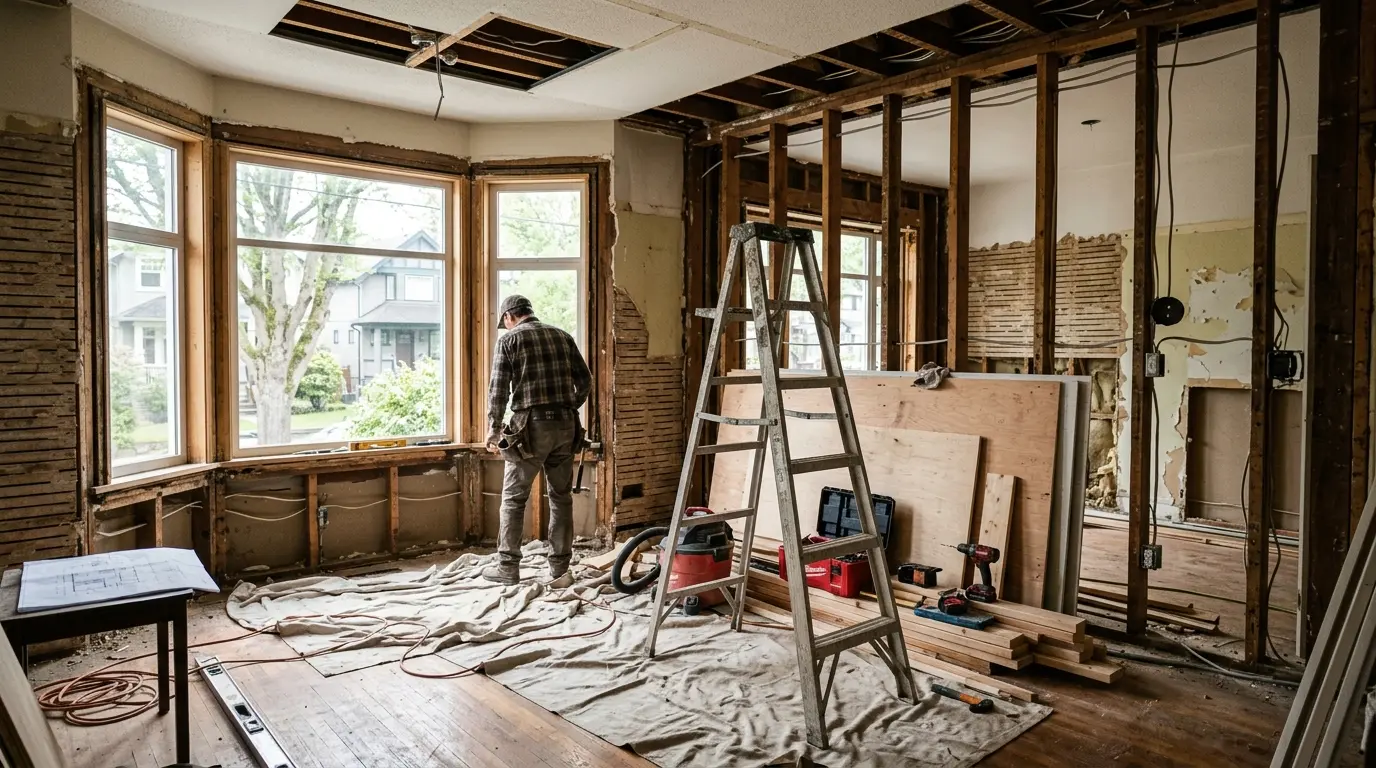
Pull permit history from the City of Vancouver permit lookup for any major claimed renovations. No permits often means the work isn’t covered by warranty, may not be insurable, and could create resale issues.
8. Lot Dimensions and Orientation (for Detached and Townhouse)
Lot dimensions matter for: future multiplex potential, sun exposure, privacy, and market comparables.
Standard Vancouver detached lot is 33×120 (3,960 sqft). Larger (50×120 or 60×130) carries premium. Smaller (28×100) carries discount.
Orientation matters: south-facing back yards get sun all day; north-facing units in dense neighbourhoods may never see direct sunlight in winter. Cross-check using a maps app and look at sun exposure for the time of year.
For multiplex-curious buyers: a standard 33×120 lot now supports 4–6 units under Bill 44, depending on transit proximity. If the lot is 50×120 or larger, the multiplex math gets dramatically better. The new ACC framework makes per-square-foot contribution costs predictable, which means lot dimensions are now directly translatable to multiplex unit count.
9. Listing History and Price Reductions
Look up the property’s full history on REW or Realtor.ca:
- Original list price vs current list price — how much has it dropped?
- Number of reductions — three or more in 90 days = seller is in capitulation territory
- Prior expired or terminated listings — did this property fail to sell in recent past? At what price?
- Last sale date and price — gives you a baseline for what a fair price increment would be
A property listed at $850K today, last sold for $720K in 2018, and previously listed at $920K (expired) is telling you a clear story: the seller has tried to get $920K and failed; $850K is their second attempt; they likely have $800K as a real bottom. Your offer should reflect that picture.
The 9-Point Checklist
| Item | What to verify | Where |
|---|---|---|
| 1. Days on market | Cumulative across relistings | REW / Realtor.ca history |
| 2. Square footage | MLS vs BC Assessment | bcassessment.ca |
| 3. Photos | Angle, time of day, missing rooms | Listing gallery |
| 4. Description | What’s NOT said | Listing copy |
| 5. Strata fees | $/sqft in context | Listing + your math |
| 6. Parking/storage | Form B allocation | Strata documents |
| 7. Renovation claims | Permit history | City permit lookup |
| 8. Lot dimensions | Size, orientation, sun | Maps app + listing |
| 9. Price history | Reductions, prior listings | REW / Realtor.ca |
How to Use This Checklist Practically
You don’t need to run all nine on every listing — that would take hours. Run them on listings you’re seriously considering:
- Online shopping (initial scan): Items 1, 3, 4, 5 — quick read of DOM, photos, description, strata fee
- Pre-tour shortlist: Items 2, 6, 9 — square footage, parking, listing history
- Pre-offer due diligence: Items 7, 8 — permits, lot details
The whole nine-point process takes 30–45 minutes per property if you’ve never done it before. By your fifth listing it’ll take 15. By your tenth, it’s automatic.
Key Takeaways
- Days on market and listing history reveal seller negotiating position
- BC Assessment square footage often differs from MLS — discrepancies over 10% warrant investigation
- Listing photos use industry-standard manipulation (wide angle, single time-of-day, selective framing)
- The listing description often tells you more by what it omits than what it states
- Strata fees should be evaluated as $/sqft in context of building age and amenities
- Always verify parking and storage against Form B, not the listing
- Renovation claims should be backed by permit history
- Lot dimensions and orientation matter for sun exposure, multiplex potential, and resale
- Listing history including reductions and prior expired listings reveals the seller’s true bottom
Frequently Asked Questions
Why do Vancouver MLS listings show different square footage than BC Assessment?
MLS listings typically use measurements from a Realtor’s site visit using either an iGuide scan or tape measurement, which can include different areas (heated vs unheated, finished vs unfinished basement, decks/patios) than BC Assessment’s measurements. BC Assessment uses building permit records and standard methodology. Discrepancies of 50–200 square feet are common; differences over 10% are red flags worth investigating.
What is days on market and why does it matter?
Days on market (DOM) measures how long a property has been actively listed. In Vancouver’s 2026 buyer’s market, listings under 14 days are still in the negotiation honeymoon period, listings 30–60 days have lost momentum, and listings past 60 days carry the strongest negotiating leverage for buyers — often accepting 5–10% below asking. Some sellers cancel and relist to reset DOM; check listing history to spot this.
What does it mean if a Vancouver listing shows multiple price reductions?
A pattern of price reductions usually means the seller priced too high originally and the market is correcting them downward. Each reduction signals weaker negotiating position. Look for: original list price, current list price, and reduction count and dates. Three reductions over 90 days is a much weaker seller position than the same final price reached on day one.
How do I verify parking and storage on a Vancouver MLS listing?
Always cross-reference the listing claim against Form B (the strata Information Certificate). Listings may say ‘1 parking, 1 storage’ but Form B might disclose those as rented from the strata corporation rather than allocated to the strata lot — meaning you’d lose them on resale or could lose them at any time. The strata plan also identifies which specific stalls are limited common property allocated to your unit.
What renovations should I be skeptical of in MLS listings?
Recently-completed renovations without permits (especially additions, basements, electrical, plumbing), ‘partially renovated’ descriptions hiding incomplete work, ‘updated kitchen’ that means new paint and hardware only, and unpermitted suite conversions. Always ask for permit history and verify with City of Vancouver’s permit lookup tool before completing.
How can I tell if MLS listing photos are misleading?
Common photo manipulation includes wide-angle distortion (rooms look larger than reality), bright daylight photos hiding dark interiors, exterior shots avoiding adjacent buildings, no photos of basement or older bathrooms, and editing out cluttered or damaged areas. Always tour in person and at the time of day you’d actually use the home — listings shot at noon hide afternoon shadow patterns.
Sources
- BC Assessment Authority
- BC Financial Services Authority
- Greater Vancouver Realtors — April 2026 Monthly Market Report
- Vancouver strata document red flags guide
Information current as of May 2026. Listing standards and verification tools evolve. Always verify specific listings with your Realtor and lawyer before completing.
Send Me a Listing You’re Considering
If you’ve spotted a Vancouver listing that looks promising, send it to me. I’ll run all nine points and come back with a one-paragraph honest read — including what I think the seller will actually accept and what’s not in the listing description that you’d want to know.
Contact Greyden Douglas directly at (604) 218-2289 or book a buyer consultation. New to Vancouver? Reach out and let’s run a few specific listings before you start touring.
Frequently asked questions
Why do Vancouver MLS listings show different square footage than BC Assessment?
MLS listings typically use measurements from a Realtor's site visit using either an iGuide scan or tape measurement, which can include different areas (heated vs unheated, finished vs unfinished basement, decks/patios) than BC Assessment's measurements. BC Assessment uses building permit records and standard methodology. Discrepancies of 50-200 square feet are common; differences over 10% are red flags worth investigating.
What is days on market and why does it matter?
Days on market (DOM) measures how long a property has been actively listed. In Vancouver's 2026 buyer's market, listings under 14 days are still in the negotiation honeymoon period, listings 30-60 days have lost momentum, and listings past 60 days carry the strongest negotiating leverage for buyers — often accepting 5-10% below asking. Some sellers cancel and relist to reset DOM; check listing history to spot this.
What does it mean if a Vancouver listing shows multiple price reductions?
A pattern of price reductions usually means the seller priced too high originally and the market is correcting them downward. Each reduction signals weaker negotiating position. Look for: original list price, current list price, and reduction count and dates. Three reductions over 90 days is a much weaker seller position than the same final price reached on day one.
How do I verify parking and storage on a Vancouver MLS listing?
Always cross-reference the listing claim against Form B (the strata Information Certificate). Listings may say '1 parking, 1 storage' but Form B might disclose those as rented from the strata corporation rather than allocated to the strata lot — meaning you'd lose them on resale or could lose them at any time. The strata plan also identifies which specific stalls are limited common property allocated to your unit.
What renovations should I be skeptical of in MLS listings?
Recently-completed renovations without permits (especially additions, basements, electrical, plumbing), 'partially renovated' descriptions hiding incomplete work, 'updated kitchen' that means new paint and hardware only, and unpermitted suite conversions. Always ask for permit history and verify with City of Vancouver's permit lookup tool before completing.
How can I tell if MLS listing photos are misleading?
Common photo manipulation includes wide-angle distortion (rooms look larger than reality), bright daylight photos hiding dark interiors, exterior shots avoiding adjacent buildings, no photos of basement or older bathrooms, and editing out cluttered or damaged areas. Always tour in person and at the time of day you'd actually use the home — listings shot at noon hide afternoon shadow patterns.
Sources
- BC Assessment Authority · government · accessed 2026-05-05
- Real Estate Council of British Columbia · government · accessed 2026-05-05
- Greater Vancouver Realtors — April 2026 Monthly Market Report · industry · accessed 2026-05-05
Related Vancouver real estate pages
Continue with local service pages, neighbourhood guides, and actionable resources related to this topic.