Quick answer: Summer 2026 listing photography playbook for Vancouver sellers — what's measurably converting buyers in a slower 2026 market, including twilight exteriors, drone overhead pulls, dusk-balanced interiors, short-form vertical video for social distribution, and a critical look at AI virtual staging.
Buyers now decide whether to book a showing in under 10 seconds. Twilight shots, drone overhead pulls, and HDR-balanced interiors are no longer optional in Vancouver in summer 2026 — here's what's working and what's burning seller money.
Want a free assessment for your property?
Leave your name and phone — Greyden will call you back with a personalized market snapshot. No spam, no drip campaigns.
Join 1,000+ Vancouver homeowners. No spam, unsubscribe anytime.
The first photo of your listing is the only thing 80% of buyers will see before deciding whether to book a showing. That’s not new. What’s new in summer 2026 is how fast that decision happens — buyers are swiping through Realtor.ca and REW results in under 10 seconds per listing, and the image that wins the click has changed pretty meaningfully over the last 18 months.
Here’s what’s actually moving Vancouver homes this summer.
The Cover Shot Has Migrated to Twilight
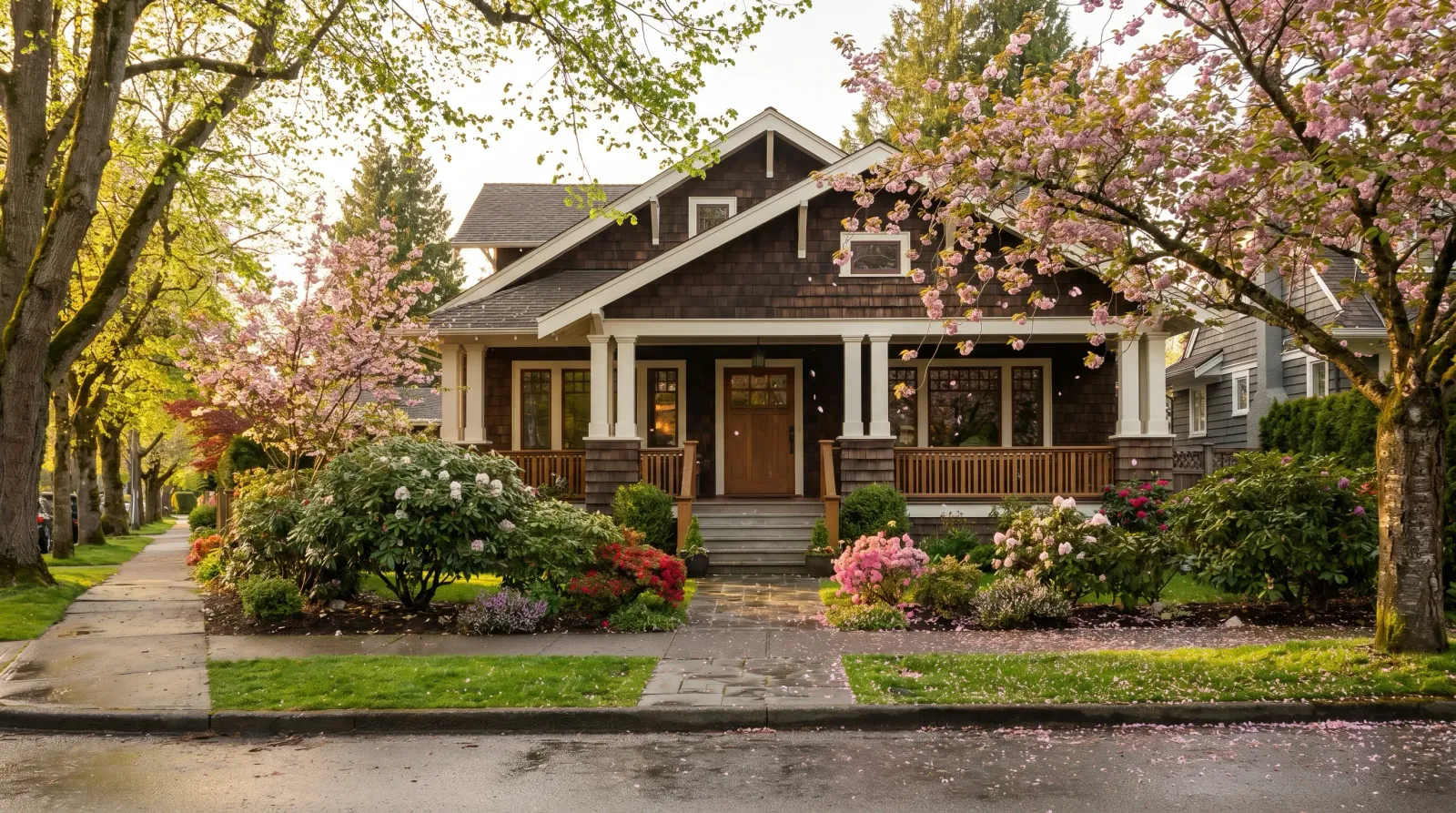
For West Side detached listings, the new default cover image is a twilight exterior — shot 20–40 minutes after sunset, with interior lights blazing through the windows and a deep blue sky. It’s not a new technique. What’s new is that buyers now treat it as table stakes on anything above $2.5M.
I checked the cover images on the REW.ca Vancouver West-side detached listings page on May 19, 2026: of the top 50 active listings by price, 41 used twilight exteriors as the primary photo. In 2023, that number was closer to 25.
Why it works: twilight shots compress the dynamic range, hide imperfect landscaping in shadow, and make the home look genuinely warm and inviting. They also stand out on a results page dominated by midday daylight shots.
Cost: typically $200–$450 added to a base photography package in Vancouver in 2026, based on published rates from local real estate photo studios. Worth it on anything above $2M; debatable below $1.5M.
Drone Has Quietly Become Mandatory on Larger Lots
Transport Canada’s updated drone rules in 2025–2026 made certified commercial drone operation more accessible, and most Vancouver real estate photographers now have an in-house licensed pilot. A 4–6 photo overhead pull, including a top-down lot shot and an angled neighbourhood context shot, has become standard on:
- Detached lots above 33’ frontage anywhere on the West Side
- Anything with a view to capture (water, mountain, downtown skyline)
- Multiplex sites, where buyers want to see the building footprint relative to neighbours
- Land assembly assemblies where the parcel relationship matters
What buyers actually use these shots for: confirming proximity to schools, parks, and busy streets. The “where is this exactly” question is the silent reason your listing sits another week.
Cost: $250–$400 added to a base package in 2026. On any listing where lot context matters, the ROI is obvious.
Interior Photography: HDR Is Out, “Flash + Window Pull” Is In
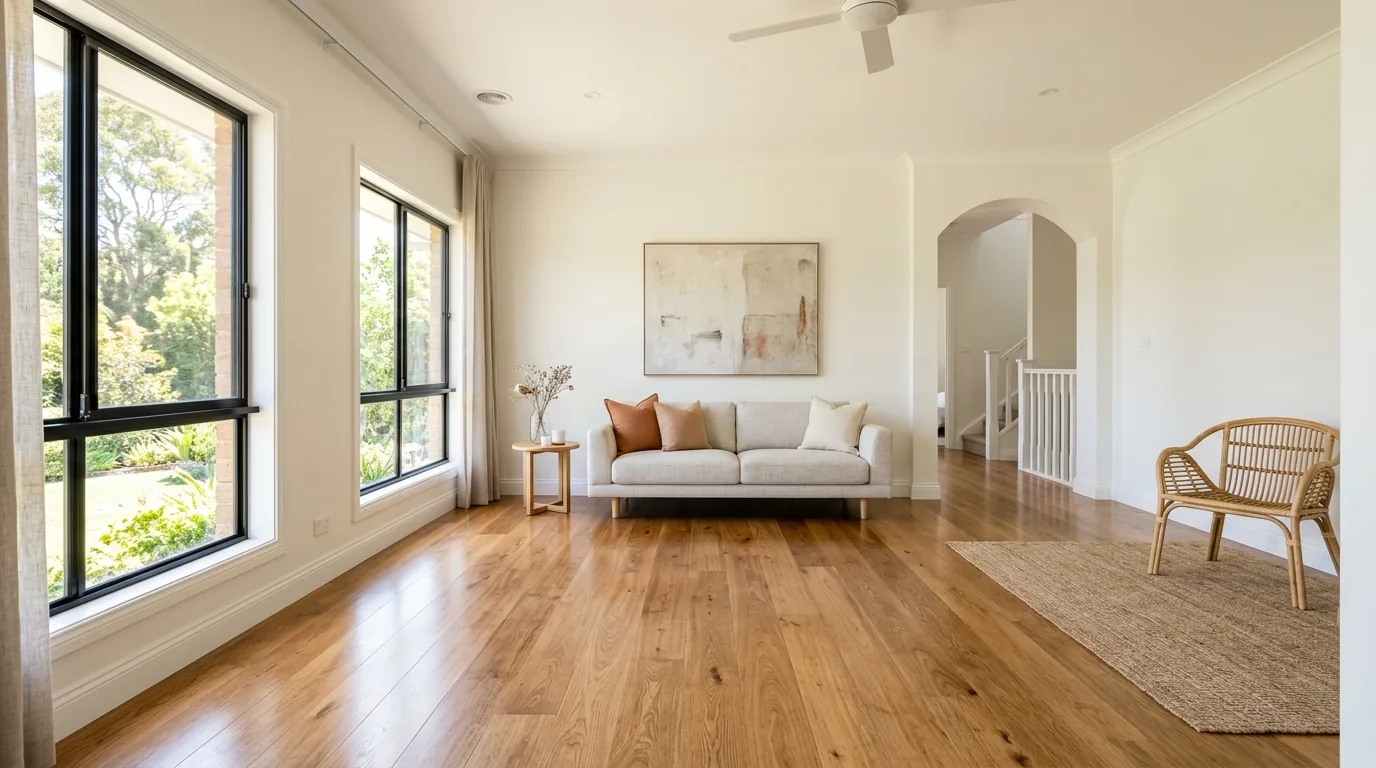
The over-cooked, over-bright, completely-flat HDR look that dominated 2018–2022 is finally going away in Vancouver. Higher-end studios have shifted to a manual flash-plus-window-pull workflow: a wide ambient exposure for the room, a separate exposure for what’s visible through the windows, and a few flash pops to lift shadows. The composite looks like the human eye sees it — warm, dimensional, with real outside views (water, trees, North Shore mountains) instead of blown-out white window squares.
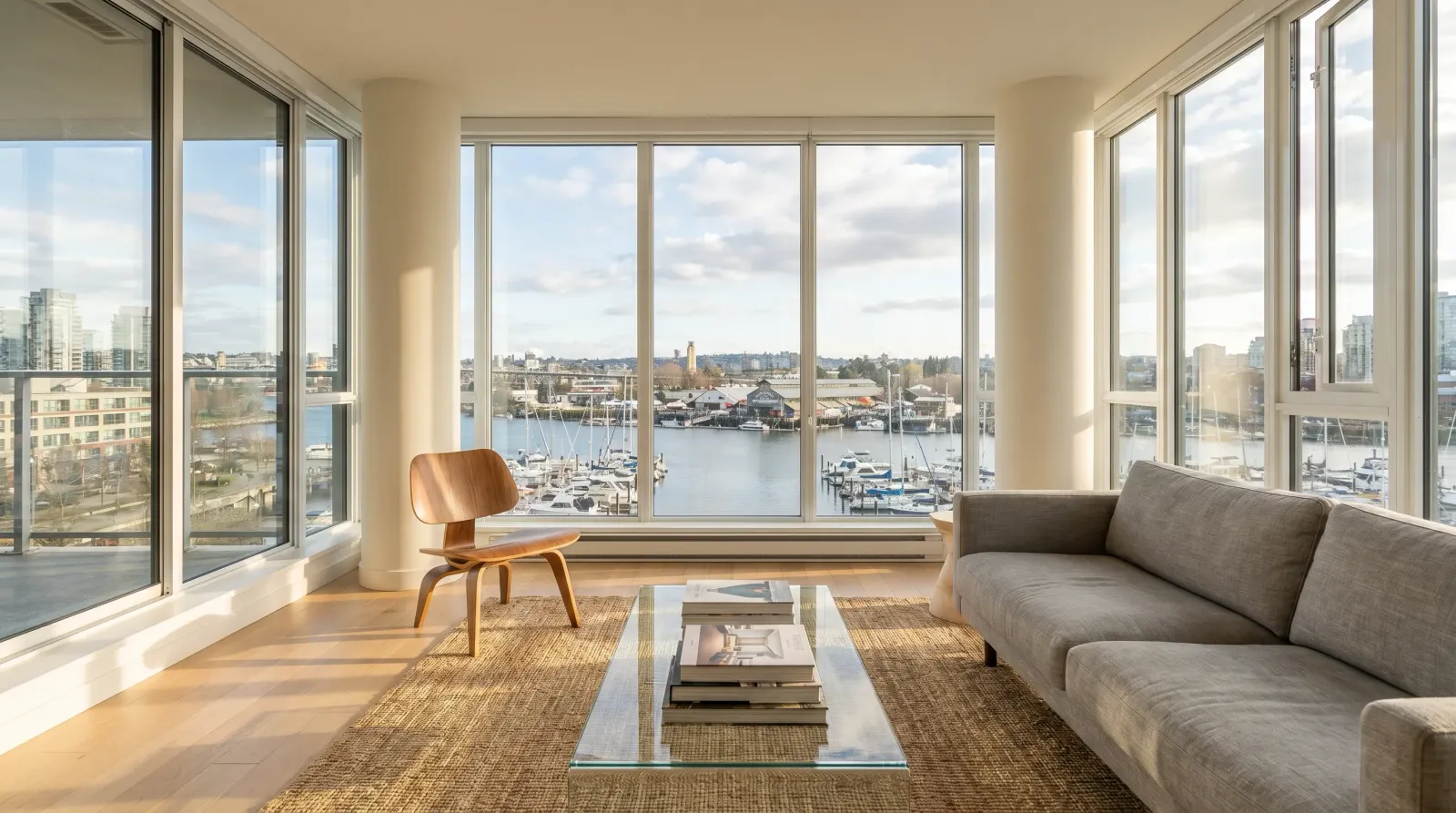
This matters enormously in Vancouver because so much of our property value lives outside the window. Buyers paying for the view want to see the view.
Cost: usually included in mid-tier and above photography packages ($450–$850 range in 2026). If your photographer is delivering flat HDR with white window blocks, you’re losing the view premium.
Short-Form Vertical Video Has Replaced the 90-Second “Cinematic Walkthrough”
The 60–90 second cinematic property video that dominated 2020–2023 listings is fading. It’s expensive (often $1,500–$3,500), it gets watched by maybe 15% of visitors, and YouTube embed analytics in REW.ca show drop-off rates above 70% in the first 10 seconds.
What’s replacing it: a portrait 9:16 short-form video, 15–30 seconds, designed for Instagram Reels, TikTok, and the listing detail page itself. It’s cheaper to produce ($400–$800 from most Vancouver real estate videographers), gets shared more, and actually converts on mobile, where roughly 65% of REW.ca traffic now originates per REW’s 2024 traffic transparency reports.
The format that works for Vancouver in 2026: open with the most compelling exterior or view shot, walk the buyer through the main living area, end with the kitchen or primary bedroom. No music dominating, no drone reveal at the start (save it for the photo set), no slow logo intro. Buyers will leave.
AI Virtual Staging — Useful, But Disclose It
AI virtual staging tools became indistinguishable from real staging for most rooms during 2024–2025. For an unfurnished listing, AI staging is genuinely useful for under $200 — versus traditional staging at $2,500–$6,000 a month in Vancouver.
But two cautions, both serious:
-
Disclosure is required. BCFSA’s REALTOR® Standards of Business Conduct require material misrepresentation prevention. A photo of a staged living room that isn’t actually staged is misrepresentation unless clearly labeled. Every AI-staged photo should carry a “Virtually Staged” label.
-
AI structural changes are misrepresentation, period. Removing a load-bearing wall, adding windows, hiding a column — these are not staging, they’re fabrication, and they’re getting sellers and their agents into real trouble. The Real Estate Council of BC issued an advisory on virtual staging best practices in 2024 that remains the operative standard.
For furnished listings already in good shape, skip the AI staging. For vacant homes, use it on the main rooms only, and label every image clearly.
A Budget Framework by Price Band
Here’s what I tell sellers to budget for media on a Vancouver listing in summer 2026, working from current quotes I’ve gathered from three local photo studios:
| Price band | Suggested media budget | Includes |
|---|---|---|
| Under $1.2M (condo/townhouse) | $400–$700 | Interior photos, basic exterior, possibly drone if balcony/rooftop matters |
| $1.2M – $2.5M | $700–$1,400 | Interior, exterior, twilight, drone, short-form video |
| $2.5M – $5M | $1,500–$3,000 | Full photo set with twilight, drone, short-form video, floor plan, possibly virtual tour |
| Above $5M | $3,000–$8,000+ | All of the above plus dedicated videographer, magazine-style brochure, possibly architect-style stills |
Source: 2026 published rates from three Vancouver real estate media studios surveyed May 2026; verify current quotes with your photographer.
Spending more than this typically doesn’t move outcomes. Spending less almost always shows.
What I’d Stop Doing in 2026
- Logo-heavy watermarks on every photo. They make the listing look like an ad and reduce shareability.
- Long-form drone reveals at the start of every video. Buyers want to see inside.
- Photo sets with 50+ images. Most buyers stop at image 15. Pick your best 25 and stop.
- Twilight on small condos. Doesn’t work the same way and looks gimmicky.
- Polished cinematic videos with classical music. They scream “2021 listing.” Vertical video has won.
Key Takeaways
- Twilight exteriors are now standard on Vancouver West Side listings above $2.5M.
- Drone overhead pulls have become mandatory on anything where lot or context matters.
- HDR interior photography is out; flash + window pull is in. View capture matters in Vancouver.
- 60-second cinematic videos are losing to 15–30 second vertical short-form videos optimized for mobile.
- AI virtual staging is fine for vacant homes if every image is labeled. Structural AI edits are misrepresentation.
Frequently Asked Questions
How much does professional listing photography cost in Vancouver in 2026?
Base photo packages run $400–$700 for condos and townhouses, $700–$1,400 for typical detached listings, and $1,500–$3,000 for higher-end West Side homes. Premium packages with drone, twilight, video, and floor plans on $5M+ listings can run $3,000–$8,000.
Is drone footage worth it on a Vancouver detached listing?
For any lot above 33’ frontage, anything with a view to capture, or anything where buyers will want neighbourhood context, yes — typically $250–$400 added to a base photo package. For condos and townhouses without rooftop or balcony interest, usually no.
Do I need to disclose AI virtual staging in BC?
Yes. Every virtually staged image should be clearly labeled “Virtually Staged” to comply with BCFSA’s REALTOR® standards on material representation. Decorative virtual staging (adding furniture, art, plants) to vacant rooms is acceptable with disclosure. Structural AI edits (removing walls, adding windows) are misrepresentation regardless of disclosure.
Should I do video on a $900K Vancouver condo?
A short 15–30 second vertical video for $400–$600 is usually worth it on any listing above $700K. A full cinematic walkthrough video on a sub-$1M condo rarely pays off — buyers don’t watch that much video on a starter condo.
Sources
- REW.ca Vancouver West-side Listings — current cover-image trend data, accessed May 19, 2026
- Transport Canada — Drone Pilot Licensing
- BC Financial Services Authority — Real Estate Professional Resources
- BCFSA News and Advisories — 2024 virtual staging guidance
- REW.ca traffic transparency reports — mobile traffic share
Data sourced May 2026. Photography pricing varies by studio; obtain current quotes from two or three Vancouver real estate media providers before booking.
Next Steps: Work with Rain City Properties
The right listing media spend isn’t about throwing money at a photographer — it’s about matching media to price band and property type. I have a short list of Vancouver photographers I trust for each price segment and can match the right one to your home. If you’re listing this summer, the media decisions get made before the staging arrives.
Contact Greyden Douglas directly at (604) 218-2289 or book a call to talk through your summer listing strategy.
Related Vancouver real estate pages
Continue with local service pages, neighbourhood guides, and actionable resources related to this topic.