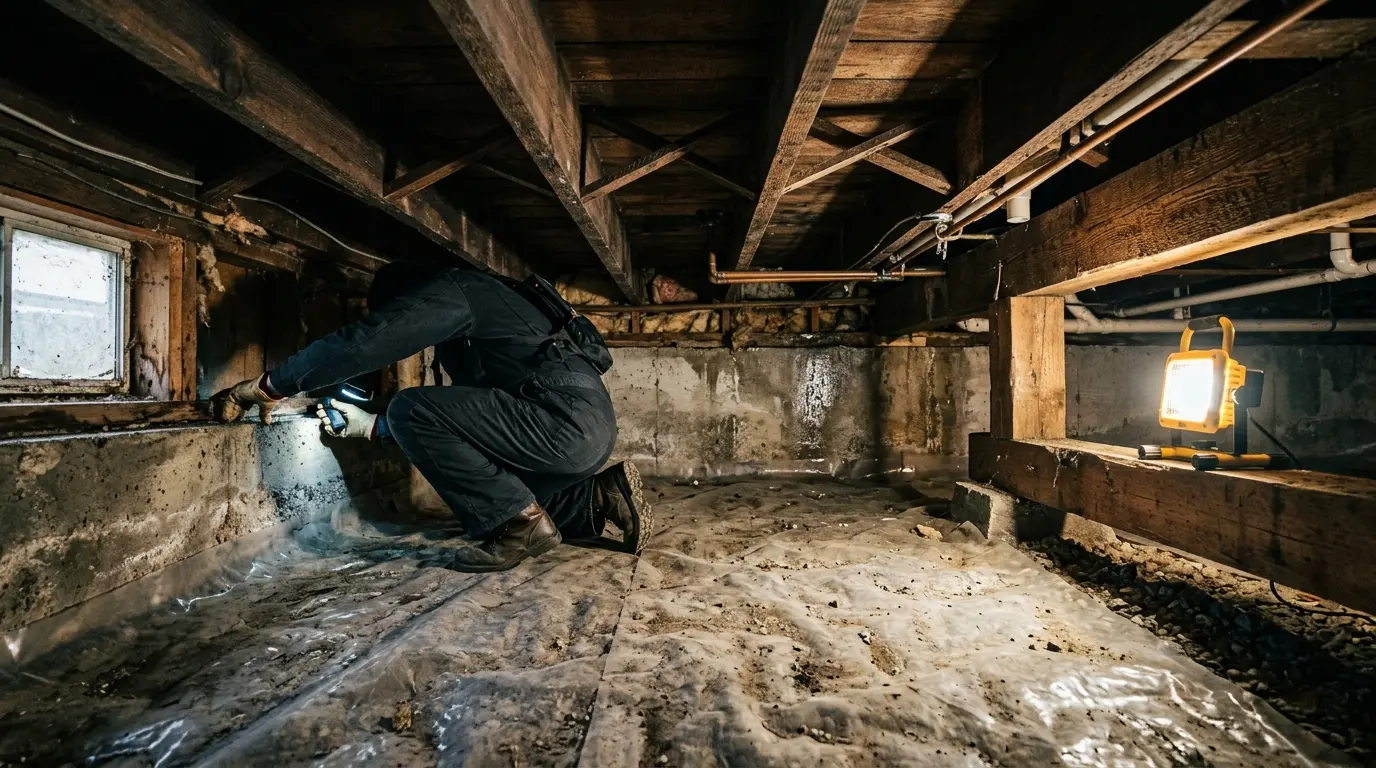
Quick answer: A 2026 guide to sewer lateral inspection for older Vancouver homes, explaining why a camera scope matters before buying, how clay pipes and tree roots fail, what replacement costs, and how responsibility splits between the city and the owner.
The sewer lateral runs from your house to the city main, and in older Vancouver homes it's often clay, cracked, and full of tree roots. A working realtor's guide to why a camera inspection matters before you buy, what replacement costs, and who pays for what.
Want a free assessment for your property?
Leave your name and phone — Greyden will call you back with a personalized market snapshot. No spam, no drip campaigns.
Join 1,000+ Vancouver homeowners. No spam, unsubscribe anytime.
A buyer I worked with a few years ago decided to skip one inspection to save a couple hundred dollars. He’d fallen for a lovely older east-side home, the offer was tight, and it felt like a small thing to cut. Six months after he moved in, his basement backed up. The old clay pipe running from his house to the street had cracked and filled with tree roots. The repair had five figures in it. He still remembers the exact number.
I tell that story to every client looking at an older Vancouver home, because the pipe that got him is the one almost nobody thinks to check. It’s called the sewer lateral, it’s buried under your front yard, and in a lot of older neighbourhoods it’s a slow-motion problem waiting to surface. Here’s what it is, why it matters before you buy, and who pays when it goes wrong.
What the sewer lateral actually is
The sewer lateral is the underground pipe that carries wastewater from your house out to the city sewer main. It usually runs under the front yard and out toward the street, connecting your home’s plumbing to the public system.
You never see it. It’s buried, it does its job quietly, and it’s easy to forget it exists. That’s exactly why it’s dangerous. In older Vancouver homes, sections of this pipe are often made of clay, a material that was standard decades ago and that becomes brittle with age. Older clay laterals develop cracks and their joints loosen over time. Once that happens, two things go wrong: the pipe can no longer carry flow reliably, and it becomes an open invitation to tree roots.
Why clay and roots are such a bad pair
Tree roots are drawn to what’s inside a sewer pipe: moisture and nutrients. When an old clay pipe develops a small crack or a loose joint, roots find it. They grow in through the gap, then keep growing and expanding inside the pipe. Over time they block the flow, catch debris, and eventually break the pipe apart from the inside.
This is one of the most common problems I see in older Vancouver homes, especially on lots with mature trees near the sewer run. The frustrating part is that it gives almost no warning above ground. The yard looks fine. The house shows nothing. Then one day the line backs up, often at the worst possible moment.
Why a camera scope matters before you buy
Here’s the part every buyer needs to hear clearly: a standard home inspection usually does not check the sewer lateral. The inspector looks at what they can see and safely access. The buried pipe under your front yard is neither.
To actually know the condition of that pipe, you need a separate sewer scope, sometimes called a camera inspection. A plumber feeds a small camera on a cable down the line, usually through a cleanout, and you watch the real condition on a screen. You see the cracks, the root intrusion, the sags, and the joints. It’s the only reliable way to know what you’re buying before you own it.
The math on this is simple. A sewer scope costs a small amount, often a few hundred dollars. Discovering a collapsed, root-filled line after closing can cost tens of thousands. Adding the scope to your due diligence is the cheapest insurance in the entire purchase.
I always recommend making the sale subject to a satisfactory sewer scope for any older home, alongside the standard inspection condition. If you want to understand how conditions like this fit into an offer, our buyers’ guide walks through the process.
What replacement actually costs
If a scope turns up a bad line, what are you looking at? I’ll be honest about the range, because it’s wide and it depends on your specific property.
Replacing a sewer lateral in Vancouver can run from several thousand dollars into the tens of thousands. The main drivers are:
- Length and depth. A long, deep run costs more to reach and replace.
- Access. A pipe under a driveway, mature landscaping, or a mature tree is far more expensive and disruptive than one under an open lawn.
- Method. In some cases a crew can reline the existing pipe from the inside (a trenchless method) rather than digging the whole thing up, which can be less disruptive. Whether that’s possible depends on the pipe’s condition.
Always get a quote from a licensed plumber based on your actual property. Don’t rely on a general number, including mine. Treat the range above as a reason to scope, not as a price for your specific lot.
Who pays: city or owner
This is the question that catches people, so let me be careful.
In Vancouver, the property owner is generally responsible for the portion of the sewer lateral that sits on their property. The City is generally responsible for the public main and the connection in the public right-of-way. Where the responsibility splits, usually around the property line, matters enormously for who pays a repair bill.
The costly mistake is assuming the City will cover a failure on the private side. Often it won’t. Before you buy, and certainly before you plan a repair, confirm the current responsibility rules and the location of your connection with the City of Vancouver. The rules and boundaries are specific, and you want them in writing, not from memory.
A few practical extras
While you’re thinking about this, two related items are worth knowing.
A backwater valve is a device that helps stop sewage from flowing back into your home if the city system surcharges during heavy rain. Many older homes don’t have one. If you’re doing sewer work anyway, it can be a sensible addition. Ask your plumber whether it fits your situation.
And if you’re buying an older home to renovate or eventually redevelop, the sewer condition still matters. A tired lateral is a cost either way, and it’s better known before you commit. If redevelopment is on your mind, our laneway homes guide covers another common older-lot project and the servicing questions that come with it.
Key Takeaways
- The sewer lateral is the buried pipe from your house to the city main. In older Vancouver homes it’s often aging clay that cracks and lets tree roots in.
- A standard home inspection usually does not check it. You need a separate sewer scope, where a plumber runs a camera down the line.
- The scope costs a few hundred dollars. A failed line can cost tens of thousands, so the inspection is cheap insurance.
- Replacement cost varies widely with length, depth, access, and whether the pipe can be relined instead of dug up. Get a quote for your specific property.
- In Vancouver the owner is generally responsible for the private-side portion of the lateral. Confirm the responsibility split and connection location with the City before you buy.
- For any older home, make your offer subject to a satisfactory sewer scope alongside the standard inspection.
Frequently Asked Questions
Should I get a sewer scope when buying an older Vancouver home?
Yes. For any older Vancouver home, a sewer scope is one of the most valuable inspections you can add, and it is not usually part of a standard home inspection. Many older homes have clay sewer laterals that crack with age and let tree roots grow in. A camera run down the line shows the real condition before you buy. The cost of the scope is small compared with the cost of discovering a collapsed line after you own the home.
What is a sewer lateral?
The sewer lateral is the underground pipe that carries wastewater from your house out to the city sewer main, usually running under your front yard and out toward the street. In older Vancouver neighbourhoods this pipe is often made of clay in older sections, which becomes brittle over decades. It is easy to forget because it is buried and out of sight, but when it fails it is expensive and disruptive to fix.
How much does it cost to replace a sewer lateral in Vancouver?
Replacing a sewer lateral in Vancouver can run into the thousands to tens of thousands of dollars depending on the length of the pipe, its depth, whether the work is under a driveway or landscaping, and whether the crew can reline the pipe or must dig it up. Trenchless relining can be less disruptive than a full dig in some cases. Always get a quote from a licensed plumber based on your specific property, because the range is wide.
Who is responsible for the sewer line, the city or the homeowner?
In Vancouver, the property owner is generally responsible for the portion of the sewer lateral on their property, and the City is responsible for the public main and the connection in the public right-of-way. The exact split at the property line can matter a great deal for who pays for a repair. Confirm the current responsibility rules and the location of your connection with the City of Vancouver, because assuming the City will cover a private-side failure is a costly mistake.
Do tree roots really damage sewer pipes?
Yes, and it is one of the most common problems in older Vancouver homes. Roots are drawn to the moisture and nutrients inside a sewer pipe. They find their way into small cracks or loose joints in old clay pipe, then grow and expand, which blocks flow and eventually breaks the pipe apart. A camera inspection is the reliable way to see whether roots have already gotten in before you commit to buying.
Sources
- City of Vancouver - sewer and drainage connections
- City of Vancouver - flood and backwater valve information
- BC Housing - home maintenance and inspection guidance
- Canada Mortgage and Housing Corporation - home inspection
- Metro Vancouver - regional sewer and drainage
Work with Rain City Properties
An older Vancouver home can be a wonderful buy, but only when you know what’s under the ground as well as what’s above it. I make sure my buyers add a sewer scope to their conditions on older homes, connect them with reliable plumbers, and help them understand who’s responsible for what before they sign. It’s a small step that has saved my clients from very large surprises.
Contact Greyden Douglas directly at (604) 218-2289 or book a call to discuss your Vancouver real estate goals.
Frequently asked questions
Should I get a sewer scope when buying an older Vancouver home?
Yes. For any older Vancouver home, a sewer scope is one of the most valuable inspections you can add, and it is not usually part of a standard home inspection. Many older homes have clay sewer laterals that crack with age and let tree roots grow in. A camera run down the line shows the real condition before you buy. The cost of the scope is small compared with the cost of discovering a collapsed line after you own the home.
What is a sewer lateral?
The sewer lateral is the underground pipe that carries wastewater from your house out to the city sewer main, usually running under your front yard and out toward the street. In older Vancouver neighbourhoods this pipe is often made of clay in older sections, which becomes brittle over decades. It is easy to forget because it is buried and out of sight, but when it fails it is expensive and disruptive to fix.
How much does it cost to replace a sewer lateral in Vancouver?
Replacing a sewer lateral in Vancouver can run into the thousands to tens of thousands of dollars depending on the length of the pipe, its depth, whether the work is under a driveway or landscaping, and whether the crew can reline the pipe or must dig it up. Trenchless relining can be less disruptive than a full dig in some cases. Always get a quote from a licensed plumber based on your specific property, because the range is wide.
Who is responsible for the sewer line, the city or the homeowner?
In Vancouver, the property owner is generally responsible for the portion of the sewer lateral on their property, and the City is responsible for the public main and the connection in the public right-of-way. The exact split at the property line can matter a great deal for who pays for a repair. Confirm the current responsibility rules and the location of your connection with the City of Vancouver, because assuming the City will cover a private-side failure is a costly mistake.
Do tree roots really damage sewer pipes?
Yes, and it is one of the most common problems in older Vancouver homes. Roots are drawn to the moisture and nutrients inside a sewer pipe. They find their way into small cracks or loose joints in old clay pipe, then grow and expand, which blocks flow and eventually breaks the pipe apart. A camera inspection is the reliable way to see whether roots have already gotten in before you commit to buying.
Related Vancouver real estate pages
Continue with local service pages, neighbourhood guides, and actionable resources related to this topic.