Quick answer: Complete guide to mortgage pre-approval in Vancouver for 2026, covering the OSFI B-20 stress test, current interest rates with BoC at 2.25%, down payment requirements, required documents, self-employed buyer considerations, and realistic affordability calculations for the Vancouver market.
I won't show houses to buyers without pre-approval. Here's exactly what lenders look at, how the stress test limits your buying power, and what you need to get approved in 2026.
Want a free assessment for your property?
Leave your name and phone — Greyden will call you back with a personalized market snapshot. No spam, no drip campaigns.
Join 1,000+ Vancouver homeowners. No spam, unsubscribe anytime.
I won’t show houses to buyers without a mortgage pre-approval. That’s not me being difficult — it’s me saving you from heartbreak.
I’ve watched buyers fall in love with a place, write an offer, and then discover they can’t actually afford it. Or worse, they spend months looking in the wrong price range because they assumed what they could borrow. The Vancouver market doesn’t reward guesswork. Before you set foot in a single open house, you need to know your number.
Here’s everything you need to get pre-approved in 2026 — and a reality check on what that approval actually means.
Pre-Approval vs Pre-Qualification: They’re Not the Same Thing
These two terms get tossed around like they’re interchangeable. They’re not.
Pre-qualification is a quick, informal estimate. You tell a lender your income and debts, they run some math, and they give you a ballpark figure. No documents verified. No credit check. No commitment from anyone. It’s a conversation, not a guarantee.
Pre-approval is the real deal. According to the Financial Consumer Agency of Canada, a mortgage pre-approval means your lender has actually reviewed your financial documents, pulled your credit, and committed to lending you a specific amount at a locked-in rate — subject to the property itself passing muster.
A pre-qualification tells you roughly what you might afford. A pre-approval tells you exactly what a lender will give you. Sellers and their agents know the difference too. When you’re competing for a property, a pre-approval letter signals that you’re a serious, vetted buyer. A pre-qualification letter signals that you haven’t done the work yet.
Why You Need Pre-Approval Before House Hunting in 2026
Three reasons, and all of them matter:
You’ll know your actual budget. Not what you think you can afford — what a lender will actually commit to. In Vancouver, where the gap between a $650K condo and an $850K condo is the difference between a one-bedroom and a two-bedroom, knowing your number saves months of wasted time.
Sellers take you seriously. In a market where multiple offers still happen on well-priced properties, a pre-approval letter tells the listing agent you can close. I’ve seen sellers choose a lower offer from a pre-approved buyer over a higher offer from someone who hasn’t been vetted.
You lock in a rate. Most lenders hold your pre-approved rate for 90 to 120 days. If rates climb during that window, you’re protected. And if rates drop? Most lenders will honour the lower rate instead.
The Stress Test: The Rule That Decides What You Can Borrow
This is the part that catches almost every buyer off guard.
Even though the Bank of Canada held its policy rate at 2.25% on March 18, 2026, you don’t qualify at your actual mortgage rate. You qualify at a higher rate, thanks to the OSFI B-20 stress test.
According to OSFI’s minimum qualifying rate guidelines, every borrower at a federally regulated lender must prove they can afford payments at the higher of:
- Their contract rate plus 2%, or
- 5.25% (the floor rate)
So if your lender offers you a 5-year fixed rate of 4.2%, you’re actually qualifying at 6.2% (4.2% + 2%). That’s well above the 5.25% floor, so the contract-plus-two formula is the one that bites.
Why does this exist? OSFI implemented the stress test to make sure borrowers can handle rate increases, income drops, or unexpected expenses without defaulting. It’s a buffer — a 2% cushion against life going sideways.
The practical impact: the stress test reduces your maximum borrowing power by roughly 20% compared to what you’d qualify for at your actual payment rate. That’s a significant gap, and it’s the single biggest factor in Vancouver affordability math.
Current Rates: Where Things Stand in Spring 2026
With the Bank of Canada holding at 2.25%, here’s what the mortgage market looks like as of April 2026, based on current data from Ratehub and WOWA:
| Product | Typical Rate Range |
|---|---|
| 5-year fixed (insured) | 3.89%–4.29% |
| 5-year fixed (uninsured) | 4.04%–4.49% |
| 5-year variable | 3.35%–4.00% |
| 3-year fixed | 3.99%–4.39% |
Variable rates are tracking below fixed rates right now, offering a pricing advantage. But remember — your qualifying rate for the stress test is your contract rate plus 2%, regardless of which product you choose. A lower variable rate means a lower qualifying rate, which means you can borrow slightly more.
What Lenders Look At: The Four Pillars
1. Income Verification
Lenders want proof that your income is real, stable, and sufficient. For salaried employees, according to Bridgewell Group’s pre-approval document guide, you’ll typically need:
- Employment letter confirming your position, salary, and start date
- Recent pay stubs (last 2–3 months)
- T4 slips (last 2 years)
- Notice of Assessment (NOA) from CRA (last 2 years)
If you have additional income sources — rental income, bonuses, commissions, overtime — bring documentation for those too. Lenders may include some or all of it depending on consistency.
2. Credit Score
Your credit score tells lenders how you handle debt. The minimums vary by lender and mortgage type:
- Insured mortgages (less than 20% down): Minimum credit score of 600 at most lenders, though many prefer 680+
- Uninsured mortgages (20%+ down): Minimums typically start at 680
- Best rates: Usually require 720+
Before applying, pull your own credit report through Equifax or TransUnion. Fix any errors and pay down outstanding balances. A credit score improvement of even 20–30 points can affect the rate you’re offered.
3. Debt Ratios (GDS and TDS)
According to CMHC’s general requirements, lenders use two ratios to determine how much you can borrow:
Gross Debt Service (GDS) ratio — maximum 39% Your total monthly housing costs (mortgage payment, property taxes, heating, and half of strata fees) divided by your gross monthly income. This can’t exceed 39%.
Total Debt Service (TDS) ratio — maximum 44% Your total monthly housing costs plus all other debt payments (car loans, student loans, credit card minimums, lines of credit) divided by your gross monthly income. This can’t exceed 44%.
These ratios are calculated using the stress test rate, not your actual payment rate. That’s what really squeezes the numbers.
4. Down Payment Source and History
Lenders want to know where your down payment is coming from and that you didn’t just borrow it last week. You’ll need to provide 90 days of bank statements showing the funds. Acceptable sources include:
- Personal savings
- RRSP withdrawals (through the Home Buyers’ Plan — up to $60,000)
- FHSA withdrawals (up to $40,000, tax-free)
- Gift from an immediate family member (with a signed gift letter confirming it’s not a loan)
- Sale of another property
Large, unexplained deposits in your account will trigger questions. If your parents transferred $50,000 three months ago, have the gift letter ready before you apply.
Down Payment Requirements: The Rules by Price Range
Down payment requirements in Canada are tiered, and the CMHC purchase insurance guidelines make the structure clear:
| Purchase Price | Minimum Down Payment |
|---|---|
| Up to $500,000 | 5% ($25,000 on $500K) |
| $500,001 to $1,499,999 | 5% on first $500K + 10% on the rest |
| $1,500,000 and above | 20% minimum (no CMHC insurance available) |
Important change: As of December 15, 2024, the insured mortgage cap was raised from $1 million to $1.5 million. This means buyers can now purchase up to $1,499,999 with less than 20% down and mortgage default insurance.
Let me put this in Vancouver terms:
- $700,000 condo: Minimum down payment of $45,000 (5% of $500K + 10% of $200K)
- $1,000,000 condo: Minimum down payment of $75,000 (5% of $500K + 10% of $500K)
- $1,500,000 house: Minimum down payment of $300,000 (20% — no insurance available)
If you’re putting less than 20% down, you’ll also pay CMHC mortgage default insurance, which gets added to your mortgage balance. The premium ranges from 0.6% to 4% of the mortgage amount depending on your down payment percentage. On a $700,000 purchase with 5% down, that insurance premium adds roughly $26,000 to your mortgage.
Self-Employed Buyers: A Tougher Road
If you’re self-employed — and plenty of Vancouver buyers are — the pre-approval process is more involved. Lenders typically require:
- 2 years of Notices of Assessment (NOAs) from CRA
- 2 years of T1 Generals (personal tax returns)
- Business financial statements (if incorporated)
- Business licence and proof of ongoing operation
The challenge: many self-employed people minimize their taxable income for tax purposes. That same tax optimization works against you when you’re applying for a mortgage because lenders use your declared income to calculate affordability.
Some lenders offer stated income programs for self-employed borrowers with strong credit and larger down payments (typically 20%+), but these come with higher interest rates — often 0.5% to 1% above standard rates. A good mortgage broker who specializes in self-employed clients is worth their weight in gold here.
How Long Does Pre-Approval Last?
Most pre-approvals are valid for 90 to 120 days, and most lenders hold your rate for the same period. If your pre-approval expires before you find a property, you can renew it — but you’ll need to provide updated documents (recent pay stubs, bank statements) and may get a different rate.
Here’s what I tell my clients: don’t get pre-approved too early. If you’re six months away from buying, wait. Get pre-approved when you’re genuinely ready to start making offers within the next three to four months.
What Can Kill Your Pre-Approval
A pre-approval is conditional. It can be revoked. Here are the things I’ve seen derail pre-approvals right before closing:
- Changing jobs or quitting. Lenders verified your employment. If that changes, your approval may disappear.
- Taking on new debt. That new car lease or furniture financing? It changes your TDS ratio. Don’t finance anything between pre-approval and closing.
- Making large purchases on credit. Even if you pay the card off monthly, the increased balance can affect your credit utilization.
- Co-signing someone else’s loan. That debt now counts on your ratios.
- Large unexplained deposits. Sudden money in your account raises anti-money-laundering flags and requires documentation.
- Missing bill payments. Even one missed payment can drop your credit score enough to affect your rate or approval.
The rule is simple: between pre-approval and closing, change nothing about your financial life. Don’t open new accounts. Don’t close old ones. Don’t make big purchases. Pretend you’re financially frozen.
The Affordability Reality Check
Let me run the actual math so you know what to expect. These numbers use the stress test qualifying rate and standard lender guidelines.
Household income: $150,000/year
- No other debts
- 5-year fixed rate: 4.2%
- Stress test qualifying rate: 6.2% (contract + 2%)
- 25-year amortization
- Maximum GDS at 39%
Using the stress test rate, this household qualifies for a mortgage of roughly $600,000 to $650,000. Add a $100,000 down payment, and you’re looking at properties in the $700,000 to $750,000 range.
Household income: $200,000/year
- No other debts
- Same rate assumptions
Maximum mortgage: roughly $800,000 to $870,000. With $200,000 down, you’re shopping in the $1,000,000 to $1,070,000 range.
Now here’s the part most people don’t want to hear: if you have a $600/month car payment and $300/month in student loans, those numbers drop significantly. That $150K household? Their maximum mortgage drops to roughly $480,000 to $520,000 once existing debts eat into the TDS ratio.
Don’t Spend What You’re Approved For
Getting approved for $700,000 doesn’t mean you should borrow $700,000. The lender’s maximum assumes you’re comfortable spending 39% of your gross income on housing. That leaves you with very little room for savings, unexpected expenses, or lifestyle spending.
I tell my clients to target a purchase price that puts their actual monthly payment at 25–30% of gross income, not the 39% maximum. That buffer is the difference between owning a home and being owned by your mortgage.
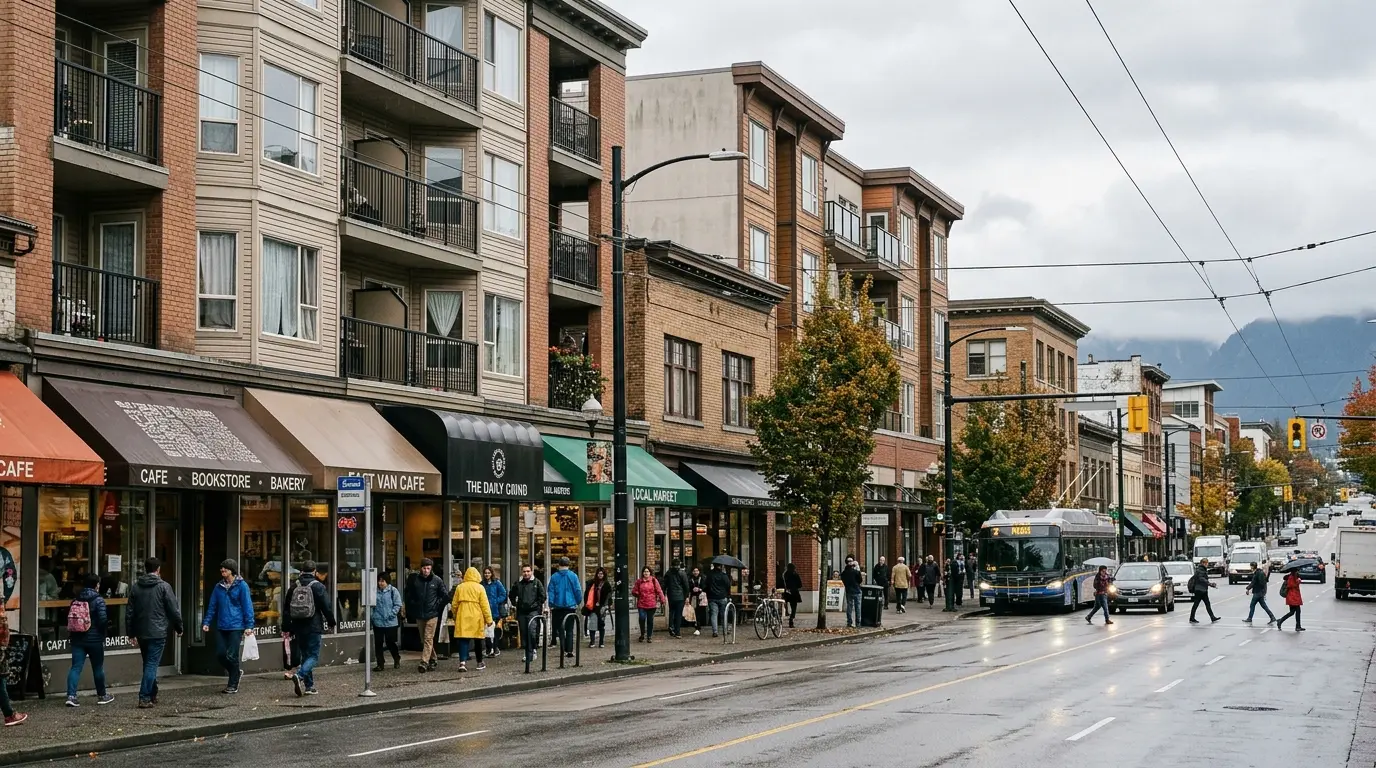
In Vancouver, this often means being realistic about what neighbourhood and property type fits your budget. A $650K approval might mean a one-bedroom in Kitsilano or a two-bedroom in East Vancouver. Understanding that tradeoff before you start looking saves everyone time.
Check out our buyer’s guide for a full walkthrough of the Vancouver purchasing process, and review our closing costs breakdown so you know the costs beyond your mortgage.
Frequently Asked Questions
Does getting pre-approved affect my credit score?
Yes, but minimally. A mortgage pre-approval triggers a hard credit inquiry, which can lower your score by 5–10 points temporarily. If you apply to multiple lenders within a 14-day window, the credit bureaus typically treat those inquiries as a single check, so don’t be afraid to shop around — just do it within a concentrated window.
Can I get pre-approved with bad credit?
It depends on how bad. Most major lenders require a minimum credit score of 600–680. If you’re below that, some alternative lenders (B lenders) will work with you, but at significantly higher rates — often 1–3% above prime lender rates. A mortgage broker can help you find options, but if your score is below 600, you’re better off spending 6–12 months rebuilding credit before applying.
Should I get pre-approved through my bank or a mortgage broker?
A mortgage broker compares rates from dozens of lenders, including banks, credit unions, and monoline lenders. Your bank only offers their own products. In most cases, a broker will find you a better rate and more flexible terms. That said, if you have a complex financial situation (self-employed, foreign income, non-standard employment), some banks have in-house underwriting that can be more accommodating. I recommend getting quotes from both.
What if rates drop after I lock in my pre-approval rate?
Most lenders honour the lower rate. Your rate hold protects you if rates go up, but if rates fall during your hold period, the lender will typically give you the lower rate at closing. Confirm this policy with your specific lender — it’s standard practice, but not universal.
Sources
- Bank of Canada Rate Decision, March 18, 2026
- Minimum Qualifying Rate for Uninsured Mortgages — OSFI
- CMHC Mortgage Loan Insurance Requirements
- CMHC Purchase Mortgage Loan Insurance
- Documents Needed for Mortgage Pre-Approval Canada — Bridgewell Group
- Best Mortgage Rates Canada — Ratehub.ca
- Best Mortgage Rates Canada — WOWA.ca
Ready to Get Pre-Approved? Start Here
Pre-approval is the first real step toward buying a home in Vancouver. Not browsing listings, not attending open houses — getting your finances verified and your budget confirmed. I work with buyers every day who are glad they did this first, and I’ve never had a client who regretted knowing their number before they started looking.
If you want help understanding what you can afford and which neighbourhoods fit your budget, let’s talk. I’ll walk you through the numbers and make sure you’re set up to buy with confidence.
Greyden Douglas Founder, Rain City Properties 📞 (604) 218-2289 Book a free buyer consultation →
Start with our buyer’s guide for the full Vancouver purchasing roadmap, or check out our closing costs breakdown to budget for everything beyond your mortgage.
Related Vancouver real estate pages
Continue with local service pages, neighbourhood guides, and actionable resources related to this topic.