Quick answer: Side-by-side cost comparison of buying new construction versus resale in Vancouver in 2026, covering purchase price, GST, PTT exemptions, the 2-5-10 warranty, strata fees, renovation budgets, and negotiation dynamics in a buyer's market.
New construction vs resale isn't just about price per square foot. Here's the full cost breakdown — GST, warranties, strata fees, renovation budgets, and negotiation leverage — so you can make a decision with real numbers.
Want a free assessment for your property?
Leave your name and phone — Greyden will call you back with a personalized market snapshot. No spam, no drip campaigns.
Join 1,000+ Vancouver homeowners. No spam, unsubscribe anytime.
I sell both new construction and resale properties. When buyers ask me which is “better,” my answer is always the same: it depends on your numbers, your timeline, and your tolerance for surprises.
The sticker price on a new build and the sticker price on a resale unit two blocks away tell you almost nothing about what you’ll actually spend. One comes with GST. The other might need a $40,000 kitchen renovation. One has a warranty. The other has fifteen years of strata minutes telling you exactly how the building has aged.
Here’s the full cost picture for both options in Vancouver’s 2026 market — with real numbers, not marketing brochures.
The Price Per Square Foot Gap
Let’s start with the most visible difference. In Vancouver’s current market, new construction condos typically list between $1,200 and $1,800 per square foot, depending on location, floor level, and finishes. Resale condos from buildings 5-15 years old are trading between $800 and $1,200 per square foot.
That gap looks dramatic until you factor in everything else.
| New Build Condo | Resale Condo (10 years old) | |
|---|---|---|
| Price per sq ft | $1,200–$1,800 | $800–$1,200 |
| 650 sq ft unit (midpoint) | ~$975,000 | ~$650,000 |
| GST (5%) | $48,750 | $0 |
| Immediate renovations | $0 | $0–$40,000 |
| Effective cost | ~$1,023,750 | ~$650,000–$690,000 |
Sources: GVR March 2026 benchmark data, Vancouver New Condos market reports
The resale apartment benchmark in Metro Vancouver sits at $706,700 as of March 2026, down 7.8% year-over-year according to GVR. New builds are holding higher per-square-foot pricing because developers need specific thresholds to make construction financing work. That means new builds aren’t discounting the way resale sellers are.
GST: The Tax That Changes Everything
This is where new-build math gets interesting — and where most buyers underestimate the cost.
Every new home in BC carries a 5% federal GST on the purchase price. On a $900,000 condo, that’s $45,000 added to your closing costs. Resale homes are GST-exempt.
According to the CRA’s GST/HST New Housing Rebate guidelines and Bridgewell Group’s BC-specific breakdown, here’s how the rebate works:
Standard GST New Housing Rebate
| Purchase Price | Rebate Available |
|---|---|
| Under $350,000 | 36% of GST paid (max $6,300) |
| $350,000–$450,000 | Reduced (formula: $6,300 × [$450K – price] / $100K) |
| Over $450,000 | $0 |
For Vancouver, where virtually every property exceeds $450,000, the standard rebate is irrelevant.
First-Time Buyer GST Rebate (Bill C-4 — New for 2025/2026)
This is the game-changer. Bill C-4, which received Royal Assent in March 2026, created a new rebate specifically for first-time buyers of new or substantially renovated homes:
- Homes up to $1,000,000: Recover 100% of the federal GST (up to $50,000)
- Homes $1,000,000–$1,500,000: Rebate phases out linearly
- Homes over $1,500,000: No rebate
On a $900,000 new condo, a qualifying first-time buyer gets back the entire $45,000 in GST. That is a massive shift — and it only applies to new construction. If you’re a first-time buyer, this makes new builds significantly more competitive than they were even a year ago.
For the full GST breakdown including how it applies to presales and assignments, read our complete guide to GST on Vancouver real estate.
Property Transfer Tax: New Build Has the Edge
PTT applies to both new and resale properties, but new construction buyers get access to the Newly Built Home Exemption, which is more generous than the standard first-time buyer exemption:
| Exemption | Full Exemption Threshold | Partial Exemption Range |
|---|---|---|
| First-Time Home Buyer | Up to $835,000 | $835,000–$860,000 |
| Newly Built Home | Up to $1,100,000 | $1,100,000–$1,150,000 |
Source: BC Government — Newly Built Home Exemption
On a $900,000 new condo, a qualifying buyer pays zero PTT under the newly built home exemption. The same $900,000 resale condo? Unless you’re a first-time buyer (and even then, you’re over the $835,000 threshold), you’re paying $16,000 in PTT.
That $16,000 PTT savings narrows the gap between new and resale considerably. For the full PTT breakdown, see our Vancouver closing costs guide.
The Full Closing Cost Comparison
Here’s a side-by-side for a $900,000 new condo versus a $750,000 resale condo (roughly comparable units in similar locations — the new build is smaller but newer):
| Cost Item | New Build ($900K) | Resale ($750K) |
|---|---|---|
| Purchase price | $900,000 | $750,000 |
| GST (5%) | $45,000 | $0 |
| GST rebate (first-time buyer, Bill C-4) | –$45,000 | N/A |
| GST rebate (non-first-time buyer) | $0 | N/A |
| Property transfer tax | $0 (newly built exemption) | $13,000 |
| Legal/notary fees | $1,500–$2,000 | $1,500–$2,000 |
| Home inspection | $350–$450 | $350–$450 |
| Immediate renovations/updates | $0 | $0–$40,000 |
| Total (first-time buyer) | $901,850–$902,450 | $764,850–$805,450 |
| Total (repeat buyer) | $946,850–$947,450 | $764,850–$805,450 |
For first-time buyers, the Bill C-4 rebate wipes out the GST and the newly built PTT exemption saves another $13,000+ compared to resale. The gap shrinks to the underlying price-per-square-foot difference.
For repeat buyers paying full GST, the new-build premium is steep — roughly $140,000–$180,000 more for a comparable living space.
The 2-5-10 Warranty: What You Actually Get
Every new home in BC built by a Licensed Residential Builder must carry home warranty insurance under the Homeowner Protection Act. Here’s what the 2-5-10 warranty covers:
| Coverage Period | What’s Covered | Claim Limit (Strata) |
|---|---|---|
| 2 years | Materials, labour, major systems (electrical, plumbing, HVAC, windows, doors) | $100,000 |
| 5 years | Building envelope, including water penetration | $100,000 |
| 10 years | Structural defects, load-bearing components | $100,000 |
Source: BC Housing — Home Warranty Insurance
This is a genuine advantage of new construction. If your kitchen faucet leaks at month 18, the builder fixes it. If the building envelope fails at year four, the warranty covers it.
But here’s what I tell buyers: the warranty is not a substitute for due diligence. Certain items are excluded — landscaping, normal wear and tear, owner-supplied materials. And some warranty claims take months to resolve. The deficiency walkthrough before you take possession is your best opportunity to document every crack, scratch, and misaligned cabinet. Bring a checklist and take photos.
Resale properties have no warranty (unless they’re under five or ten years old and the original warranty transfers). But they have something else: a track record. You can read strata depreciation reports, review years of meeting minutes, and see exactly how the building has aged. No guessing.
Strata Fees: The First Five Years vs Reality
New buildings often launch with lower strata fees because the contingency reserve fund is empty and major maintenance is years away. Developers sometimes set fees artificially low to make units look more affordable.
Here’s what typically happens:
| Building Age | Monthly Strata Fee (650 sq ft) | Notes |
|---|---|---|
| Year 1–3 (new) | $250–$350 | Low contingency fund, everything is new |
| Year 5–10 | $350–$450 | First depreciation report, fees adjust upward |
| Year 10–20 | $400–$550 | Major maintenance begins (elevator upgrades, painting) |
| Year 20+ | $500–$700+ | Envelope work, pipe replacements, special levies possible |
A new building’s strata fee tells you what costs are today. A 10-year-old building’s strata fee tells you what costs actually are — plus you can read the depreciation report to see what’s coming. That transparency is worth something.
Before buying any strata property, review the full document package. Our guide on what to review in strata documents covers every red flag to watch for.
Timing: 30 Days vs 3 Years
If you’re buying a presale (new construction purchased before completion), you’re typically waiting 2 to 4 years for the building to finish. A lot can change: interest rates, your income, your relationship, your job. You also face completion risk — projects can be delayed or, in rare cases, cancelled.
Resale closes in 30 to 90 days. You know exactly what you’re getting, the price is locked, and you can move in on a predictable schedule.
In 2026’s market, this timing difference matters more than usual. With the apartment benchmark down 7.8% year-over-year, buyers purchasing presale today at $1,400/sq ft are betting that prices will recover by the time the building completes in 2028 or 2029. That’s a real gamble given current market conditions.
For a deeper look at presale risks and contracts, read our Vancouver presale condo guide. And if you’re focused on the condo market specifically, our Vancouver condo buying guide covers everything from strata bylaws to what to watch for at showings.
Resale Renovation Costs: Budget Honestly
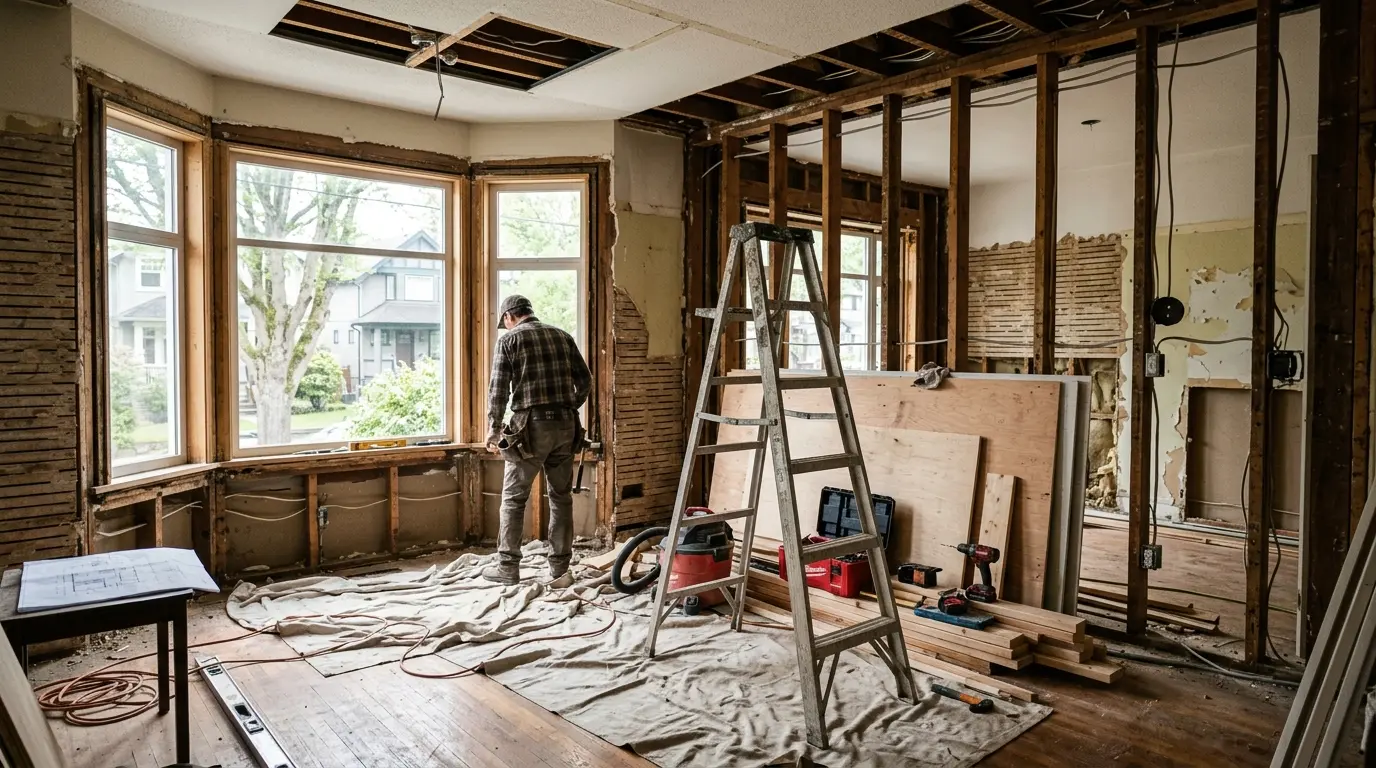
A 10-year-old condo will likely need some updates within the first few years. Here’s what I typically see:
| Renovation | Cost Range | When Needed |
|---|---|---|
| Kitchen refresh (counters, appliances, backsplash) | $15,000–$35,000 | If original finishes |
| Bathroom update | $8,000–$20,000 | If original finishes |
| Flooring replacement | $5,000–$12,000 | Depends on condition |
| Painting throughout | $2,000–$4,000 | Almost always |
| Appliance replacement | $3,000–$8,000 | 10-15 year lifespan |
Not every resale needs $40,000 in work. Some 8-year-old units with updated kitchens need nothing but paint. Others with original builder-grade finishes need everything. Walk through the unit and price out what’s actually needed — don’t assume.
A 20-year-old unit at $850/sq ft that needs $25,000 in renovations is still cheaper per square foot than a new build at $1,400/sq ft. But a 5-year-old resale at $1,050/sq ft that needs nothing? That might be the sweet spot right now.
Which Is Better for Investors?
If you’re buying for rental income, here’s how new and resale compare:
New Build Advantages:
- Higher rents (tenants pay more for modern finishes)
- Lower maintenance costs in the first 5-10 years
- Warranty coverage reduces surprise repair bills
- Newer buildings may attract higher-quality tenants
Resale Advantages:
- Lower purchase price = better cap rate from day one
- Established rental track record in the building
- Cash flow positive sooner
- In 2026’s market, better negotiation leverage (14.2% sales-to-active ratio means sellers are competing for buyers)
The math usually favours resale for cash-flow investors. A $700,000 resale condo renting at $2,500/month produces better returns than a $950,000 new build renting at $2,800/month — even though the new build commands higher rent.
For appreciation-focused investors willing to wait, presale in a strong transit-oriented location can work — but in a declining market, you’re taking on significant risk.
The 2026 Market Factor
Here’s what makes this decision different in 2026 compared to 2021 or 2022:
Resale has more negotiation room. With a 14.2% sales-to-active ratio across Metro Vancouver (GVR March 2026 data) and 14,774 active listings, resale sellers are motivated. I’ve seen buyers negotiate 5-10% below asking on well-positioned resale units. That’s $35,000–$70,000 on a $700,000 condo.
New builds have less flexibility. Developers still need to hit certain price-per-square-foot thresholds to service their construction loans. They’ll throw in upgrades, waive assignments fees, or offer extended deposit structures — but the base price rarely drops significantly. The gap between what developers need and what the market is willing to pay is creating a real tension in the presale market right now.
Benchmark prices are declining. The apartment benchmark is down 7.8% year-over-year to $706,700. Buying a presale today at a premium and completing in 2028 means you need the market to recover just to break even. Buying resale today lets you lock in current pricing — which, for the first time in years, actually favours the buyer.
The Decision Framework
Here’s how I help my clients think through this:
Choose new construction if:
- You’re a first-time buyer who can use the Bill C-4 GST rebate (this is a significant financial advantage)
- You want a move-in-ready home with no renovation surprises
- You value warranty protection and modern building systems
- You’re buying a completed new build (not presale), avoiding timing risk
- Your budget per square foot works at $1,200+
Choose resale if:
- You want more space for your dollar
- You prefer established buildings with depreciation reports and strata history
- You’re an investor focused on cash flow
- You want to negotiate aggressively in a buyer’s market
- You’re comfortable budgeting for potential renovations
- You need to move within 30-90 days
Consider a 3-7 year old resale if:
- You want newer finishes without the GST
- The original 2-5-10 warranty may still have structural coverage remaining
- You want the best of both worlds — modern building, proven track record
Frequently Asked Questions
Do I pay GST on a resale home in Vancouver?
No. GST only applies to new construction or substantially renovated homes sold by a builder or developer. If a home has been previously occupied as a residence, it’s GST-exempt regardless of how recently it was built.
Can I negotiate the price on a new build condo?
You can try, but developers have less room to move on base price than resale sellers. In 2026, developers are more likely to offer incentives — assignment fee waivers, upgrade packages, extended deposit timelines, or reduced parking costs — rather than cutting the per-square-foot price.
Does the 2-5-10 warranty transfer if I buy a 3-year-old condo?
Yes. The warranty transfers to subsequent owners for the remaining coverage period. If you buy a 3-year-old condo, you’d have the building envelope coverage for another 2 years and structural coverage for another 7 years. Materials and labour coverage would have expired. Check with the warranty provider for exact details.
Is it better to buy presale or a completed new build?
In 2026, completed new builds reduce your risk significantly. You can walk the actual unit, see the actual finishes, and close in weeks rather than years. Presale pricing should theoretically be lower (you’re compensating for the wait and risk), but in Vancouver, presale prices are often set at or above what the completed units will realistically sell for.
Sources
- GVR — March 2026 Monthly Market Report
- BC Housing — Home Warranty Insurance for New Homes
- BC Government — Newly Built Home PTT Exemption
- Bridgewell Group — GST on New Homes in BC
- Marco Pontillo — GST on New Homes in BC 2026
- Vancouver New Condos — March 2026 GVR Statistics
Trying to decide between new construction and resale in Vancouver? Every situation is different — budget, timeline, risk tolerance, and whether you qualify for first-time buyer programs all change the math. I’ll walk you through the numbers for your specific scenario.
Greyden Douglas | Book a consultation | Call (604) 218-2289
Related Vancouver real estate pages
Continue with local service pages, neighbourhood guides, and actionable resources related to this topic.