Quick answer: A 27-point open house inspection checklist for Vancouver buyers, organized by exterior, interior structure, kitchen and bathrooms, mechanical systems, condo-specific items, and neighbourhood assessment, with Vancouver-specific warnings about leaky condo era buildings, oil tanks, asbestos, and peat bog areas.
Most buyers spend 20 minutes at an open house looking at countertops and paint colours. Here are the 27 things I actually check — the stuff that saves you from a $50,000 surprise after closing.
Want a free assessment for your property?
Leave your name and phone — Greyden will call you back with a personalized market snapshot. No spam, no drip campaigns.
Join 1,000+ Vancouver homeowners. No spam, unsubscribe anytime.
The first thing I do when I walk into a house is ignore the staging. Seriously. The flowers on the dining table, the artfully draped throw blanket, the scented candle in the bathroom — that’s all theatre. The listing agent spent good money making this place feel like a magazine spread, and your job is to look past every bit of it.
I’ve been doing this for 20 years in Vancouver, and the difference between a good buy and a money pit almost always comes down to what you notice in the first 30 minutes. Not the finishes. The bones.
Here’s the checklist I give my clients before every open house. Save it to your phone. Pull it up when you walk in. You’ll look like you know exactly what you’re doing — because you will.
Exterior (Items 1–5)
Start outside. Always. Most buyers walk straight through the front door. I walk around the building first.
1. Roof Condition
Look up. Missing shingles, curling edges, moss buildup, sagging ridgelines — these are all signals. A new roof in Vancouver runs $10,000–$25,000 for a typical detached home, more for tile or cedar shake. If the roof looks tired, it’s coming out of your pocket after closing.
2. Gutters and Downspouts
In a city that gets 1,189mm of rain annually, gutters matter more than almost anywhere else in Canada. Are they pulling away from the fascia? Clogged with debris? Do the downspouts direct water away from the foundation, or are they dumping it right next to the house? Improper drainage is the number one cause of basement moisture in Vancouver.
3. Foundation Walls
Walk the perimeter and look at the visible foundation. Hairline cracks are normal in concrete — they happen as the material cures. Horizontal cracks, stair-step cracks in masonry, or cracks wider than a quarter inch are different. Those suggest structural movement. In peat bog areas, this is especially important — the soil may still be settling.
4. Drainage and Grading
The ground should slope away from the house on all sides. If the yard slopes toward the foundation, you’re looking at water problems. Check for standing water, soggy patches, or staining on the lower walls that suggests past flooding.
5. Lot and Landscaping
Mature trees close to the house can mean root intrusion into drainage tiles or foundation walls. Retaining walls should be vertical, not leaning. And if you notice the driveway or walkways are significantly uneven or heaving, that’s the ground moving — which in East Vancouver often means peat.
Interior Structure (Items 6–10)
Now go inside. But keep ignoring the staging.
6. Floor Levelness
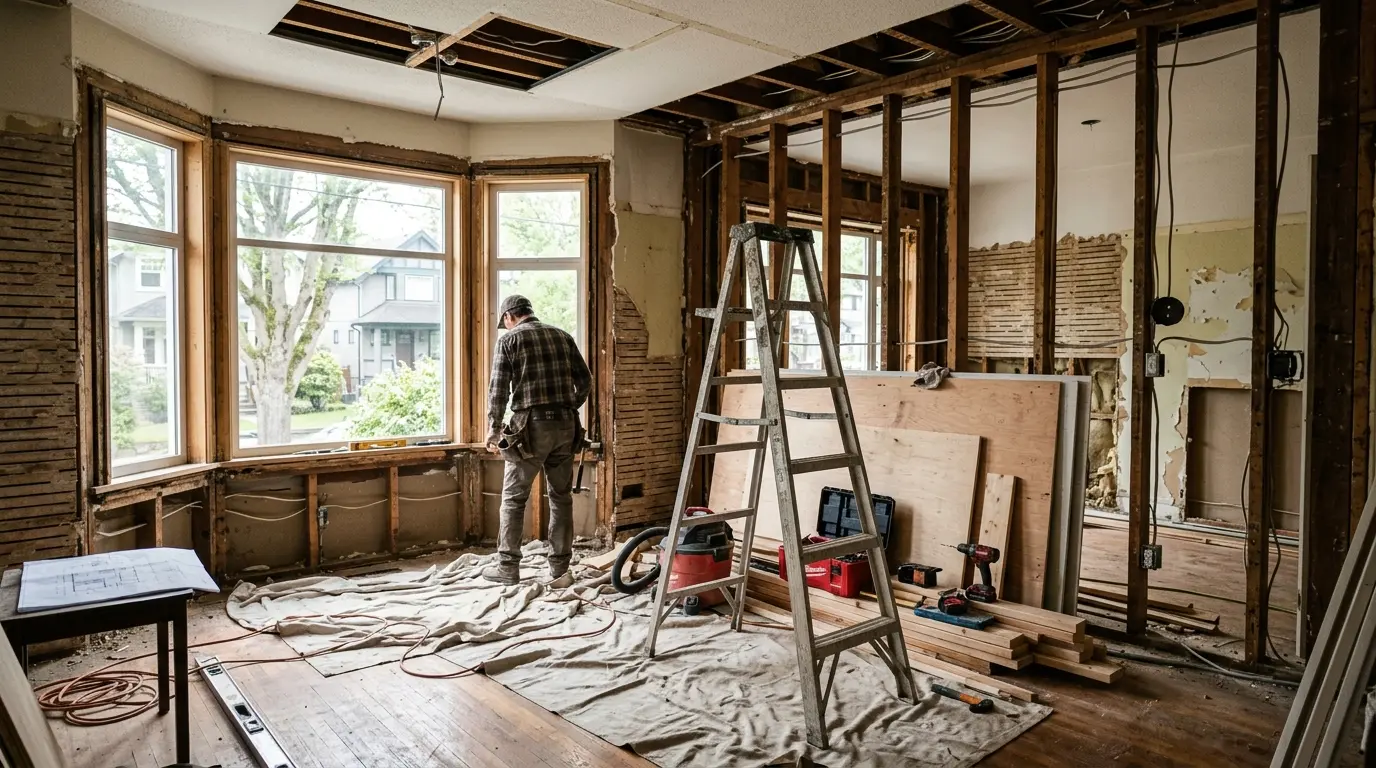
Here’s my favourite trick: bring a marble. Set it on the hardwood in the middle of the room. If it rolls, the floor isn’t level. Some slope is normal in older Vancouver homes — we’re talking about houses built in the 1920s–1960s on every kind of soil. But if the marble takes off like it’s on a racetrack, you’re looking at settlement issues that need investigation.
7. Doors and Windows
Open and close every door you can. Do they stick? Do they swing open on their own? Doors that won’t latch or windows that jam are signs the frame has shifted. In a wood-frame house, this often means the foundation has moved. Check the window sills for condensation damage, rot, or mould — Vancouver’s humidity is relentless.
8. Walls and Ceilings
Look for cracks, especially diagonal ones radiating from door and window corners. Hairline settlement cracks in plaster are typical in older homes. But fresh patches, recently painted-over cracks, or cracks that run through both the drywall and the tape underneath — those are the house telling you something is still moving.
9. Window Condition
Single-pane windows in Vancouver are an energy disaster and a condensation factory. Check whether they’re double-glazed. Look for fogging between panes (seal failure). Test that they open and close smoothly. Replacing windows in a typical Vancouver home costs $15,000–$40,000.
10. Basement Moisture
Go to the basement. Use your nose. That musty smell? It’s moisture, and it’s telling you the waterproofing has failed or the drainage isn’t working. Look for water stains on walls, white mineral deposits (efflorescence), peeling paint, or warped baseboards. Check behind any furniture or boxes pushed against walls — that’s often where sellers hide the evidence.
Kitchen and Bathrooms (Items 11–14)
These are the rooms that cost the most to fix. Pay attention.
11. Water Pressure
Turn on the kitchen faucet. Then turn on the bathroom faucet at the same time. Does the pressure drop significantly? Low pressure or inconsistent flow can mean corroded pipes, undersized supply lines, or issues with the municipal connection. In older Vancouver homes with original galvanized steel plumbing, re-piping costs $8,000–$15,000.
12. Under-Sink Inspection
Open every cabinet door under every sink. Look for moisture, staining, warped wood, or active drips. Check for mould. This is where slow leaks hide for years. While you’re down there, look at the pipes — copper and PEX are good, galvanized steel and older ABS are concerns.
13. Ventilation
Do the bathrooms have working exhaust fans? In Vancouver’s climate, a bathroom without proper ventilation will grow mould. Period. Turn the fan on and hold a tissue near the grille — if it doesn’t pull the tissue up, the fan isn’t actually venting anywhere (a surprisingly common problem in older renovations).
14. Appliance Age
Open the dishwasher, look at the furnace sticker, check the hot water tank label. Appliances have lifespans. A 15-year-old dishwasher is on borrowed time. A 12-year-old hot water tank will need replacing soon ($1,500–$3,000 installed). These aren’t deal-breakers, but they’re negotiation points.
Mechanical Systems (Items 15–19)
This is where the big money hides. Most buyers skip this section entirely because it’s not glamorous. That’s exactly why you shouldn’t.
15. Electrical Panel
Find the panel (usually in the basement or utility room). What’s the amperage? Older Vancouver homes often have 60-amp panels — that’s barely enough for a modern household with AC, EV chargers, and electric cooking. Upgrading to 200 amps costs $3,000–$6,000. If you see a fuse box instead of breakers, or any aluminum wiring (common in 1965–1975 construction), budget for an upgrade.
16. Hot Water Tank
Check the label for the manufacture date. Standard tanks last 8–12 years. If it’s older than 10, you’re on the clock. Tankless systems last longer but cost more to replace. Look for corrosion at the connections or water staining underneath.
17. Furnace or Heat Pump
A gas furnace lasts 15–20 years. Check the age. Listen for unusual noises when it runs. If the house has a heat pump (increasingly common in Vancouver since the BC Energy Step Code tightened requirements), check whether it’s a newer model or an early-generation unit. Replacement costs: $5,000–$8,000 for a furnace, $8,000–$15,000 for a heat pump system.
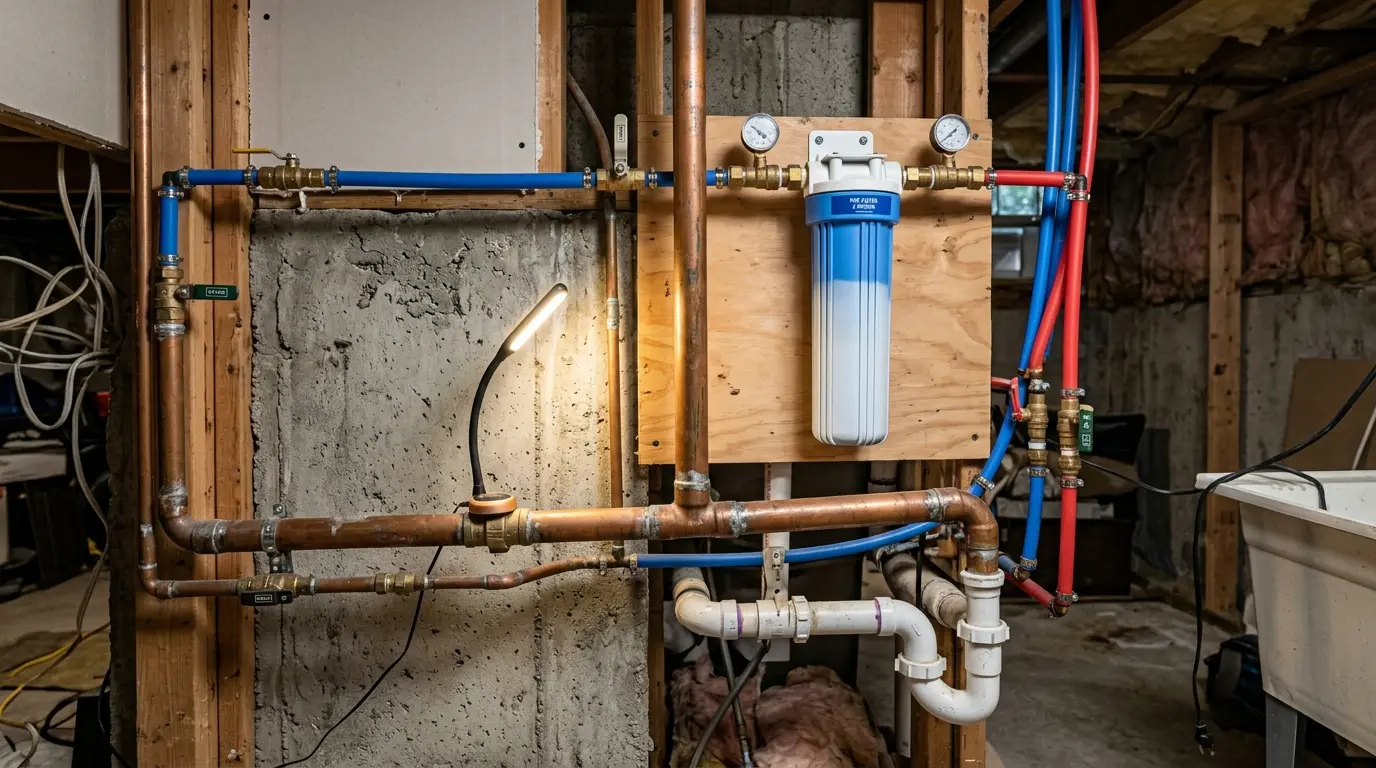
18. Visible Plumbing
In the basement or mechanical room, look at exposed pipes. Copper is fine. PEX (flexible plastic) is fine. Galvanized steel (grey, threaded joints) is a ticking clock — it corrodes from the inside and restricts flow. If you see a mix of materials with rubber couplings joining them, someone did a patch job rather than a proper re-pipe.
19. Insulation
If you can see into the attic or crawl space, look at the insulation. Is there any? How much? Vancouver homes built before 1980 often have minimal insulation. Vermiculite insulation (small grey/brown granules) may contain asbestos — homes built before 1990 should have an asbestos survey before any renovation work, as required by WorkSafeBC. Since January 2024, BC law requires all asbestos removal contractors to be licensed.
Condo-Specific (Items 20–23)
Buying a condo in Vancouver comes with a whole separate layer of due diligence. Here’s what to look for beyond the unit itself.
20. Common Areas Maintenance
Walk the hallways slowly. Look at the carpet, the paint, the lighting. Well-maintained common areas signal a well-run strata. Peeling paint, burnt-out lights, cracked tiles, and musty smells in the corridors suggest the strata is either underfunded or poorly managed — and that means special assessments in your future.
21. Parking and Storage
Go look at your actual stall. Is it accessible? Can you fit your vehicle? Is the parking garage dry or is there water intrusion? Check the storage locker — some buildings have lockers that flood, have pest issues, or are so small they’re essentially useless. These details affect your daily life and resale value.
22. Building Envelope
This is the big one for Vancouver condos. If the building was constructed between the mid-1980s and early 2000s, you could be looking at a leaky condo era building. Approximately 45% of all condo units built in BC between 1985 and 2000 had moisture problems, and 90% of three- to four-storey wood-frame buildings built during that period faced serious issues — resulting in over $4 billion in damage across 900+ buildings and 31,000 units. Ask whether a rainscreen retrofit has been completed. If it hasn’t, walk away unless the price reflects a six-figure remediation cost.
23. Lobby and Hallway Condition
The lobby is the building’s first impression for future buyers when you sell. Is it dated? Recently updated? Does the intercom and security system work? These details affect marketability. Also check whether the building has a concierge or is unmanned — this affects strata fees and security.
The Neighbourhood (Items 24–27)
The house might be perfect, but if the neighbourhood doesn’t work, none of it matters.
24. Noise Levels
Visit at different times. A street that’s quiet at 11am on a Tuesday might be a truck route at 6am or a bar district at midnight. Stand outside and listen. Open the windows inside and listen again. Aircraft noise, SkyTrain rumble, commercial HVAC systems — these things don’t show up in listing photos.
25. Street Parking
If the property doesn’t come with dedicated parking (common in older East Van), drive by on a weekday evening and a weekend. Can you find parking within a block? Is the street permit-only? Vancouver’s parking situation varies wildly by neighbourhood and season.
26. Nearby Construction
Check the City of Vancouver’s development applications map for approved projects nearby. A 6-storey rental building going up next door will mean 18 months of construction noise and could affect your views and privacy permanently. This is one of the most common buyer complaints I hear — “nobody told me about the development.”
27. Walkability and Transit
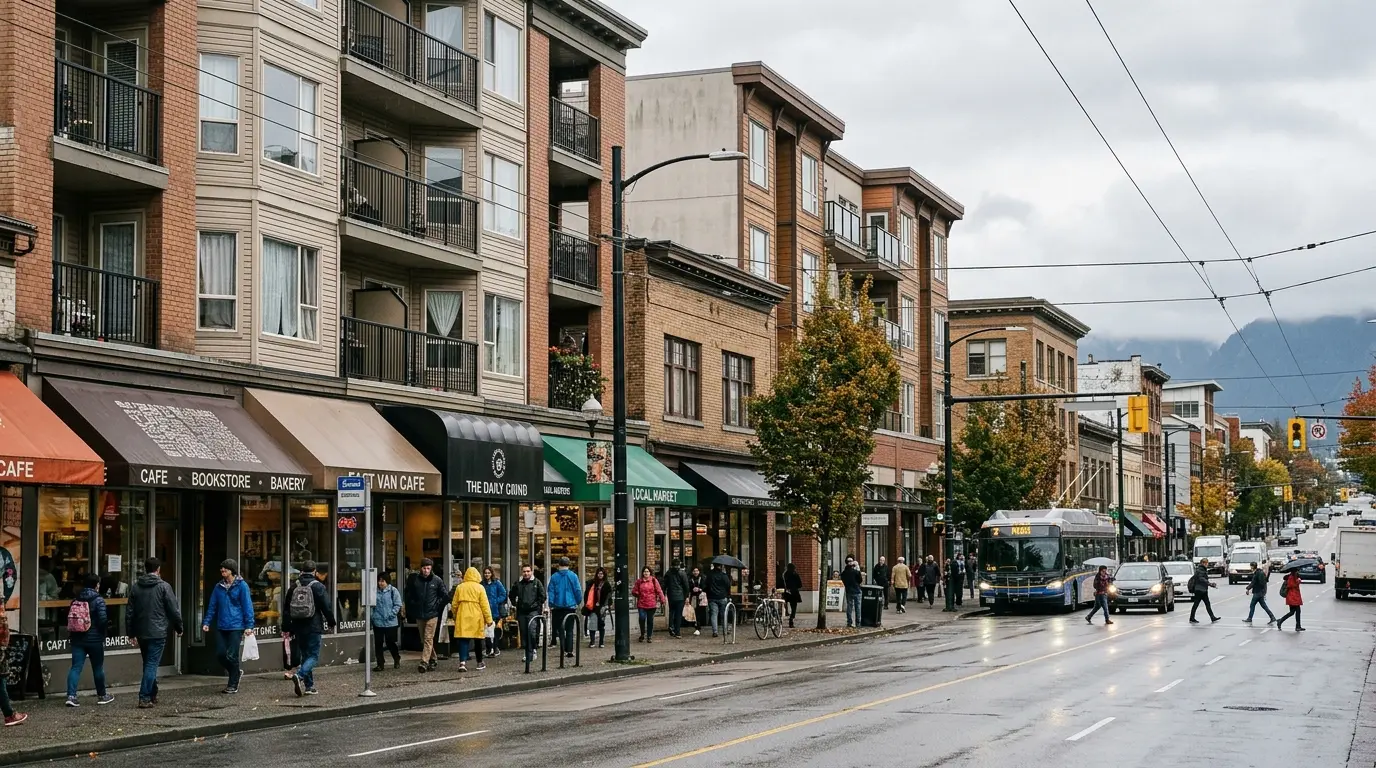
Walk to the nearest grocery store, coffee shop, and transit stop. Time it. What the listing says (“steps to Commercial Drive!”) and what the walk actually feels like on a rainy November evening are two different things. Check the TransLink trip planner for actual commute times to your workplace.
Vancouver-Specific Red Flags
Beyond the 27-point checklist, Vancouver has a few unique hazards that don’t apply in most other Canadian cities.
Peat Bog Areas
If the property is in East Vancouver — particularly around Trout Lake, Mount Pleasant, Hastings-Sunrise, or the Boundary Road corridor — check the City of Vancouver’s VanMap for peat areas. Homes on peat can trade at a 10–20% discount, but foundation problems can cost $30,000–$120,000+ to fix. Read my full peat bog guide before viewing any property in these zones.
Leaky Condo Era Buildings (1985–2000)
I mentioned this in the condo section, but it bears repeating: the leaky condo crisis is the most expensive housing failure in Canadian history. Buildings from this era that haven’t been remediated with a rainscreen system are high-risk purchases. Always request the depreciation report and minutes from the last two years of strata meetings — special assessments for envelope work can run $30,000–$80,000 per unit.
Oil Tank Decommissioning
Most Vancouver homes built before the 1960s were heated by oil furnaces with underground storage tanks. If the home has been converted to gas or electric but the old oil tank was never removed, you’re inheriting an environmental liability. The City of Vancouver requires that unused tanks be removed and any contaminated soil remediated. Decommissioning costs $1,000–$3,000 for a clean removal, but if there’s soil contamination, remediation can run $10,000–$50,000+. Ask the seller directly: “Has an oil tank scan been done?”
Asbestos in Pre-1990 Homes
Asbestos was used in BC construction from the 1950s through 1990 — in insulation, floor tiles, textured ceilings, pipe wrap, and drywall compounds. It’s only a problem if disturbed, but that means any renovation triggers testing requirements. WorkSafeBC mandates that materials installed before 1990 be tested by a qualified professional before any work begins. As of January 2024, all asbestos abatement contractors in BC must be licensed. Budget $2,000–$5,000 for testing and $5,000–$30,000+ for removal if you’re planning renovations.
What Your Phone Can Do at an Open House
You’re already carrying the most useful inspection tool you own. Here’s how to use it.
Compass app — Open your phone’s compass and note which direction the main living spaces face. South and west-facing windows get the best natural light in Vancouver. A north-facing living room will feel cave-like from October through March. This single detail affects both your enjoyment of the space and resale value.
Video recording — Walk through the entire property recording video. You’ll forget details by the time you get home, and the video lets you review things you missed in person. Narrate as you go — “this crack above the bedroom door, water stain on the basement ceiling” — so you don’t have to remember what caught your eye.
Cell signal strength — Check your phone signal in every room, especially the basement. Some Vancouver neighbourhoods have dead zones, and if you work from home, this matters. Test both cellular and Wi-Fi (if available).
Camera for serial numbers — Photograph the labels on the furnace, hot water tank, and electrical panel. You can look up manufacture dates and model specifications later.
Questions to Ask the Listing Agent
The trick here is to get information without revealing how interested you are. Ask these casually, like you’re just making conversation.
- “How long has the seller owned the property?” — Short ownership periods (under 3 years) sometimes indicate the seller discovered a problem and is cutting their losses.
- “Have there been any insurance claims?” — Water damage claims, fire, or structural issues will show up on a property’s claims history. The seller isn’t required to volunteer this, but if asked directly, they can’t misrepresent it.
- “Why is the seller moving?” — The answer itself matters less than how they answer it. Vague responses like “just time for a change” when the home is only 2 years old deserve follow-up.
- “What’s included and what’s excluded?” — Get this in writing. That gorgeous built-in shelving unit? The listing agent may tell you the seller is taking it. Those appliances? Clarify now, not during contract negotiations.
- “Has the seller done any renovations? Were permits pulled?” — Unpermitted work is a liability. If the basement suite, deck addition, or kitchen reno was done without permits, it can affect your insurance, your financing, and your ability to sell later.
Frequently Asked Questions
How many open houses should I visit before making an offer?
There’s no magic number, but I tell my clients to see at least 10–15 properties before writing an offer. You need to calibrate your expectations — understand what $800,000 actually buys in your target neighbourhood, what “good condition” really means for a 1960s rancher, and how to spot the difference between cosmetic updates and real renovation work.
Should I bring a home inspector to an open house?
Not to the first viewing. Open houses are for initial screening — you’re deciding whether a property is worth a second look, not committing to buy. Save the home inspector ($400–$600) for the subject removal period after your offer is accepted. But absolutely bring this checklist and your phone.
What’s the biggest red flag most buyers miss at open houses?
Moisture. Every time. Buyers notice kitchen finishes and bathroom tile but completely miss the musty basement, the water staining behind the furnace, or the soft drywall at the base of the bathroom wall. In Vancouver’s climate, water intrusion is the single most expensive problem you can inherit — and it’s the one sellers are best at hiding.
Can I take photos and videos at an open house?
Yes, and you should. Some agents may ask you not to photograph personal items or family photos, which is reasonable. But documenting the property’s condition — cracks, stains, mechanical equipment, electrical panels — is your right as a potential buyer. If an agent discourages you from taking photos of the building’s condition, that itself is a red flag.
Sources
- Leaky Condo Crisis — Wikipedia
- BC Government — Asbestos: Renovations, Public Safety and Tenancy in British Columbia
- City of Vancouver — Underground Storage Tank Removal and Abandonment Permits
- City of Vancouver — Peat Areas VanMap Layer
- WorkSafeBC — Asbestos
Data sourced April 2026. Always conduct professional inspections before making financial decisions.
Ready to Tour Open Houses with Confidence?
I attend open houses with my buyer clients all the time — and I can promise you, having someone who knows what to look for changes everything. I’ve talked clients out of properties that looked gorgeous but had $80,000 in hidden problems, and I’ve found overlooked gems that other buyers passed on because they didn’t understand what they were seeing.
If you’re actively looking in Vancouver, let’s connect. I’ll walk you through the properties that match your criteria and point out everything this checklist covers — plus the neighbourhood-specific issues that only come from 20 years of local experience.
Contact Greyden Douglas at (604) 218-2289 or book a buyer consultation to start your search.
Check out our comprehensive Buyer’s Guide for more on navigating the Vancouver market.
Related Vancouver real estate pages
Continue with local service pages, neighbourhood guides, and actionable resources related to this topic.