Quick answer: Guide to Vancouver's peat bog real estate zones covering locations, property value discounts of 10-20%, foundation solutions costing $30,000-$120,000, financing and insurance challenges, warning signs, and investment potential for buyers willing to do proper due diligence.
Large parts of East Vancouver sit on drained swampland that's still decomposing. Here's where the peat bogs are, what they do to homes, and whether the 10-20% discount is worth the risk.
Want a free assessment for your property?
Leave your name and phone — Greyden will call you back with a personalized market snapshot. No spam, no drip campaigns.
Join 1,000+ Vancouver homeowners. No spam, unsubscribe anytime.
I get asked about peat bogs at least once a week. Usually it’s a buyer who found a suspiciously affordable house in Mount Pleasant or Kensington-Cedar Cottage, did some Googling, and is now panicking about whether the whole thing is going to sink into the earth.
The short answer: no, your house is not going to disappear. But peat is real, it matters, and if you don’t understand it before you buy, it can cost you tens of thousands of dollars in surprises. Let me walk you through what I’ve learned in 20 years of selling homes in these neighbourhoods.
What Actually Is Peat, and Why Is It Under Vancouver?
Peat is decomposing organic matter — leaves, moss, roots — that’s been breaking down for thousands of years. Before Vancouver was a city, much of what’s now East Van was marshland and stream beds. False Creek extended way further inland than it does today, and beaver dams created wetlands all through what we now call Mount Pleasant and Grandview-Woodland.
As Vancouver expanded after WWII, developers drained these wetlands and built houses on what looked like solid ground. It wasn’t. The soil underneath was — and still is — soft, spongy, and constantly shifting as the organic material continues to decompose.
Here’s the thing that surprises most people: peat never stops breaking down. It’s not like the land is slowly firming up. It’s actually doing the opposite. That’s why a house built in 1950 on peat may have been fine for 30 years and then started tilting in the 1980s.
Where Are the Peat Bogs?
The City of Vancouver maintains a peat areas layer on VanMap that shows known peat zones across the city. It’s the first place you should check when evaluating any property in East Vancouver.
The major zones:
Trout Lake / John Hendry Park — Probably the most well-known peat area. The bog extends through Kensington-Cedar Cottage and into Grandview-Woodland, around Prince Edward and Inverness Streets. Trout Lake itself was originally a water source for nearby mills, and beaver activity created the surrounding bog conditions that persist today.
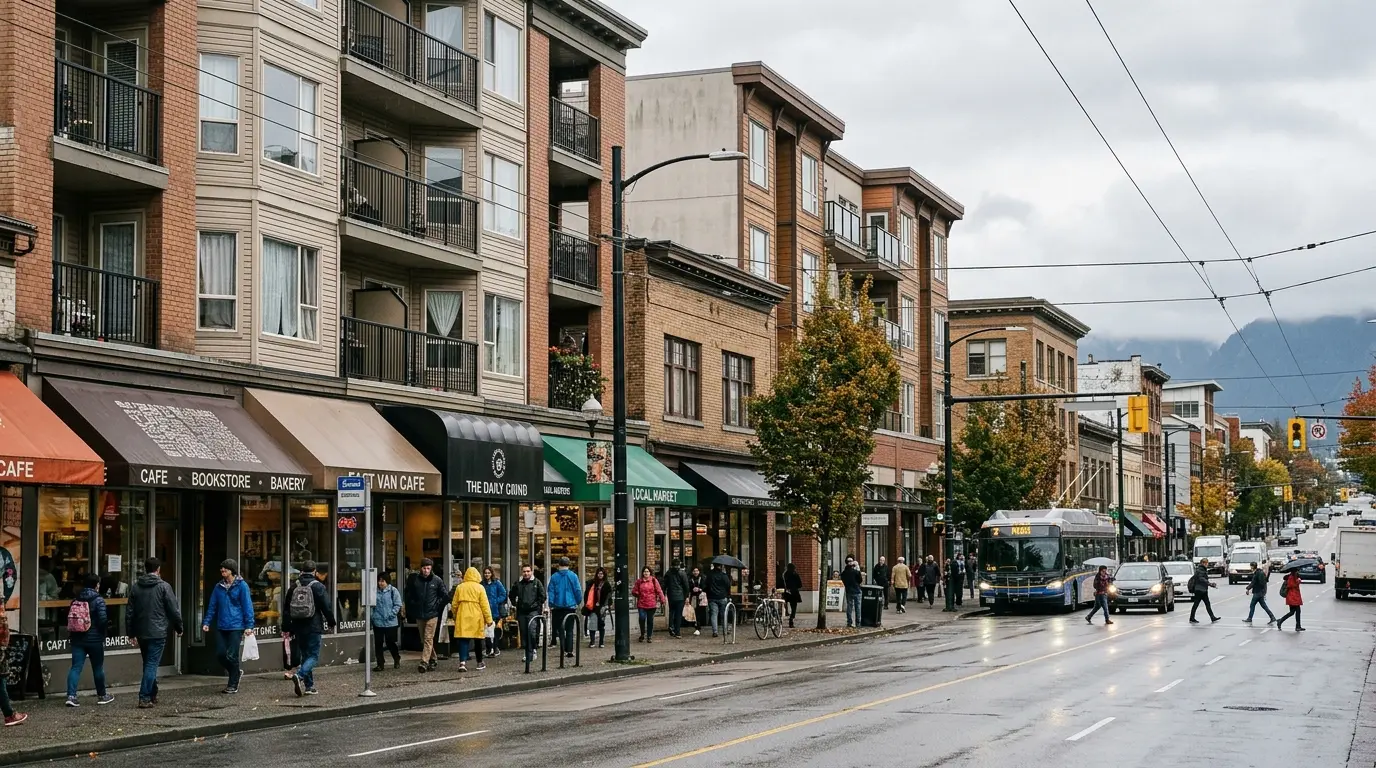
Mount Pleasant (the Tea Swamp) — Walk the residential streets between Main and Kingsway sometime and really look at the houses. Some lean visibly. Sidewalks dip and rise. Fence lines haven’t been straight in decades. The City actually tried rubber sidewalks on 17th Avenue because traditional concrete kept cracking from the soil movement.
Hastings-Sunrise East — Less talked about than Trout Lake, but the area around Adanac Street (bounded by East Pender and Napier, Garden to Slocan) has significant peat. Check individual lots carefully here because depth varies a lot block to block.
South Vancouver — A substantial zone runs from 37th to 47th Avenue between Windsor and Beatrice Streets, with a larger area extending from 43rd to 49th between Nanaimo and Rupert.
The Boundary Road Bog — This is the biggest one. It stretches from Windsor past Boundary Road, from East Pender all the way to Lougheed Highway. Some of the deepest peat deposits in the city. It continues into Burnaby.
Arbutus-Shaughnessy Border — Here’s a fun piece of history: Shaughnessy was deliberately positioned between two bogs by the Canadian Pacific Railway in the early 1900s. The CPR chose the stable ridge for its premium development and left the surrounding bog land for later, less planned growth. You’ll find peat along King Edward from 16th to Edington Drive between Granville and Arbutus.
Smaller pockets show up near Kerrisdale Park, around 44th and Laurel, and between Oak and Ash Streets from 16th to 22nd Avenue.
One important caveat: the VanMap layer shows general zones, not exact property boundaries. Peat depth can vary wildly even within a single block. The only way to know for sure is a site-specific geotechnical report.
How Peat Affects Property Values
Properties on peat generally trade at a 10-20% discount compared to equivalent homes on stable soil. In a market where a detached home in Mount Pleasant might list at $1.8M, that’s a $180,000-$360,000 difference. That’s not a rounding error.
The discount exists because of three compounding factors:
- Foundation risk — Older homes without pile foundations may have active settlement issues that are expensive to fix
- Higher construction costs — Building new on peat costs $50,000-$120,000 more than building on stable ground due to required geotechnical work and pile foundations
- Financing friction — Some lenders make it harder to get a mortgage on peat properties, which reduces your buyer pool
But — and this is where it gets interesting — the discount is often larger than the actual cost of dealing with the peat. That’s the opportunity.
Warning Signs You’re Looking at a Peat Problem
In my experience, you can spot the signs before you even walk through the front door:
Outside the house: Lumpy, uneven roads and sidewalks. Cracked driveways. Fence lines that tilt or lean. Neighbouring houses sitting at different levels. Sinking yards that stay muddy even in dry weather.
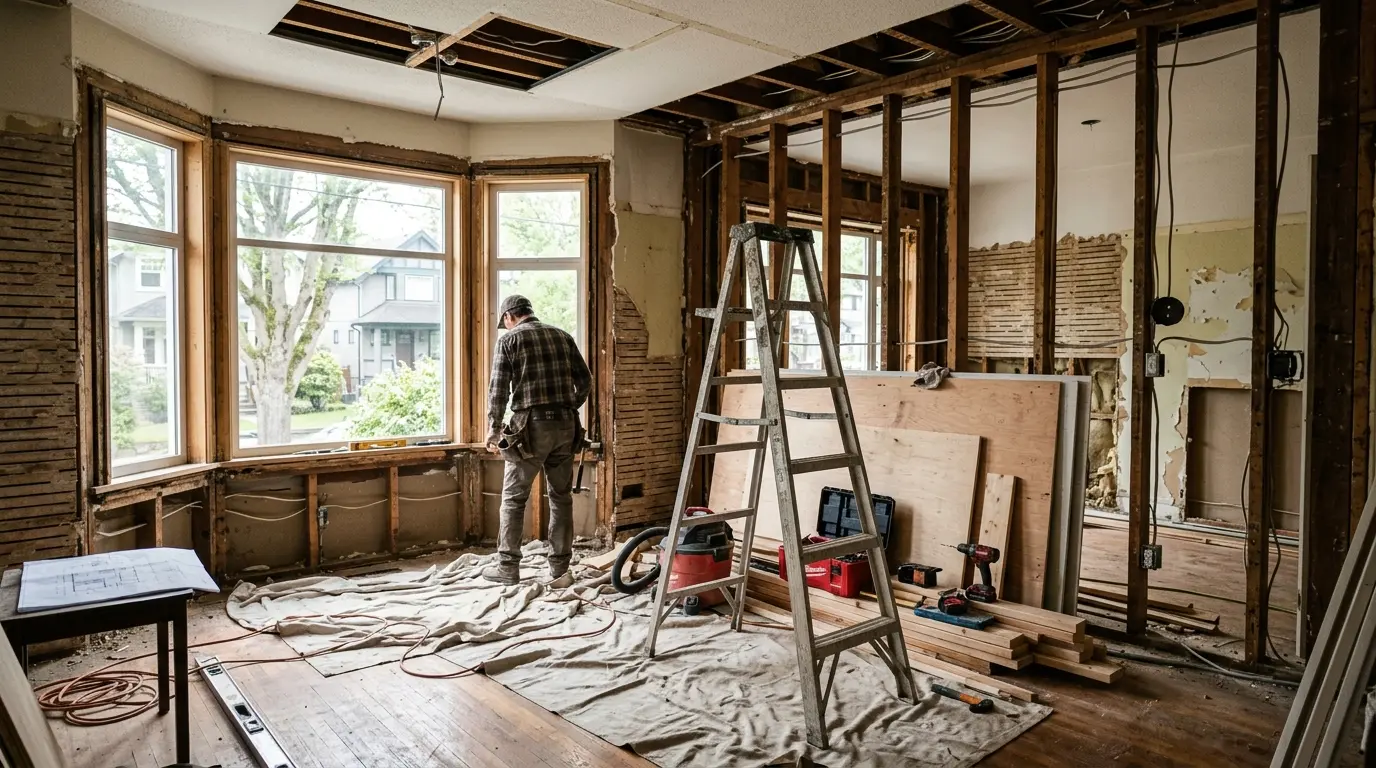
Inside the house: Sloping floors (bring a marble on your next showing — seriously). Doors and windows that stick or won’t close. Diagonal cracks radiating from door frames. Gaps between walls and ceiling. A damp, musty basement. Visible patching on walls and foundations that suggests past repair work.
None of these are automatic deal-breakers. They’re information. The question isn’t “does this house have peat problems?” — it’s “how bad are they, and what will it cost to fix?”
Foundation Solutions and What They Cost
The City of Vancouver requires geotechnical reports and engineered foundations before issuing building permits in mapped peat areas, per Bulletin 2000-057. Here’s what the actual fix looks like:
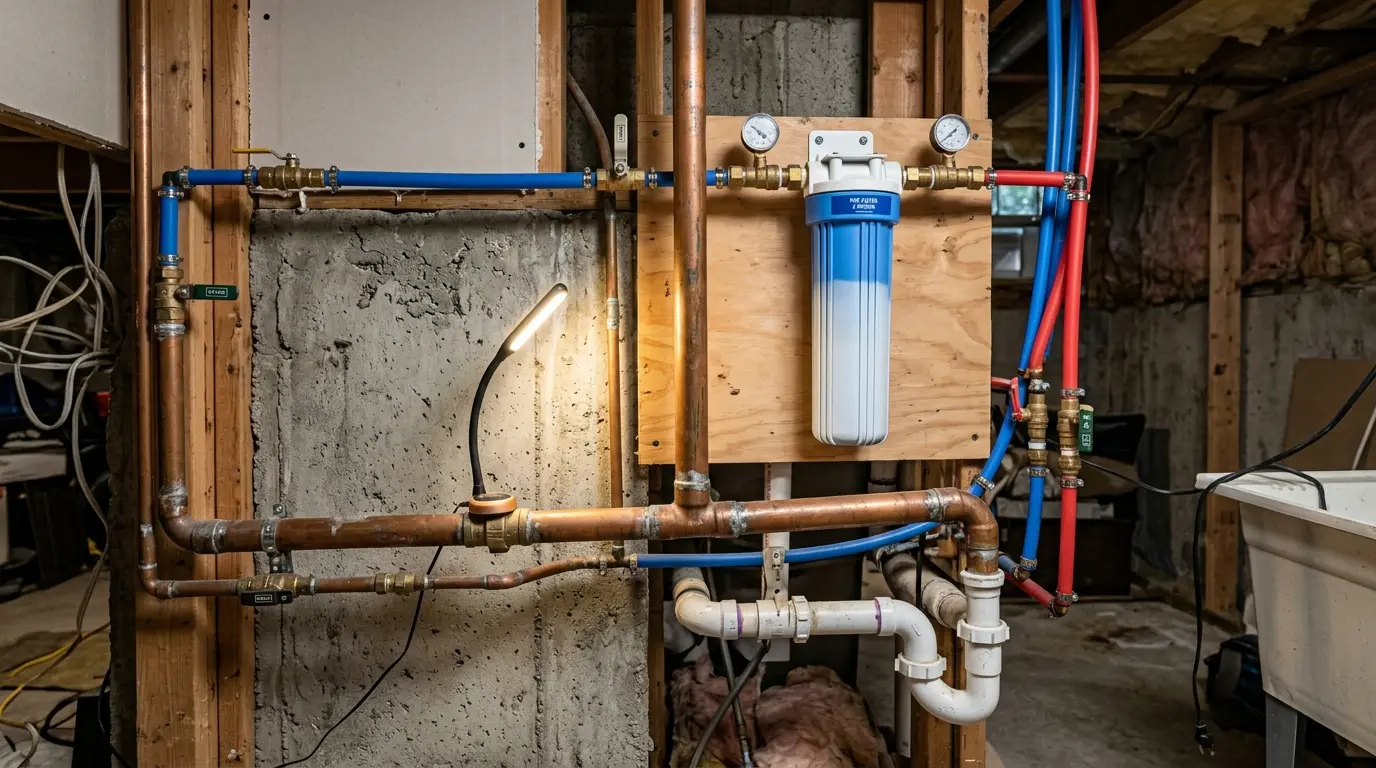
Helical (screw) piles are the preferred method today. They’re steel screws drilled into the ground until they hit solid bearing soil. A geotechnical engineer designs the grid, and grade beams connect everything to support the foundation. Cost: $40,000-$80,000+. This is what I’d recommend for most situations — minimal disruption to neighbouring properties and virtually eliminates future settlement.
Driven concrete piles are the traditional approach. Cement pilings drilled or driven down to firm ground, sometimes 16 or more feet deep. Cost: $30,000-$70,000+. Effective but more disruptive during installation.
Excavation and replacement means digging out the peat and backfilling with compacted gravel. Only works for shallow peat (under 4-5 feet). Cost: $20,000-$50,000. The risk here is that excavation can destabilize neighbouring lots by altering drainage.
Underpinning is for existing homes with active problems. Screw piles or micro-piles get installed beneath the current foundation to lift and stabilize the structure. Cost: $50,000-$120,000+. Expensive, but it can save a house that’s otherwise doomed.
Before any of this happens, you need a geotechnical investigation with core sampling — that runs $5,000-$15,000 depending on complexity.
One thing I want to be clear about: once a house is built on proper pile foundations, the peat issue is essentially solved. The structure is anchored to solid ground below the peat. Modern homes (post-2000) in peat areas were almost certainly built this way, because the City now requires it. The main concern is with older homes on shallow foundations.
Financing and Insurance: The Hidden Costs
This is where peat catches a lot of buyers off guard.
Mortgages: Some lenders require additional inspections or higher down payments (25%+) for peat properties. A few will decline the application altogether. Having a current geotechnical report and evidence of proper foundation work makes a huge difference in your approval chances. Talk to your mortgage broker about peat specifically before you start making offers — don’t find out at the financing condition stage that your lender won’t fund the purchase.
Insurance: Premiums on peat properties typically run 20-40% higher than comparable homes on stable ground. You may also need specialized riders for foundation settling, water damage, and structural movement. Annual foundation inspections ($300-$500) are often required to maintain your coverage. Budget for this — it’s a recurring cost, not a one-time expense.
Should You Buy on Peat? My Honest Take
I’ve sold plenty of homes on peat, and I’ve seen both sides of this. Buyers who did their homework and came out ahead. Buyers who skipped the geotechnical report and spent $90,000 they hadn’t budgeted for.
The math can work in your favour. If you’re buying a $1.5M house at a 15% peat discount, that’s $225,000 in savings. Even if you spend $80,000 on foundation stabilization, you’re still $145,000 ahead of what you would have paid for the same house on firm ground. And once that foundation work is done, the house competes on equal footing at resale.
Where it gets particularly interesting is multiplex development. With Bill 44 opening up single-family lots to 4-6 unit builds, peat lots in desirable East Van neighbourhoods can be smart acquisition targets. You’re buying the land at a discount, and the new build gets pile foundations from day one — so the peat issue disappears entirely for the finished product.
But I’ll be straight with you: this only works if you do the due diligence. Skipping the geotechnical report to save $10,000 is the worst bet in Vancouver real estate. You’re flying blind into a situation where the downside is a cracked foundation and a six-figure repair bill.
The Due Diligence Checklist
Here’s exactly what I tell my clients:
- Check VanMap first. Before you view any East Van property, pull up the peat layer. Takes 30 seconds.
- Order a geotechnical report. $5,000-$15,000. Non-negotiable for any property in a mapped peat zone.
- Get a structural engineer, not just a home inspector. Standard home inspections are visual. You need someone who can evaluate differential settlement and foundation integrity. $500-$1,500.
- Research the foundation. When was the house built? Check building permits with the City to find out if pile foundations were installed. Post-2000 builds likely have them.
- Budget for remediation. Get quotes before making an offer, not after. Use the costs as negotiation leverage.
- Confirm financing early. Talk to your broker about peat before you write an offer. Not all lenders will fund these purchases.
For a deeper dive into all of these topics — including a detailed breakdown of every peat zone in Vancouver — check out our complete Vancouver Peat Bog Real Estate Guide.
Key Takeaways
- Peat bogs cover significant portions of East Vancouver, particularly around Trout Lake, Mount Pleasant, Hastings-Sunrise, and the Boundary Road corridor
- Properties on peat typically sell at a 10-20% discount, which can mean $150,000-$300,000+ in savings on a detached home
- Modern pile foundations solve the peat problem permanently — the main risk is older homes built on shallow foundations
- Foundation remediation costs $30,000-$120,000 depending on method and peat depth, but often costs less than the purchase discount
- Always get a geotechnical report before buying in a peat zone — this is the single most important step
Frequently Asked Questions
How do I check if a Vancouver property is on peat bog land?
The City of Vancouver’s VanMap tool has a “Peat Areas” layer under Districts and Areas that shows known peat zones in dark green. Search for the property address, toggle on the layer, and check if it falls within a green zone. Note that VanMap shows general areas — for a specific lot, you need a geotechnical soil report with core sampling ($5,000-$15,000).
Are newer homes on peat safe to buy?
Generally yes. Homes built after roughly 2000 in mapped peat areas were required to have geotechnical reports and engineered pile foundations as a condition of their building permit. Once a home sits on piles anchored to solid bearing soil, the peat above doesn’t affect the structure. Verify by checking the property’s building permits with the City.
How much does it cost to fix a house sinking on peat?
It depends on severity and method. Underpinning an existing home with screw piles or micro-piles typically costs $50,000-$120,000+. For less severe cases, targeted foundation repair may run $30,000-$70,000. A geotechnical engineer needs to assess the specific situation before you can get accurate quotes.
Can I get a mortgage for a peat bog property?
Yes, but with caveats. Some lenders require a current geotechnical report, higher down payments (25%+), or additional inspections. A few may decline. Work with a mortgage broker experienced in non-standard Vancouver properties, and get pre-approval sorted before making offers.
Is buying on peat a good investment?
It can be, if you do the math carefully. A 15% purchase discount on a $1.5M home saves $225,000. Even after spending $80,000 on foundation work, you’re ahead — and the stabilized home competes equally at resale. Peat lots are also interesting for multiplex development under Bill 44, since new builds get proper pile foundations from day one.
Sources
- City of Vancouver — Peat Areas VanMap Layer
- City of Vancouver — Bulletin 2000-057: Foundations in Areas of Peat Bogs or Soft Soils
- City of Vancouver — Bulletin 2016-005: Geotechnical and Shoring Design
- Samantha Kwong — The Hidden Ground Beneath: What Buying or Selling on Peat Means, Oct 2025
- icon&co — Peat Bogs: Vancouver’s Soggy Underbelly
- Leo Wilk Real Estate — Owning a Home in Vancouver’s Peat Bogs
- Vancouver Real Estate Podcast — A Complete Guide to Vancouver’s Peat Bog Areas with Jeff Langford
Data sourced April 2026. Peat conditions are site-specific — always verify with a geotechnical engineer before making financial decisions.
Next Steps: Work with Rain City Properties
If you’re looking at a property in one of Vancouver’s peat zones, don’t go it alone. I’ve been selling in these neighbourhoods for 20 years and I know which blocks have the deepest peat, which builders do the best foundation work, and how to structure an offer that accounts for soil conditions.
Whether you’re buying your first home in Mount Pleasant, evaluating a teardown in Hastings-Sunrise for multiplex development, or trying to figure out if that suspiciously cheap listing in Kensington-Cedar Cottage is a deal or a trap — I can help you figure it out.
Contact Greyden Douglas directly at (604) 218-2289 or book a call to discuss your Vancouver real estate goals.
Related Vancouver real estate pages
Continue with local service pages, neighbourhood guides, and actionable resources related to this topic.