Vancouver Peat Bog Real Estate Guide
Everything you need to know about buying, building, and owning property on Vancouver's peat bog land. Where the bogs are, what they mean for your home, and how to protect your investment.
The bottom line: Parts of Vancouver were built on drained swampland with soft, unstable soil called peat. Homes on peat typically sell at a 10-20% discount, but modern pile foundations make new construction perfectly safe. The key is knowing where the bogs are, understanding the costs, and getting proper inspections before you buy.
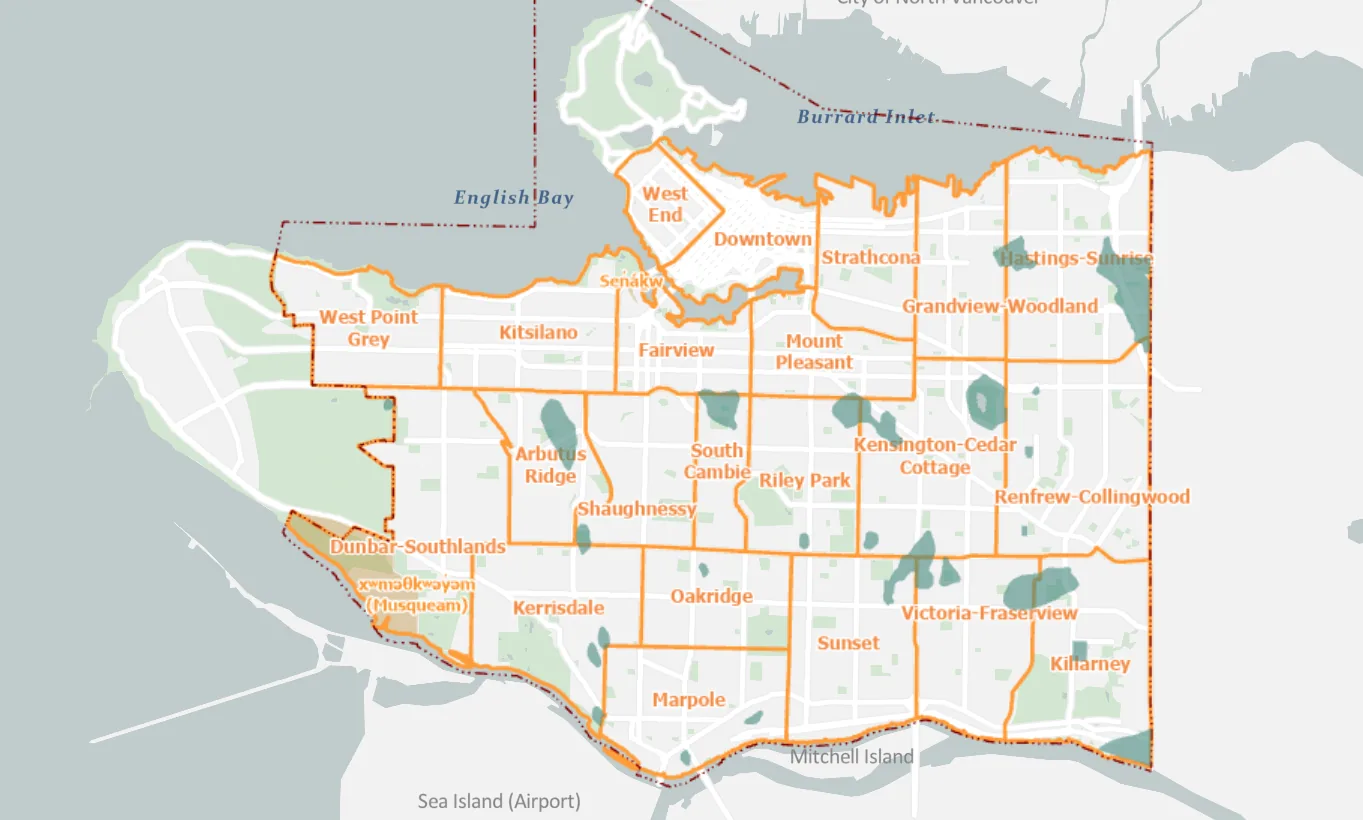
Vancouver's peat bog areas (shown in teal/green) by neighbourhood. Source: City of Vancouver VanMap
What Is Peat Bog Land?
Peat bogs are wetlands composed of slowly decomposing organic matter — leaves, moss, roots, and other vegetation — that has accumulated over thousands of years. Think of peat like a sponge full of water: it expands when wet and contracts when dry, creating constant shifting and movement in the soil.
Before Vancouver was a city, much of what is now East Vancouver was swampland. Historical streams and rivers flowed through areas like Broadway, and False Creek was much larger than it is today. As the city grew, these wetlands were drained and filled in. Early developers built streets and houses on what appeared to be solid ground — not realizing the soil beneath was still soft and unstable.
The result? Decades later, that peat is still decomposing, still shifting, and still causing problems for homes built without proper foundations. It's why some Vancouver streets are lumpy, some houses lean, and some fences look like they're slowly melting into the ground.
Peat Bog Impact by the Numbers
10-20%
Typical property discount vs. stable soil
16+ ft
Depth piles may need to reach firm ground
20-40%
Higher insurance premiums
8+
Major peat zones across Vancouver
Where Are Vancouver's Peat Bogs?
The City of Vancouver maps known peat areas through VanMap's Peat Areas layer. Here are the major zones and what to expect in each.
How to Check a Specific Address
- Visit maps.vancouver.ca (VanMap)
- Search for the property address in the search bar
- Open the layer menu and navigate to Districts and Areas
- Toggle on the Peat Areas layer (shown in dark green)
- If the property falls within a green zone, it's in a mapped peat area
Important: VanMap shows general peat zones, not precise property boundaries. A site-specific geotechnical report is the only way to confirm soil conditions for an individual lot.
Trout Lake / John Hendry Park
Kensington-Cedar Cottage, Grandview-Woodland Moderate to deepBoundaries: Surrounding Trout Lake, extending along Prince Edward and Inverness Streets
One of the most well-known peat areas. Trout Lake originally supplied water to local mills and beaver activity created the surrounding bog conditions.
Mount Pleasant (Tea Swamp)
Mount Pleasant ModerateBoundaries: Pockets from 16th to 24th Avenue, many blocks near Kingsway
The historic "Tea Swamp" is responsible for the neighbourhood's famously lopsided houses and lumpy streets. The City has experimented with rubber sidewalks on 17th Avenue to manage ongoing settlement.
Hastings-Sunrise East
Hastings-Sunrise ModerateBoundaries: Adanac Street area, bounded by East Pender and Napier, Garden to Slocan Street
Less widely known than the Trout Lake area but still significant. Check individual lots carefully as peat depth varies.
South Vancouver (Windsor-Beatrice)
Victoria-Fraserview, Killarney Moderate to deepBoundaries: 37th to 47th Avenue between Windsor and Beatrice Streets
A substantial peat zone in South Vancouver. A larger area extends from 43rd to 49th Avenue between Nanaimo and Rupert Street.
Boundary Road Bog
Renfrew-Collingwood, Hastings-Sunrise Deep — largest bogBoundaries: Windsor extending past Boundary Road, East Pender to Lougheed Highway
The largest contiguous peat area in Vancouver, extending into Burnaby. Some of the deepest peat deposits in the city.
Arbutus-Shaughnessy Border
Arbutus Ridge, Shaughnessy ModerateBoundaries: King Edward Street from 16th Ave to Edington Drive, between Granville and Arbutus
Shaughnessy was strategically positioned between two bogs by the Canadian Pacific Railway in the early 1900s. Peat areas line its eastern and western edges.
Oakridge-Cambie
Oakridge, South Cambie Light to moderateBoundaries: 16th to 22nd Avenue, between Oak and Ash Streets
A narrower peat zone that's less severe than East Van areas but still requires inspection.
Scattered Small Pockets
Kerrisdale, Marpole LightBoundaries: Near Kerrisdale Park; 44th and Laurel; 60th and Maple to 34th and Angus
Smaller isolated pockets. Easy to miss on the map but still relevant for individual property purchases.
Warning Signs: How to Spot Peat Bog Problems
Whether you're walking through a neighbourhood or viewing a property, these are the telltale signs you're on peat bog land with foundation issues.
Exterior Warning Signs
- ! Lumpy, uneven roads and sidewalks in front of the property
- ! Cracked or heaving driveways and pathways
- ! Fence lines that tilt, lean, or are visibly uneven
- ! Neighbouring houses that appear to sit at different levels
- ! Sinking or perpetually muddy yards
- ! Visible separation between the house and attached garage or porch
Interior Warning Signs
- ! Sloping or uneven floors (roll a marble to test)
- ! Doors and windows that stick, jam, or won't close properly
- ! Diagonal cracks radiating from door and window frames
- ! Gaps between walls and ceiling or walls and floor
- ! Damp, musty basement or crawl space
- ! Visible patching or past repair work on walls and foundations
Foundation Solutions for Peat Bog Properties
The City of Vancouver requires specific geotechnical reports and engineered foundations before issuing building permits in mapped peat areas. Here are the primary construction methods used.
Helical (Screw) Piles
Preferred methodGiant steel screws drilled into the ground until they reach solid bearing soil. A grid of helical piles is designed by a geotechnical engineer, and grade beams connect the piles to support a slab-on-grade foundation. This method virtually eliminates settlement and minimizes impact on neighbouring properties.
Driven Concrete Piles
Cement pilings driven or drilled down to solid ground (sometimes 16+ feet deep), then connected to the foundation above. This is the traditional approach used in Vancouver's peat zones for decades. Highly effective but more disruptive during installation than helical piles.
Excavation & Replacement
Excavating the peat and replacing it with compacted gravel or road base to create stable bearing soil. This is more economical for shallow peat (under 4-5 feet) but carries risks: excavation can destabilize neighbouring properties by altering drainage and subsurface water flow.
Underpinning (for Existing Homes)
Retrofitting an existing home by installing screw piles or micro-piles beneath the current foundation and lifting/stabilizing the structure. This is the primary remediation option for older homes with settling problems. Complex and expensive, but can be transformative.
Required Reports for New Construction
Before issuing a building permit on mapped peat land, the City of Vancouver requires:
- Geotechnical investigation — Core sampling to determine peat depth, soil composition, and bearing capacity ($5,000 - $15,000)
- Settlement analysis — Engineering report predicting how much the soil will settle and over what timeframe
- Foundation design — Engineered foundation plan specifying pile type, depth, spacing, and grade beam configuration
- Structural engineer sign-off — Confirmation that the proposed structure is compatible with the foundation design
Buying in a peat bog area? Get expert guidance.
Send us the property address and we'll help you understand the soil conditions, required inspections, and what to budget for. Free, no-obligation consultation.
Join 1,000+ Vancouver homeowners. No spam, unsubscribe anytime.
Buying a Home on Peat Bog Land: Due Diligence Checklist
Check VanMap Before You Fall in Love
Before visiting any property in East Vancouver or the areas listed above, check the peat layer on VanMap. Knowing you're in a peat zone changes how you evaluate the property, what questions you ask, and what inspections you need.
Order a Geotechnical Report
Don't rely on the listing agent's word. For any property in a peat area, invest in an independent geotechnical investigation ($5,000-$15,000). The report will tell you the peat depth, bearing capacity, and what foundation work (if any) is needed. This is non-negotiable due diligence.
Get a Structural Inspection (Not Just a Home Inspection)
Standard home inspections are visual assessments. For a peat property, you need a structural engineer to evaluate the foundation, look for signs of differential settlement, and assess whether the structure is stable or actively moving. This costs $500-$1,500 but can save you from a six-figure mistake.
Research the Foundation Type
Find out when the home was built and what type of foundation it has. Post-2000 homes in peat areas likely have pile foundations (check building permits with the City). Pre-1990 homes are much more likely to have conventional shallow foundations that are vulnerable to settlement.
Budget for Remediation
If the home has foundation issues, get quotes for underpinning or stabilization before making an offer. Use these costs as leverage in your negotiations — the 10-20% peat discount should reflect the actual cost of bringing the foundation to modern standards.
Confirm Financing Early
Talk to your mortgage broker about peat specifically. Some lenders require soil reports before approval, and some have higher down payment requirements (25%+). Getting pre-approved with a lender who understands peat properties avoids last-minute financing surprises.
If the price seems too good to be true, it probably involves peat. A significantly underpriced home in an otherwise expensive East Vancouver neighbourhood is often sitting on bog land. That's not necessarily a deal-breaker — but it means you need to investigate before you celebrate.
Financing & Insurance on Peat Bog Properties
Mortgage Considerations
- -Some lenders require 25%+ down payment for peat properties
- -Current geotechnical reports may be required for approval
- -A few lenders decline peat properties altogether
- -Homes with modern pile foundations have fewer financing issues
- -Work with a broker experienced in non-standard properties
Insurance Considerations
- -Premiums typically 20-40% higher than stable ground
- -May need specialized coverage for foundation settling
- -Water damage and structural movement riders recommended
- -Annual foundation inspection ($300-$500) helps maintain coverage
- -Shop around — non-standard property specialists offer better rates
Need to estimate your mortgage payments? Use our mortgage calculator to model different scenarios, and our closing cost calculator to budget for the full purchase.
Peat Bog Properties as Investment Opportunities
For informed buyers, peat bog properties can be among the best value plays in Vancouver's real estate market. The 10-20% discount means you're buying into desirable East Vancouver neighbourhoods — Mount Pleasant, Hastings-Sunrise, Kensington-Cedar Cottage — at significantly below market rates for comparable homes on stable ground.
Why It Can Work
- +10-20% discount on purchase price in prime neighbourhoods
- +Modern foundations solve the problem permanently
- +Multiplex development potential under Bill 44 zoning
- +Stabilized properties compete on equal footing at resale
- +Less competition from uninformed buyers
Risks to Manage
- -Foundation costs can exceed estimates if peat is deeper than expected
- -Higher insurance and maintenance costs reduce returns
- -Some buyers still avoid peat properties, limiting resale pool
- -Financing constraints may reduce leverage opportunities
- -Peat depth varies unpredictably — even within one lot
Thinking about investing in East Vancouver? Read our Investment Guide for a broader look at Vancouver's real estate investment landscape, including multiplex development opportunities.
Selling a Home on Peat Bog Land
If you're selling a property on peat, proactive disclosure and documentation are your best tools. Buyers who understand the soil conditions and see evidence of proper management will pay more than buyers who discover the issue during due diligence.
Get a Current Geotechnical Report
A recent soil report ($5,000-$8,000 for sellers) demonstrates transparency and gives buyers confidence. It removes the unknown, which is what buyers fear most about peat properties.
Document All Foundation Work
If you've invested in underpinning, pile installation, or drainage improvements, compile all permits, engineering reports, and receipts. This documentation directly justifies a higher asking price by proving the peat issue has been addressed.
Price Strategically
If the foundation has been stabilized to modern standards, your home should trade close to comparable non-peat properties. If foundation issues remain, price to reflect the estimated cost of remediation — trying to hide the issue will only lead to failed inspections and collapsed deals.
The History Behind Vancouver's Peat Bogs
Before European settlement, much of East Vancouver was a network of streams, marshes, and beaver-dammed wetlands. False Creek extended much further inland than its current boundaries, and Trout Lake — originally called Lake of Little Fishes by the Musqueam — supplied water to nearby mills as late as the 1860s.
As Vancouver expanded post-WWII, developers drained these wetlands to create affordable building lots. The demand for housing was enormous and the land was cheap. Streets were laid, houses were framed, and families moved in — few understanding that the ground beneath them was still decomposing organic matter that would never fully stabilize.
The Mount Pleasant area, known historically as the "Tea Swamp," is perhaps the most visible example. Walk along the residential streets between Main and Kingsway and you'll see homes that seem to have a quirky angle, sidewalks that dip and rise, and fence lines that haven't been straight in decades. The City has even experimented with rubber sidewalks on 17th Avenue to cope with the constant soil movement.
Interestingly, Vancouver's wealthiest neighbourhood — Shaughnessy — was deliberately positioned between two large bogs by the Canadian Pacific Railway in the early 1900s. The CPR, which owned the land, chose the ridge of stable ground between the bogs for its premium development, while the surrounding bog land was left for later, less planned development.
Today, the Camosun Bog in Pacific Spirit Park offers a glimpse of what Vancouver's original peatlands looked like. Ongoing restoration work and public boardwalks make it a fascinating visit for anyone interested in understanding the landscape that lies beneath the city's streets.
Frequently Asked Questions
What is a peat bog and why does it matter for Vancouver real estate?
Peat bogs are wetlands made up of slowly decomposing organic matter that accumulated over thousands of years. Parts of Vancouver were originally swampland that was drained as the city expanded. The soil beneath these areas is soft and unstable — it expands when wet and contracts when dry, causing structural problems for homes built without proper foundations. Homes on peat bog land typically sell at a 10-20% discount compared to equivalent homes on stable soil.
Where are the peat bog areas in Vancouver?
The largest peat bog zones are in East Vancouver, particularly around Trout Lake, Mount Pleasant (the historic Tea Swamp), and Hastings-Sunrise. Other affected areas include sections of Kensington-Cedar Cottage along Prince Edward and Inverness Streets, pockets near Kingsway from 16th to 24th Avenue, areas between 37th and 47th Avenue (Windsor to Beatrice), and the large bog stretching from Windsor past Boundary Road. Smaller pockets exist in Kerrisdale, Arbutus, and near 44th and Laurel. Use the City of Vancouver's VanMap peat layer to check specific addresses.
How much does it cost to build on peat bog land in Vancouver?
Building on peat requires additional steps that increase costs significantly. A geotechnical soil report costs $5,000-$15,000 depending on complexity. Helical pile or cement piling foundations add $30,000-$80,000+ to construction costs, depending on how deep solid ground lies (sometimes 16+ feet down). Total additional costs for foundation work on a peat bog lot can be $50,000-$120,000 compared to building on stable ground.
Can I get a mortgage for a home on peat bog land?
Yes, but it may be more challenging. Some lenders require additional inspections, soil reports, or higher down payments (25%+) for properties on peat. A few lenders may decline altogether. Having a current geotechnical report and evidence of proper foundation work significantly improves your chances of mortgage approval. Work with a mortgage broker experienced with Vancouver peat properties.
How do I check if a property is on peat bog land?
The City of Vancouver's VanMap tool has a "Peat Areas" layer (under Districts and Areas) that shows known peat zones in dark green. However, this map is not definitive — it shows general areas, not precise property boundaries. For a specific property, you need a geotechnical soil report with core sampling to confirm soil conditions. Always verify before purchasing, as peat depth can vary significantly even within a single block.
Are newer homes on peat bog land safe to buy?
Newer homes (generally post-2000) built on peat are typically safe because the City of Vancouver now requires geotechnical reports and engineered pile foundations before issuing building permits. Once a home is built on properly designed pile foundations anchored to solid bearing soil, the structure is stable and settlement is minimal. The primary concern is with older homes (especially pre-1990s) that were built on shallow foundations without modern engineering.
What are the warning signs that a house has peat bog problems?
Look for sloping or uneven floors, doors and windows that stick or won't close properly, cracks in walls (especially diagonal cracks around door frames), tilted fence lines, separation between walls and ceiling, a damp or musty basement, and cracked or heaving sidewalks and driveways. Outside, look for sinking yards, lumpy roads, and neighbouring homes that appear to lean or sit at different levels. These signs indicate ongoing soil movement and potential structural issues.
Is buying a home on peat bog land a good investment?
It depends on the property and your approach. Homes on peat trade at a 10-20% discount, which can represent significant savings in Vancouver's market. If the home has modern pile foundations, or if you budget for proper foundation stabilization, peat properties in desirable neighbourhoods like Mount Pleasant or Hastings-Sunrise can offer excellent value. The key is thorough due diligence, realistic budgeting for any required remediation, and working with professionals who understand peat construction.
Does home insurance cost more on peat bog properties?
Yes. Insurance premiums for homes on peat are typically 20-40% higher than comparable properties on stable ground. Insurers factor in the elevated risk of foundation settling, water damage, and structural movement. You may need specialized coverage riders for foundation-related claims. Shopping around with brokers who specialize in non-standard properties can help you find competitive rates.
What foundation types work best on peat in Vancouver?
The two most common approaches are helical (screw) piles and driven concrete piles. Helical piles are giant steel screws drilled into the ground until they reach bearing soil, then connected by grade beams — this is the preferred method as it minimizes impact on neighbouring properties. Excavation and replacement (removing peat and backfilling with compacted gravel) works for shallower peat but risks destabilizing adjacent lots. The right approach depends on peat depth and site conditions, determined by a geotechnical engineer.
Need Expert Guidance on a Peat Bog Property?
With over 20 years of experience in Vancouver real estate, we've helped hundreds of buyers navigate peat bog purchases with confidence. Whether you're evaluating a property, planning construction, or preparing to sell, we'll guide you through every step.