Quick answer: Data-backed pricing strategy guide for Vancouver home sellers in spring 2026. March GVR data shows 2,032 sales (31.8% below 10-year average) with 14,774 active listings and benchmarks down 6.8-8.2% year-over-year. Argues for pricing to current market data rather than historical comps, with practical tips on staging, pre-inspections, and the multiplex angle for RS-zoned lots.
The spring rush never came. With sales 31.8% below the 10-year average and inventory at multi-year highs, pricing your home right the first time is the difference between sold and stale. Here's what's working for my sellers right now.
Want a free assessment for your property?
Leave your name and phone — Greyden will call you back with a personalized market snapshot. No spam, no drip campaigns.
Join 1,000+ Vancouver homeowners. No spam, unsubscribe anytime.
I have had more uncomfortable conversations with sellers this year than in any year I can remember. The conversation usually goes something like this: “But my neighbour sold for $1.4 million in 2022.” And I have to say, as gently as I can, that 2022 is not coming back — not this year, and probably not next year either.
The spring market that sellers count on every year — that reliable wave of motivated buyers who push prices up between March and June — has not shown up in 2026. And if you are planning to list your home, you need to understand what that means for your pricing strategy before you make a mistake that costs you months and tens of thousands of dollars.
The Spring That Wasn’t
Every year, the real estate industry talks about the “spring rush.” Buyers come out of hibernation, listings get multiple offers, prices tick up. It is the season sellers wait for.
In 2026, it hasn’t happened.
Greater Vancouver Realtors’ March 2026 report tells the story in three numbers:
| Metric | March 2026 | Year-over-Year | vs. 10-Year Average |
|---|---|---|---|
| Residential sales | 2,032 | -2.8% | -31.8% |
| New listings | 5,792 | -10.3% | — |
| Active listings | 14,774 | +1.6% | +38% |
| Sales-to-active ratio | 14.2% | — | — |
Source: GVR Monthly Market Report, March 2026
Sales running nearly 32% below the 10-year average. Active listings sitting 38% above it. That is not a slow spring — that is a market where buyers have options, time, and leverage, and they know it.
Andrew Lis, GVR’s chief economist, noted that “the aggregate total masks an emerging divergence among market segments,” with detached sales actually rising while multifamily activity has slowed. But the broader picture is clear: there are far more homes for sale than there are buyers willing to purchase them.
Benchmark Prices: Where We Actually Are
Here is the part that stings. The benchmark prices — the best measure of what a “typical” home is worth in each category — are down meaningfully from a year ago:
| Property Type | Benchmark Price | Year-over-Year |
|---|---|---|
| Composite (all types) | $1,104,300 | -6.8% |
| Detached | $1,854,800 | -8.2% |
| Apartment / Condo | $706,700 | -7.8% |
| Townhouse | $1,047,100 | -5.7% |
Source: GVR March 2026 Statistics
If you bought a detached home for $2 million in early 2024, that same home is benchmarking roughly $165,000 less today. That is real money, and it is the reality sellers need to start from — not from what they paid, not from what their neighbour got, and definitely not from what Zealty says their home is “estimated” at.
The Pricing Mistake That Costs Sellers the Most
In my 20 years of selling real estate in Vancouver, I have watched this pattern play out hundreds of times: a seller insists on listing $50,000 or $100,000 above market because “we can always come down.” It sounds logical. It is not.
Here is what actually happens when you overprice in a slow market:
Week 1-2: Your listing hits the market. The buyers who are actively looking — the serious ones — see it immediately. They compare it to other options (remember, there are 14,774 of those right now). They note that your home is priced above comparable properties. They move on.
Week 3-4: Showing activity drops off. The first wave of interested buyers has already passed. Your listing starts sliding down search results as newer, fresher listings appear above it.
Week 5-8: Your agent suggests a price reduction. You agree, reluctantly, and drop it by $25,000. But the market has moved on. Buyers who track your listing see the price cut and think: “If they dropped once, they’ll drop again. Let’s wait.”
Week 9+: Your home is now “stale.” Every buyer’s agent in Vancouver knows it has been sitting. The only offers you get are low-ball ones from investors who smell blood.
According to HouseSigma data reported by Daily Hive, Metro Vancouver homes averaged 100 days on market in January 2026 when accounting for relists — up from 75 days in August 2025 and the highest level in recent records. Even the standard days-on-market metric has pushed past 50 days.
Each additional week your home sits is not just lost time. It is lost money and lost credibility.
The Strategy That Works: Price It Right the First Time
I tell my sellers the same thing every time: your best offer usually comes in the first two weeks. That is when your listing has maximum visibility, maximum freshness, and maximum buyer attention. Miss that window and you are fighting uphill.
“Price it right the first time” does not mean pricing low. It means pricing to current market reality. Here is what that looks like in practice:
1. Study your actual competition, not your aspirations. Pull every active listing within a reasonable radius that a buyer would compare to your home. If there are 12 similar condos listed in your building or neighbourhood, you need to be priced competitively against all 12 — not just the most expensive one.
2. Look at sold prices, not list prices. In a market where the sales-to-active ratio is 14.2%, most listings are not selling. The ones that do sell are the ones priced correctly. What did they close at?
3. Account for the year-over-year decline. If a comparable home sold eight months ago for $1.1 million, and benchmarks are down 7-8% since then, your starting point is closer to $1.02 million. That is not pessimism. That is math.
4. Price for the search filters. Most buyers search in round-number brackets — under $700K, under $800K, under $1 million. If your home is worth $705,000, listing at $699,000 puts you in front of far more eyeballs than listing at $719,000. This is not a gimmick; it is how online search works.
Positioning Your Listing Against 14,774 Competitors
When I say you are competing against 14,774 active listings, I mean it literally. That is the current inventory in Metro Vancouver. Your listing does not exist in a vacuum — it exists in a sea of options.
Here is how I help my sellers stand out:
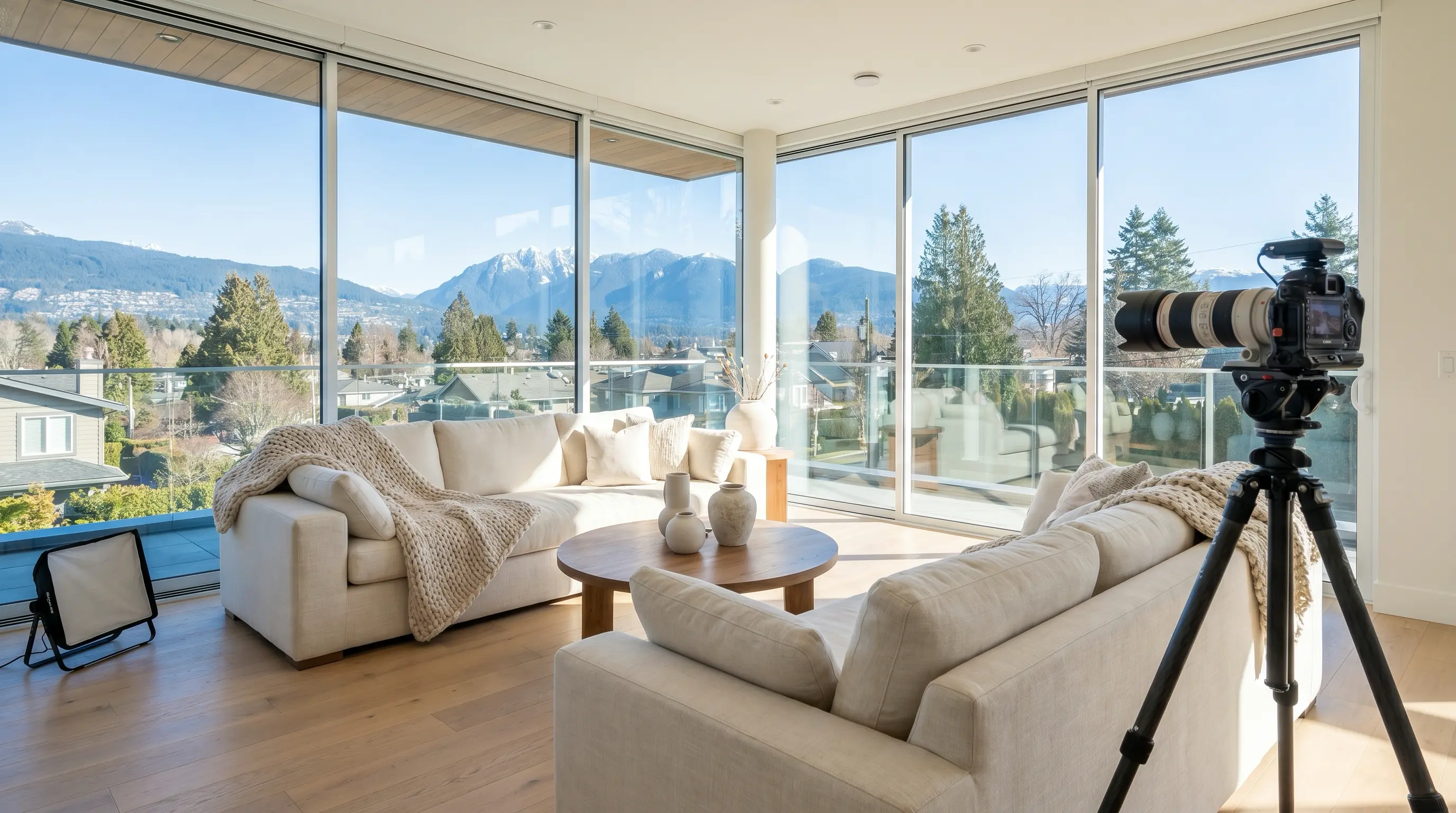
Professional photography is non-negotiable. I am still seeing listings with iPhone photos, dark rooms, and cluttered counters. In a market where buyers are scrolling through dozens of listings per session, your photos are your first showing. If they don’t stop the scroll, nothing else matters.
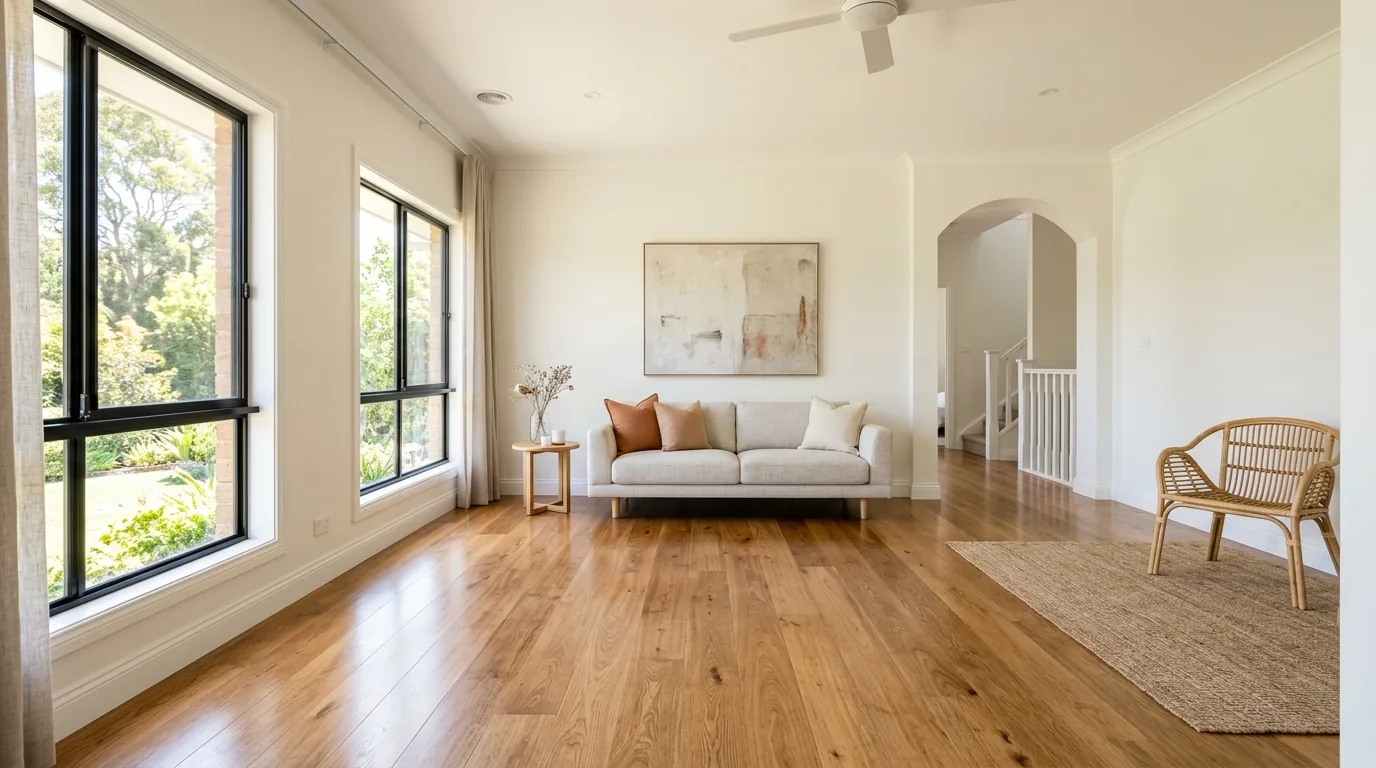
Staging works. I know it feels like an unnecessary expense when you are already stressed about the sale. But a staged home photographs better, shows better, and helps buyers picture themselves living there. In a market with this much inventory, that emotional connection is what separates a showing from an offer.
Get a pre-inspection done. In a buyer’s market, buyers are cautious. They look for reasons to walk away. A pre-inspection removes the biggest wildcard from the equation. It tells buyers: this seller is serious, this home is sound, and there are no surprises waiting. It also speeds up the closing process once you do get an offer.
Time your listing strategically. Going live on a Friday afternoon before a long weekend is not a strategy — it is a waste of your first impression. I prefer launching listings Tuesday or Wednesday, giving buyers and agents time to schedule weekend showings while your listing is still fresh and prominent in search results.
The Multiplex Angle: Your RS Lot Might Be Worth More Than You Think
If you own a home on an RS-zoned lot in Vancouver — a standard single-family lot — you may be sitting on more value than a traditional sale would capture. Under the city’s multiplex policy, many of these lots can now accommodate up to six units.
Builders and developers are actively looking for these lots. In some cases, the land value to a builder is higher than what a typical buyer would pay for your existing home, because they are pricing the lot based on what they can build — not what is there now.
I have worked with sellers who were resigned to taking a hit on their home value, only to discover that their lot was worth a premium to the right buyer. If you own an RS-zoned property and are thinking about selling, this is worth exploring before you list. Read more about multiplex opportunities here.
When You Should NOT Sell
I am going to say something that most real estate agents won’t: if you do not have to sell right now, it might make sense to wait.
Here is when I tell sellers to hold:
- You have no equity pressure. Your mortgage is manageable, you are not carrying two properties, and there is no life event forcing a move. Why sell into a down market if you don’t need to?
- You bought in the last two years at peak prices. If you purchased at or near the 2022 high, selling now might mean realizing a loss. Unless you need to move, sitting tight could make more sense.
- Your timeline is flexible. If you can wait 12-18 months, market conditions may improve — though nobody can guarantee that.
But here is the flip side: if you need to sell — you are relocating, downsizing, going through a separation, or carrying costs you can’t sustain — then waiting is not a strategy. It is a gamble. And in a market that is trending down 7-8% per year, every month you wait while hoping for a rebound could mean selling for even less later.
The honest answer is that nobody knows where the bottom is. The Bank of Canada held its rate at 2.25% in March, citing competing pressures of weaker economic growth and rising energy-driven inflation. That uncertainty is not going anywhere soon.
The Interest Rate Wild Card
The Bank of Canada’s decision to hold at 2.25% creates a strange kind of limbo for sellers. Rates have come down 275 basis points since June 2024, which should be bringing buyers off the sidelines — and to some degree, it has for detached homes. But the stress test still requires qualifying at a rate well above the contract rate, keeping many would-be buyers locked out.
For sellers, this means your buyer pool is smaller than it would be in a “normal” rate environment. Price accordingly.
Key Takeaways
- March 2026 sales were 31.8% below the 10-year average while active listings sat 38% above it — the spring rush hasn’t arrived and the market favours buyers.
- Benchmark prices are down 6.8% to 8.2% year-over-year depending on property type. Price to today’s market, not last year’s.
- Homes are averaging 50+ standard days on market and up to 100 days when accounting for relists. Every week of sitting erodes your position.
- The “price high and reduce later” approach backfires in a slow market — your best buyer interest comes in the first two weeks.
- If you own an RS-zoned lot, explore the multiplex angle before listing — your land may be worth more to a builder than a traditional buyer.
Frequently Asked Questions
How should I price my Vancouver home in 2026?
Price based on current sold comparables and active competition — not on what your neighbour got in 2022 or what online estimation tools say. With benchmarks down 6.8% to 8.2% year-over-year and 14,774 active listings on the market, buyers have options and will skip overpriced homes. Work with an agent who can pull hyper-local data and position your home competitively from day one. Get a free home valuation here.
How long does it take to sell a home in Vancouver right now?
The standard days-on-market metric has pushed past 50 days in Metro Vancouver, and when accounting for relists (homes taken off market and relisted), the average is closer to 100 days according to HouseSigma data. Properly priced homes in desirable locations can still sell faster, but the days of one-week sales with multiple offers are largely behind us for most property types.
Is spring 2026 a good time to sell in Vancouver?
It depends on your situation. The traditional spring price bump has not materialized — March 2026 saw only 2,032 sales, 31.8% below the 10-year average. If you have a compelling reason to sell (relocation, downsizing, financial pressure), then pricing correctly and presenting well can still get your home sold. If you have flexibility and no urgency, waiting may be worth considering, though there is no guarantee conditions improve. Check out our seller’s guide for a full overview of the selling process.
Should I renovate before selling in this market?
In most cases, no. Major renovations rarely return their full cost in a down market. Focus instead on low-cost, high-impact improvements: fresh paint in neutral colours, professional cleaning, decluttering, and staging. A pre-inspection is a better investment than a kitchen reno right now — it gives buyers confidence and speeds up the sale process.
Sources
- Greater Vancouver Realtors — Monthly Market Report, March 2026
- Vancouver New Condos — March 2026 GVR Statistics
- Bank of Canada — Rate Decision, March 18, 2026
- Daily Hive — Metro Vancouver Homes Now Taking 100 Days to Sell
Data sourced April 2026. Market conditions change frequently. Verify current figures before making financial decisions.
Ready to Price Your Home Right?
If you are thinking about selling in 2026, the most important thing you can do is start with an accurate picture of what your home is worth today — not what you hope it is worth or what it might have been worth two years ago.
I offer a free, no-obligation home valuation that is based on current market data, recent comparable sales, and the specific conditions in your neighbourhood. No algorithms, no inflated estimates to win your listing. Just an honest number.
If the number works for you, we will build a pricing and marketing strategy designed to get your home sold — not to sit on the market for three months collecting dust. If the number does not work for your situation, I will tell you that too. I would rather have an honest conversation now than watch you chase a price that the market will not support.
Contact Greyden Douglas directly at (604) 218-2289, request a home valuation, or get in touch to discuss your selling strategy.
Related Vancouver real estate pages
Continue with local service pages, neighbourhood guides, and actionable resources related to this topic.