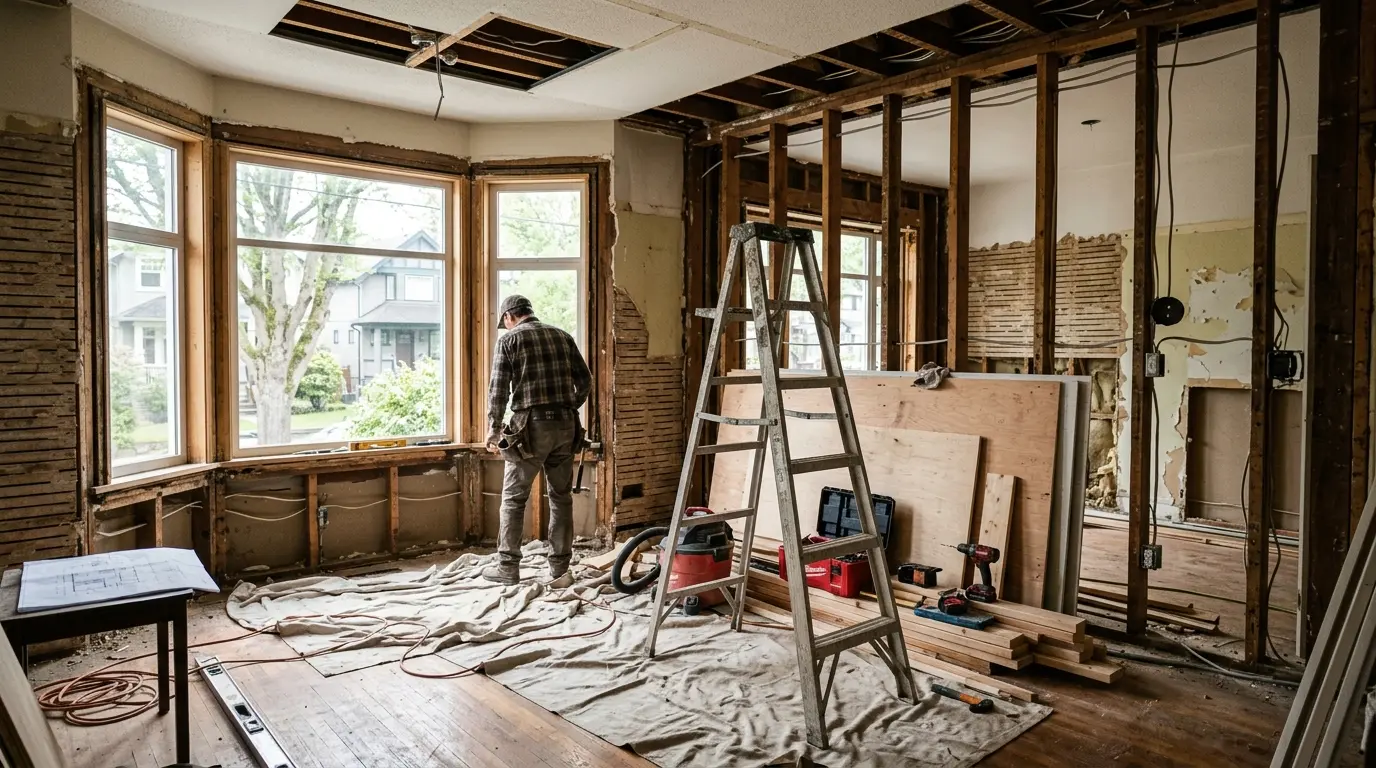
Quick answer: British Columbia requires mandatory third-party home warranty insurance on most new homes and presales: 2 years on labour and materials, 5 years on the building envelope, and 10 years on structural defects. Owner-built homes can be exempt under specific conditions.
Every new home and presale in BC comes with mandatory 2-5-10 warranty insurance. Here's what the 2, 5, and 10 actually cover, who's exempt, how to make a claim, and why presale buyers should care before they sign.
Want a free assessment for your property?
Leave your name and phone — Greyden will call you back with a personalized market snapshot. No spam, no drip campaigns.
Join 1,000+ Vancouver homeowners. No spam, unsubscribe anytime.
A buyer I worked with last year walked into the sales centre for a new East Vancouver tower, saw “backed by a 10-year warranty” on the glossy handout, and told me he felt completely protected. Whatever went wrong, he figured, someone would fix it for a decade.
I had to slow him down. That “10-year warranty” is real, and BC’s version is genuinely one of the better new-home protections in the country. But the number on the brochure isn’t the whole story. It’s actually three different numbers stacked on top of each other, and the longest one covers the least.
If you’re buying a presale condo, a brand-new townhouse, or a freshly built house in Vancouver this year, understanding how the warranty is layered is one of the few things that can save you real money. Here’s how it actually works.
What the “2-5-10” actually means
BC requires almost every new home to be covered by third-party home warranty insurance before it can be sold. The “2-5-10” is shorthand for three separate coverage windows that run at the same time but cover very different things. Coverage and minimum standards are set by the province and administered through BC Housing’s Licensing and Consumer Services.
2 years: labour and materials
This is the everyday-defects layer, and it’s the one most buyers should care about most. It covers defects in materials and workmanship, the things you actually live with day to day. Doors that won’t close square, cracking grout, paint and trim problems, faulty fixtures, and similar issues.
There’s some nuance inside the two years. Coverage on certain items, like specific building materials and labour, can run for the full two years, while other categories phase out at twelve or fifteen months. The point is the same: this is the shortest window, and it’s where the majority of real-world complaints land. If something is off, you report it now, not “eventually.”
5 years: the building envelope
The building envelope is everything that keeps water out, the exterior walls, the roof, the windows and the systems that manage moisture. For five years, you’re covered for water penetration through that envelope.
In a rainy coastal city, this matters enormously. Vancouver had an entire era of “leaky condo” disasters in the 1980s and 1990s, and the 2-5-10 system exists in large part as a response to it. Five years of envelope coverage is meaningful protection, but it’s also why I tell envelope problems should never be ignored, they often start small and quiet.
10 years: structural defects
The longest window is also the narrowest in scope. The ten years covers structural defects, meaning failures in the load-bearing parts of the building that hold it up. If the foundation, framing, or load-bearing structure fails in a way that makes the home unsafe or unlivable, that’s the ten-year coverage.
It does not cover a sticky window in year seven, or a worn-out appliance, or the grout that cracked again. Those are not structural. This is the single most common misunderstanding I run into, and it’s worth saying plainly: the “10-year warranty” is not a ten-year coverage of everything.
Who is exempt: owner-builders
The one significant exception is homes built by an authorized owner-builder. If someone gets owner-builder authorization from BC Housing and constructs a home for their own personal use, that home isn’t required to carry the standard 2-5-10 builder warranty. Instead it falls under a separate, narrower owner-builder protection.
This matters when you’re buying a resale home that’s only a few years old. If the previous owner built it themselves under owner-builder rules, the coverage you inherit is different and generally weaker than a full builder-backed 2-5-10 policy. There are also resale restrictions on owner-built homes within a certain period after construction.
The practical takeaway: if you’re buying a newer home that wasn’t built by a licensed residential builder, ask specifically what warranty applies. Don’t assume it’s the full 2-5-10. Your real estate lawyer and a careful read of the title and disclosure documents should clear this up before you remove subjects.
What the warranty does not cover
Even within the covered windows, the warranty has real limits. It is insurance against defined defects, not a maintenance plan or a satisfaction guarantee. Things that generally fall outside coverage include:
- Normal wear and tear, and damage from your own neglect or failure to maintain the home
- Damage from improper owner alterations or renovations
- Landscaping, and in many cases detached structures
- Issues already covered by a manufacturer’s warranty on appliances
- Damage caused by something outside the builder’s control
There are also dollar limits on coverage, set per unit and for the building as a whole. For most single homes the limits are high enough that they rarely come into play, but in a strata building it’s worth understanding that envelope and structural coverage for the whole building is capped.
This is where new construction and resale start to feel similar. The warranty is one layer of protection, but it doesn’t replace doing your homework. The same diligence that matters on an older home, reading the documents and getting expert eyes on the building, matters on new construction too. If you’re weighing a presale against an existing unit, my presale vs resale comparison and a careful look at the strata’s depreciation report are both worth your time.
How to make a claim
The process is more straightforward than people fear, but it rewards being organized and on time.
- Find your warranty certificate. Every covered home comes with documentation naming the warranty provider. On a presale, you should receive this around completion. Keep it somewhere you’ll find it in three years.
- Report in writing, early. Contact the builder and the warranty provider in writing and describe the defect. Reporting early matters because of the tiered windows, a problem reported in month thirteen may still be covered, while the same problem reported in month twenty-five may not.
- Document everything. Photos, dates, and copies of your correspondence. If the issue is water-related, document it the moment you notice it.
- Escalate to the warranty provider if the builder doesn’t respond. The insurance exists precisely for the situation where the builder won’t or can’t fix the problem, or has gone out of business.
For a strata, many envelope and structural claims are handled by the strata corporation rather than an individual owner, because they involve common property. If you’re a presale buyer who’ll be part of a strata, understand that you may be relying on the council to pursue building-wide claims.
Why presale buyers especially need to understand this
Presales add a wrinkle that catches people off guard: the gap between when you sign and when you’re covered.
Your warranty coverage generally starts at first occupancy or completion, not the day you signed the presale contract. On a Vancouver presale, those dates can be two or three years apart. So the clock on your 2-year labour-and-materials coverage doesn’t even begin until you take possession, which is good, but it also means your warranty certificate and start date won’t exist until near completion. Don’t expect a finished policy in hand the day you sign.
The other presale-specific point: do a thorough walkthrough at completion and document every deficiency, then keep watching through the first two years. The early window is short and it’s where most claims live. A buyer who treats the first two years passively is leaving the most useful part of the coverage on the table.
If you’re new to all of this, our buyers guide walks through the wider purchase process, and the closing costs calculator will help you understand what completion actually costs on a presale.
Key Takeaways
- BC’s “2-5-10” warranty is three windows running at once: 2 years on labour and materials, 5 years on the building envelope (water penetration), and 10 years on structural defects.
- The longest number covers the least. The 10-year portion is structural only, not a ten-year guarantee on everything.
- Most real-world complaints fall in the 2-year window, so report defects early and in writing.
- Owner-built homes are exempt from the standard builder warranty and carry separate, weaker coverage. Always confirm what applies on a newer resale.
- On a presale, coverage usually starts at occupancy or completion, not your contract date, so the warranty clock can begin years after you sign.
- The warranty is insurance against defined defects, not a maintenance plan, and it has dollar limits, especially across a whole strata building.
Frequently Asked Questions
Is the 2-5-10 warranty mandatory on all new homes in BC?
It is mandatory on almost all new homes built by a licensed residential builder in BC, including presale condos and townhouses. The main exception is a home built by an authorized owner-builder for their own use, which falls under a separate owner-builder warranty rather than the standard 2-5-10 policy.
Who pays for the new home warranty in BC?
The builder pays for the warranty insurance and arranges it with a private provider before the home is sold. The cost is built into the purchase price, so as a buyer you do not pay a separate premium. You receive the warranty coverage automatically as the homeowner.
Does the 10-year warranty cover everything for 10 years?
No. The structure of the warranty is layered. Labour and materials are covered for 2 years, the building envelope for 5 years, and only the structure itself for 10 years. Most cosmetic and minor defects fall under the shortest 2-year window, so it is important to report problems early.
Does the warranty transfer if I buy a resale home that is only a few years old?
Yes. The 2-5-10 warranty stays with the home, not the original owner, for the remainder of each coverage period. If you buy a three-year-old condo, the structural and building envelope coverage continues, but the 2-year labour and materials portion will already have expired.
When does the warranty coverage start on a presale condo?
Coverage generally starts from the date the home is first occupied or the purchase completes, whichever comes first, not from the date you signed your presale contract. With presales, your contract date and your coverage start date can be years apart.
Sources
- BC Housing — Licensing and Consumer Services
- BC Housing — Homeowner Protection and Home Warranty Insurance
- Government of British Columbia — Buying or building a home
- Canada Mortgage and Housing Corporation (CMHC)
Work with Rain City Properties
New construction comes with a strong warranty by BC standards, but it only protects you if you understand how it’s tiered and act inside the right windows. Whether you’re comparing presales or trying to make sense of a warranty certificate before you remove subjects, I can help you read the fine print and decide what’s actually a concern.
Contact Greyden Douglas directly at (604) 218-2289 or book a call to discuss your Vancouver real estate goals.
Frequently asked questions
Is the 2-5-10 warranty mandatory on all new homes in BC?
It is mandatory on almost all new homes built by a licensed residential builder in BC, including presale condos and townhouses. The main exception is a home built by an authorized owner-builder for their own use, which falls under a separate owner-builder warranty rather than the standard 2-5-10 policy.
Who pays for the new home warranty in BC?
The builder pays for the warranty insurance and arranges it with a private provider before the home is sold. The cost is built into the purchase price, so as a buyer you do not pay a separate premium. You receive the warranty coverage automatically as the homeowner.
Does the 10-year warranty cover everything for 10 years?
No. The structure of the warranty is layered. Labour and materials are covered for 2 years, the building envelope (water penetration) for 5 years, and only the structure itself for 10 years. Most cosmetic and minor defects fall under the shortest 2-year window, so it is important to report problems early.
Does the warranty transfer if I buy a resale home that is only a few years old?
Yes. The 2-5-10 warranty stays with the home, not the original owner, for the remainder of each coverage period. If you buy a three-year-old condo, the structural and building envelope coverage continues, but the 2-year labour and materials portion will already have expired.
When does the warranty coverage start on a presale condo?
Coverage generally starts from the date the home is first occupied or the purchase completes, whichever comes first, not from the date you signed your presale contract. With presales, your contract date and your coverage start date can be years apart.
Related Vancouver real estate pages
Continue with local service pages, neighbourhood guides, and actionable resources related to this topic.