Quick answer: A 2026 guide to Killarney, a quiet southeast Vancouver family neighbourhood near Central Park and Champlain Heights, covering large lots, post-war housing stock, value versus the West Side, and Bill 44 multiplex redevelopment potential.
A working realtor's guide to buying in Killarney: the large lots, the post-war bungalows, the quiet streets near Central Park, and why this southeast Vancouver neighbourhood keeps drawing families and builders looking for value and Bill 44 multiplex potential.
Want a free assessment for your property?
Leave your name and phone — Greyden will call you back with a personalized market snapshot. No spam, no drip campaigns.
Join 1,000+ Vancouver homeowners. No spam, unsubscribe anytime.
A young family I worked with last year had all but decided a yard in Vancouver was impossible. They were tired of losing on the West Side and had started looking at condos, telling themselves that was the only realistic option. We spent one Saturday driving the streets of Killarney instead. By the end of the day, they were talking about which block they liked best.
That is Killarney in a sentence. It is the quiet southeast corner of Vancouver that keeps giving families room they did not think they could afford in the city. It sits against the Burnaby border, next to Central Park, and it is defined by something you rarely get in Vancouver anymore: space.
I want to give you an honest picture of what Killarney costs, who buys here, what daily life feels like, and the zoning change that is quietly turning big post-war lots into something more.
Where Killarney is and what defines it
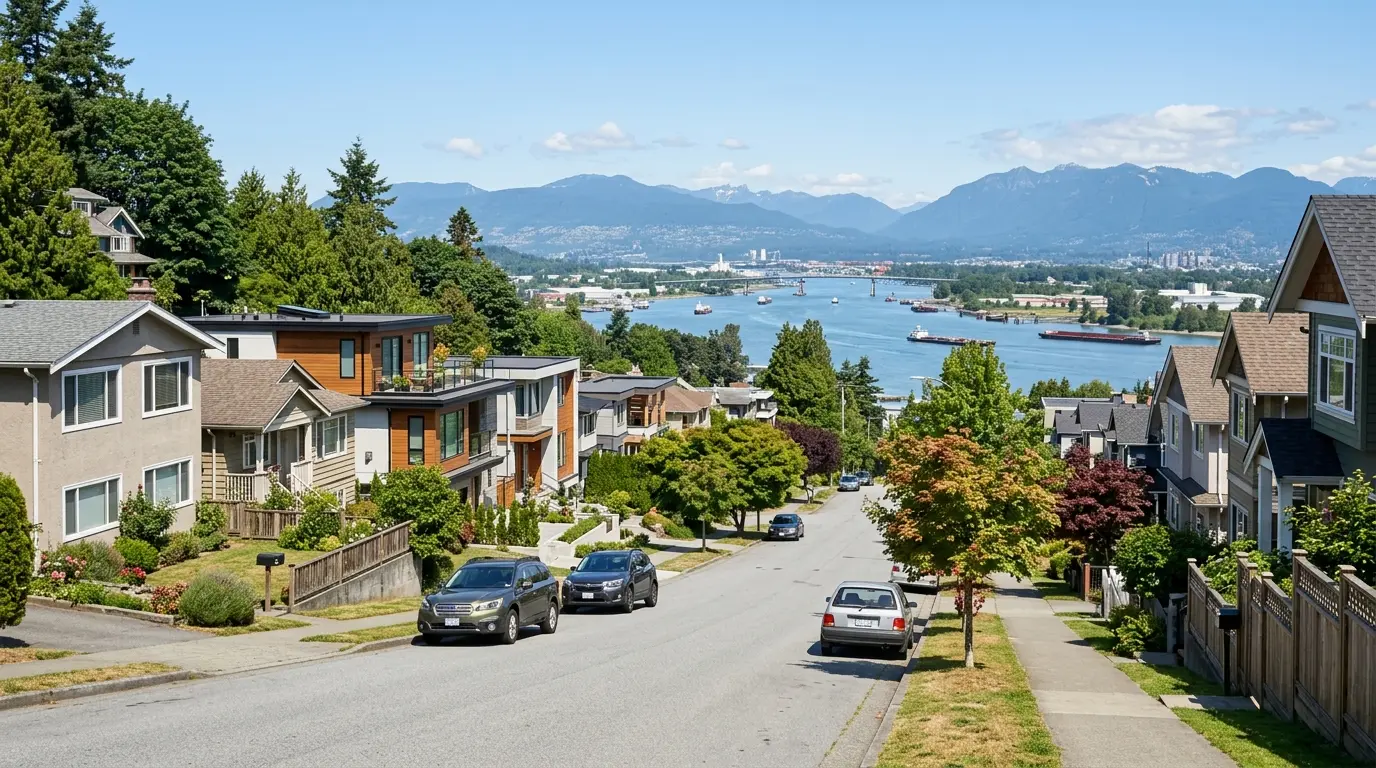
Killarney runs along the southeast edge of Vancouver, bordering Burnaby to the east and the Fraser River lowlands to the south. Central Park, one of the region’s larger green spaces, sits right on its eastern edge. To the south and west, Killarney blends into Champlain Heights, a newer area with townhouse complexes, parks, and walking trails.
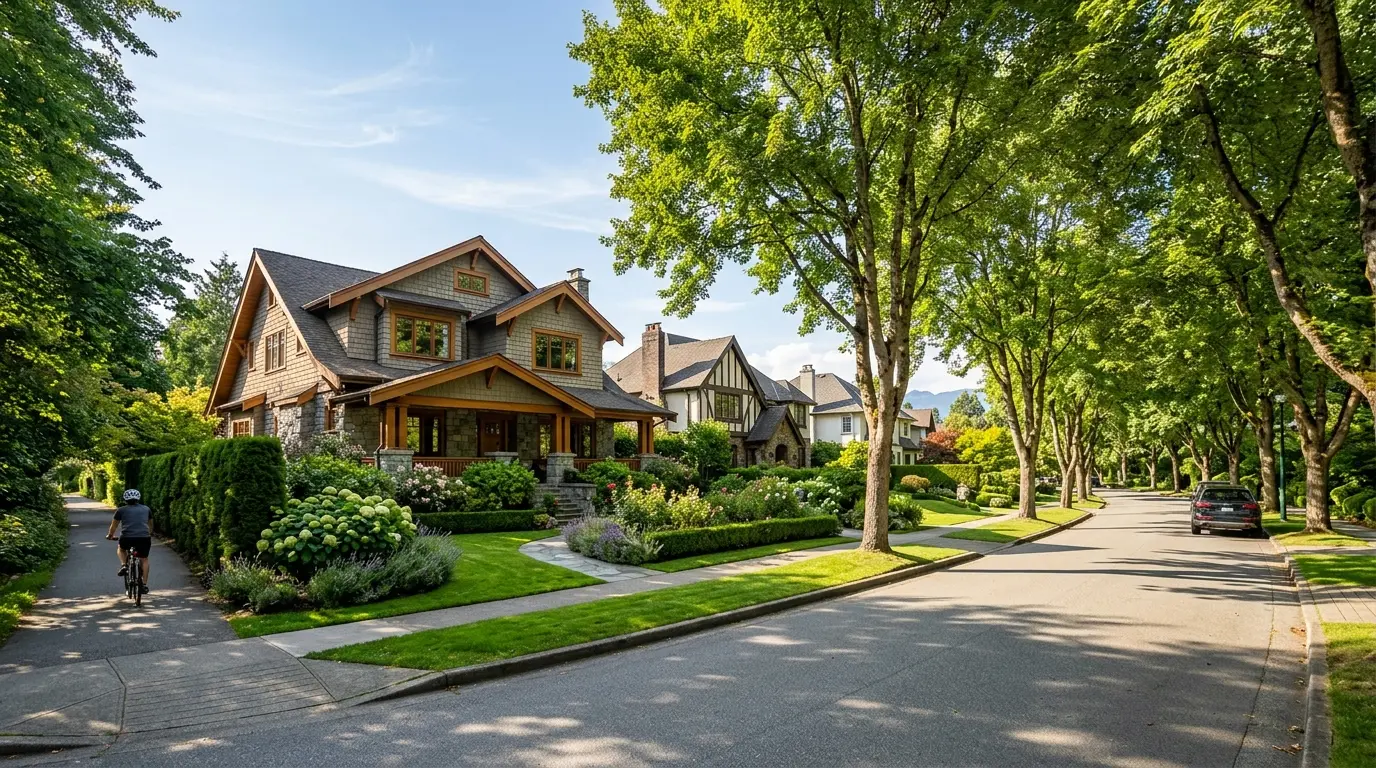
The housing stock tells the story of when the area grew. You will find plenty of post-war bungalows, 1960s and 1970s houses, and Vancouver Specials, along with a steady supply of newer rebuilds. What sets Killarney apart from the older core is lot size. Many lots here are wider or deeper than the standard 33-foot Vancouver lot, and that extra land shapes both the lifestyle and the redevelopment math.
Price tiers: what your money buys
Let me be direct, because price is the first thing every buyer asks. Killarney generally trades below Vancouver’s citywide detached benchmark, which sat around $1.85 million as of early 2026. For a full lot with a real backyard inside city limits, that is about as accessible as detached Vancouver gets.
Here is roughly how I see the tiers, keeping in mind these are illustrative and shift with the market.
Entry point: older bungalows and teardown lots
The most affordable way into a detached Killarney home is usually an original post-war bungalow or a lot being sold mainly for its land. These appeal to two different buyers: a family willing to live in or slowly renovate an older house, and a builder pricing the lot as a future project. When those two compete, land value tends to set the floor.
Mid-tier: updated homes and older rebuilds
Move up and you are looking at well-kept homes that have been updated, or houses from the 1990s and 2000s that do not need immediate work. Many of these come with a basement suite already in place, which helps carry the mortgage. This is where a lot of families land.
Top tier: newer custom builds and large lots
At the upper end are recently built custom homes and the larger lots that builders want for multiplex projects. A wide or deep lot can actually price above a smaller one in a nicer condition, because the land supports more units. That is a shift from how buyers used to read this market.
Whatever tier you are in, if you want to know what your purchase will really cost once you add land transfer tax, legal fees, and the rest, our closing costs calculator gives you a realistic cash-to-close figure.
Who buys in Killarney
In my experience, Killarney draws three groups.
The largest is value-focused families. They are often people who started their search on the West Side or in central East Van, hit the price wall, and discovered they could get a full lot with a yard here for the same money. Space is the reason they choose Killarney.
The second group is long-term holders and investors. Many older homes come with a legal basement suite, and rental demand is steady given the community facilities and the Burnaby border. If that is your angle, our Vancouver rental property ROI guide walks through the real numbers.
The third and fastest-growing group is builders looking at lots through a redevelopment lens. The large Killarney lot is a direct match for the new multiplex rules, which I will get to next.
The lifestyle: parks, community, and quiet streets
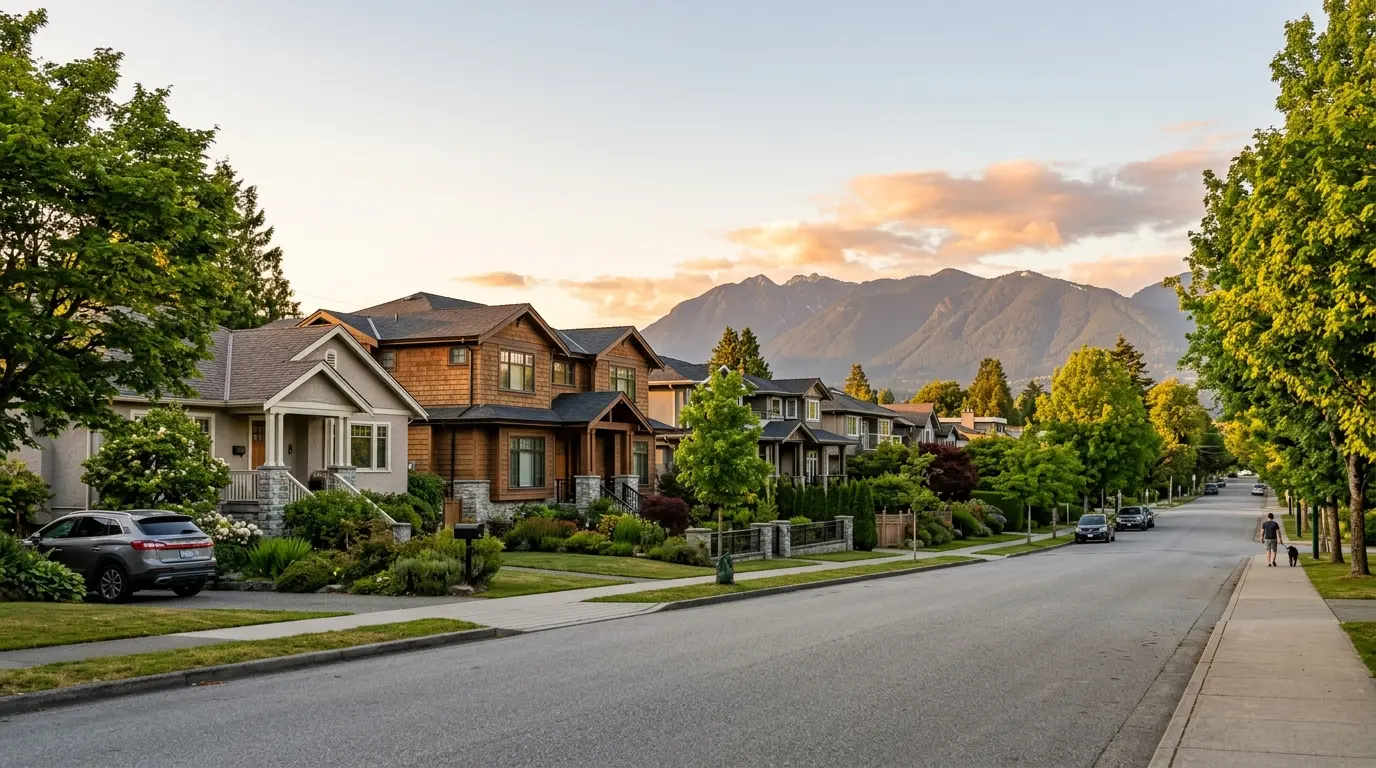
The biggest draw for families is space and calm. Killarney is not on the way to anywhere, so through-traffic on the interior streets is light. Central Park sits on the eastern edge with trails, sports fields, and a pitch-and-putt course. The Killarney Community Centre and pool anchor the neighbourhood, and Champlain Heights adds more parks and green paths to the south.
Day to day, Killarney is more car-friendly than transit-rich. There is bus service and the Expo SkyTrain Line runs nearby along the Burnaby border, but this is not a walk-to-the-train neighbourhood the way parts of central East Van are. I tell buyers that plainly. If a short downtown commute is your top priority, weigh that carefully. If space, parks, and a quiet street matter more, Killarney delivers.
Bill 44, multiplexes, and the redevelopment outlook
Here is the part of the Killarney story that has changed the most in the last couple of years.
Under BC’s Bill 44 housing legislation and the City of Vancouver’s corresponding zoning, most standard single-family lots in Killarney now carry R1-1 zoning. On a typical lot, R1-1 permits up to eight units, a small-scale multiplex, where a couple of years ago you could build a single house plus, in many cases, a laneway home.
Killarney has an advantage here that tighter neighbourhoods do not: lot size. A wider or deeper lot gives an architect more room to lay out units, parking, and open space, which often makes a multiplex work better on the numbers than a cramped 33-foot lot. That is exactly why builders have started paying close attention to this area.
What does that mean in practice? A few things.
First, land value has firmed up, especially on the larger lots. A builder evaluating a lot for six or eight units can often justify paying more than a family would for the house as a home. So the tired bungalow and the redevelopment site are frequently the same listing.
Second, you will see more multiplex and townhouse construction across Killarney over the coming years. If you want to understand how these projects actually pencil out, our multiplex page goes much deeper.
Third, it changes how you read a listing. A dated post-war house on a big lot is not just a fixer. It is a development site, and it will likely be priced and contested as one. Our explainer on R1-1 zoning in Vancouver breaks down units, setbacks, and the practical limits.
A word of caution: zoning permission is not the same as a guaranteed, profitable project. Setbacks, parking, tree retention, servicing costs, and construction pricing all shape what you can actually build and whether the numbers work. Always confirm what a specific lot allows with the City of Vancouver, and run real construction costs before you buy on a development thesis.
Key Takeaways
- Killarney is one of southeast Vancouver’s strongest value neighbourhoods, defined by larger lots, post-war homes, quiet streets, and parks near Central Park and Champlain Heights.
- Detached prices generally trade below the citywide detached benchmark of roughly $1.85 million as of early 2026, with older bungalows and teardown lots as the entry point.
- Lots here are often wider or deeper than the standard Vancouver lot, which makes a Bill 44 multiplex work better than on a tight 33-foot lot.
- Most standard lots are now R1-1 zoned, allowing up to eight units, so family homes and redevelopment sites are frequently the same listings.
- The trade-off is a longer downtown commute and a more car-dependent, spread-out layout than transit-rich East Van areas.
- Zoning permission does not guarantee a viable project; confirm setbacks, parking, and real construction costs before buying to develop.
Frequently Asked Questions
Is Killarney a good neighbourhood to buy in Vancouver?
Killarney is one of southeast Vancouver’s better value neighbourhoods for families who want a full lot and quiet streets without West Side prices. It has larger-than-average lots, post-war bungalows and Vancouver Specials, good parks, and detached prices that generally run below the citywide benchmark. The trade-off is a longer commute to downtown and a more spread-out, car-friendly layout.
How much does a house cost in Killarney in 2026?
Killarney detached homes typically trade below Vancouver’s citywide detached benchmark of roughly $1.85 million as of early 2026, making it one of the more accessible parts of the city for a full lot. Older bungalows and teardown lots are the entry point, while renovated or newer builds command more. Larger lots that work for a multiplex can price higher because builders compete for them.
Why are the lots in Killarney larger than in other parts of Vancouver?
Killarney was developed largely in the post-war decades on the southeast edge of the city, where land was less constrained than in the older, denser core. Many lots here are wider or deeper than the standard 33-foot Vancouver lot. That extra size matters now because a larger lot gives more room for a multiplex under Bill 44, which is part of why builders pay attention to the area.
Can you build a multiplex in Killarney under Bill 44?
Most standard Killarney lots are zoned R1-1, which under BC’s Bill 44 housing legislation permits up to eight units on a typical lot, subject to City of Vancouver rules on setbacks, parking, and design. The larger lots common in Killarney can make these projects work better than a tight 33-foot lot. Always confirm what a specific property allows with the City before buying to redevelop.
What is daily life like in Killarney?
Killarney is quiet, residential, and family-focused. It sits next to Central Park in Burnaby, has the Killarney Community Centre and pool, and borders the newer Champlain Heights area with its parks and walking trails. It is more car-dependent than transit-rich East Van neighbourhoods, and downtown is a longer trip, but for space and calm it is one of the city’s steadier choices.
Sources
- City of Vancouver: zoning and development
- Province of BC: small-scale multi-unit housing (Bill 44)
- City of Vancouver: Killarney Community Centre
- BC Assessment: property information
- Greater Vancouver Realtors: monthly market reports
Work with Rain City Properties
Killarney rewards buyers who value space and price over a short commute, and who understand that a big post-war lot might be a family home, a rental, or a development site. If you are weighing the neighbourhood this year, I can walk you through current pricing on specific blocks, confirm what a lot allows under R1-1, and help you find the right fit for your budget.
Contact Greyden Douglas directly at (604) 218-2289 or book a call to discuss your Vancouver real estate goals.
Frequently asked questions
Is Killarney a good neighbourhood to buy in Vancouver?
Killarney is one of southeast Vancouver's better value neighbourhoods for families who want a full lot and quiet streets without West Side prices. It has larger-than-average lots, post-war bungalows and Vancouver Specials, good parks, and detached prices that generally run below the citywide benchmark. The trade-off is a longer commute to downtown and a more spread-out, car-friendly layout.
How much does a house cost in Killarney in 2026?
Killarney detached homes typically trade below Vancouver's citywide detached benchmark of roughly $1.85 million as of early 2026, making it one of the more accessible parts of the city for a full lot. Older bungalows and teardown lots are the entry point, while renovated or newer builds command more. Larger lots that work for a multiplex can price higher because builders compete for them.
Why are the lots in Killarney larger than in other parts of Vancouver?
Killarney was developed largely in the post-war decades on the southeast edge of the city, where land was less constrained than in the older, denser core. Many lots here are wider or deeper than the standard 33-foot Vancouver lot. That extra size matters now because a larger lot gives more room for a multiplex under Bill 44, which is part of why builders pay attention to the area.
Can you build a multiplex in Killarney under Bill 44?
Most standard Killarney lots are zoned R1-1, which under BC's Bill 44 housing legislation permits up to eight units on a typical lot, subject to City of Vancouver rules on setbacks, parking, and design. The larger lots common in Killarney can make these projects work better than a tight 33-foot lot. Always confirm what a specific property allows with the City before buying to redevelop.
What is daily life like in Killarney?
Killarney is quiet, residential, and family-focused. It sits next to Central Park in Burnaby, has the Killarney Community Centre and pool, and borders the newer Champlain Heights area with its parks and walking trails. It is more car-dependent than transit-rich East Van neighbourhoods, and downtown is a longer trip, but for space and calm it is one of the city's steadier choices.
Related Vancouver real estate pages
Continue with local service pages, neighbourhood guides, and actionable resources related to this topic.