Quick answer: Relocation guide to Commercial Drive (Grandview-Woodland), Vancouver, covering housing prices (older condos from the high $400Ks, half-duplexes $1.1M-$1.5M, character houses $1.6M-$2.2M+), the Commercial-Broadway SkyTrain hub, Trout Lake and Grandview Park, the Drive's Italian heritage and food scene, and honest pros and cons for 2026.
Everything you need to know before moving to Commercial Drive — housing costs, transit at Commercial-Broadway, Trout Lake, the food scene, and the honest pros and cons of Vancouver's most stubbornly independent neighbourhood.
Want a free assessment for your property?
Leave your name and phone — Greyden will call you back with a personalized market snapshot. No spam, no drip campaigns.
Join 1,000+ Vancouver homeowners. No spam, unsubscribe anytime.
Commercial Drive doesn’t try to charm you. It’s loud, a little scruffy, fiercely independent, and more itself than any commercial street in Vancouver. People who live near the Drive tend to organize their lives around it — the produce markets, the espresso bars that predate the word “barista,” the parks at both ends — and they tend to stay.
If you’re considering a move here, this guide covers what it actually costs, how you’ll get around, and the trade-offs the neighbourhood’s fans don’t always mention. (If you’re still comparing across the east side broadly, start with our moving to East Vancouver guide and come back.)
First, the Geography
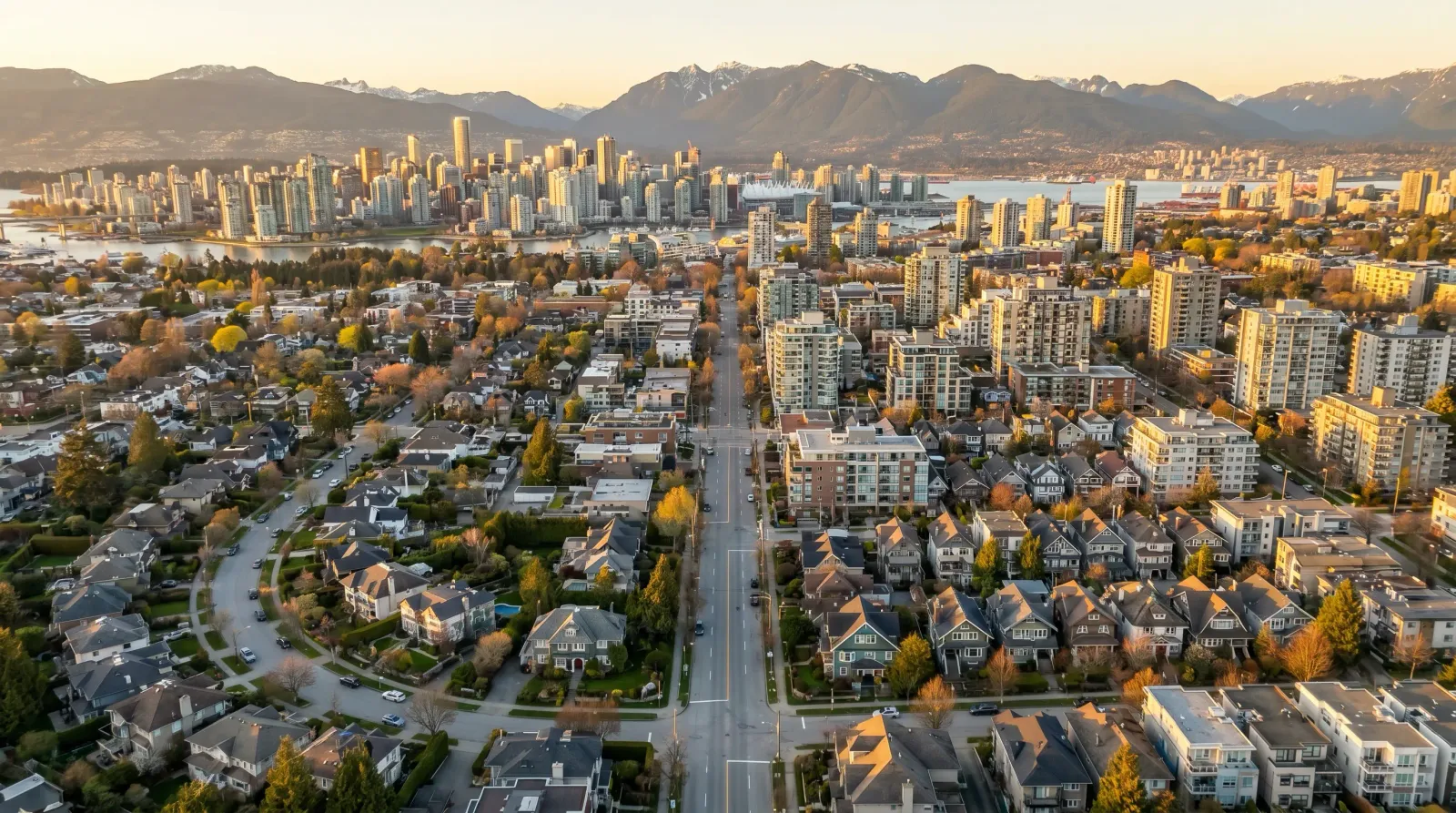
“Commercial Drive” the street runs from the waterfront to Victoria Diversion, but the neighbourhood people mean is the stretch from around Venables Street south to Broadway, sitting inside the official Grandview-Woodland community. East of the Drive you get quiet residential blocks toward Nanaimo; west, you slope toward Clark Drive and the port lands. The southern anchor is the Commercial-Broadway SkyTrain interchange; the northern blocks shade into Strathcona’s industrial edge.
Housing Prices: What You Will Pay
Grandview-Woodland is old housing stock almost top to bottom, and that defines both the prices and the homework.
Condos here are mostly wood-frame, walk-up era buildings from the 1960s through 1990s, with a thin layer of newer low-rise projects. One-bedrooms in older buildings start in the high $400,000s to mid $500,000s — some of the best entry pricing within walking distance of rapid transit anywhere in Vancouver. Two-bedrooms run roughly $650,000 to $850,000. Newer concrete is scarce; when it lists, it prices closer to Mount Pleasant.
Half-duplexes and townhouses are the neighbourhood’s growing middle. Strata half-duplexes — often a character house split into front-back units — typically list between $1.1 million and $1.5 million. Purpose-built townhouses are rare and move quickly.
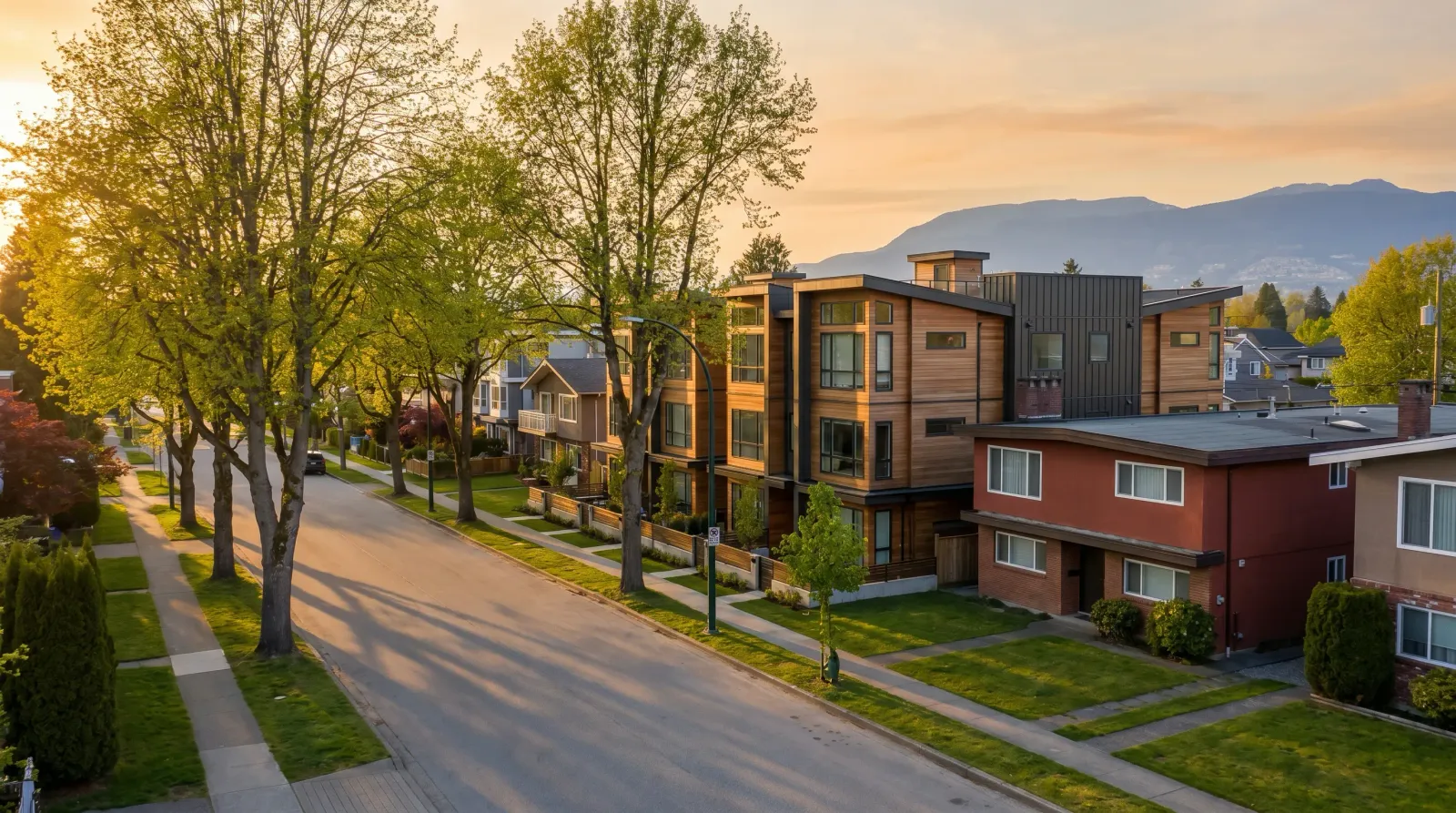
Detached character homes are the signature product: Victorians, Edwardians, and Vancouver Specials, many with legal or easily legalized basement suites. Expect $1.6 million to $2.2 million for livable character stock, more for renovated houses on the tree-canopy blocks between the Drive and Victoria. A working suite can offset $1,800 to $2,500 of your monthly carrying cost, which is how most families actually afford these houses.
Rentals run roughly $2,000 to $2,400 for a one-bedroom and $2,800 to $3,400 for a two-bedroom, with basement suites somewhat below that.
These are ranges I see in practice, not appraisals — for current listings and street-by-street context, see our Grandview-Woodland neighbourhood page or browse current Vancouver listings.
Cost of Living Beyond Housing
Daily costs on the Drive skew cheaper than the west side, and the produce shopping is legitimately one of the best deals in the city. The independent green grocers — stacked-crates-on-the-sidewalk places like Norman’s and Triple A — routinely undercut chain supermarkets. Santa Barbara Market and the Italian delis cover specialty goods at fair prices.
Restaurants run the full range: $12 takeout slices and banh mi at one end, $80-for-two Italian dinners at the other. Coffee is a religion here and still mostly $4 to $6. Your money simply goes further on the Drive than in Kitsilano, and the quality drop is zero.
Transit: Getting Around Without a Car
This is the Drive’s superpower. Commercial-Broadway Station at the south end is one of the busiest transit hubs in the region: the Expo Line and Millennium Line interchange there, putting downtown about 10 minutes away and Metrotown, Brentwood, and the Broadway corridor all on one-seat rides. The 99 B-Line connects to the Broadway Subway’s reach toward Cambie and beyond.
On the street itself, the #20 Victoria bus runs the length of the Drive to downtown. Cyclists get flat, calm east-west routes on Adanac and the Lakewood/Woodland bikeways, plus the off-Broadway 10th Avenue route to the south.
Living within a 10-minute walk of Commercial-Broadway and going car-free isn’t a compromise here; it’s the standard play.
Parking: The Honest Truth
If you do keep a car, the residential blocks have decent permit and free street parking by Vancouver standards, but the blocks immediately off the Drive fill up on weekend evenings. Older condo buildings usually include one stall; character-house parking is whatever the lane gives you. The closer you live to the SkyTrain, the more often you’ll find commuter cars hunting your block — factor a permit into your plans.
Noise Levels
The Drive itself is loud: buses, patios, buskers, the occasional march (this is Vancouver’s protest-and-parade street, and Italian Day and Car Free Day close the whole strip). One block off, it drops fast — the residential streets are genuinely quiet, with the train whistle from the port lands as the east side’s background soundtrack. North of Venables, port and industrial noise is more present. If you’re noise-sensitive, target the blocks between William and 6th, two-plus blocks off the Drive.
The Vibe: Who Lives Here
The Drive’s bones are Italian — this was Vancouver’s Little Italy, and the espresso bars, delis, and the bocce courts at Victoria Park are living history, not theme-park dressing. Layered over that: decades of counterculture, the city’s most visible co-op housing community, young families priced out of the west side, artists and tradespeople, and long-tenured renters who anchor the street’s politics.
It skews community-organized and opinionated. There are block parties. There are petitions. Sometimes the petition is about the block party. If you want anonymous and frictionless, the Drive will exhaust you; if you want neighbours who know your name, it’s the best deal in town.
Where to Eat and Drink
An honest top-of-mind list, not a directory: Continental Coffee and Caffè Calabria for old-school espresso; La Grotta del Formaggio for sandwiches worth a lineup; Via Tevere for Neapolitan pizza a few blocks east; Havana for patio season on Grandview Park; St. Augustine’s for the craft-beer tap wall; Kishimoto for sushi you should book ahead for. The strip turns over less than most — the institutions here measure tenure in decades.
Grocery Stores and Daily Errands
Daily life happens on foot: green grocers every few blocks, Santa Barbara Market, the Italian delis, Donald’s Market at the north end, and a No Frills near the station for staples. Trout Lake Farmers Market runs Saturdays in the warm months at John Hendry Park. Pharmacies, hardware, banks, and the Britannia community centre complex (library, pool, rink) cover the rest. It is a genuinely complete 15-minute neighbourhood.
Parks: Trout Lake and Grandview Park
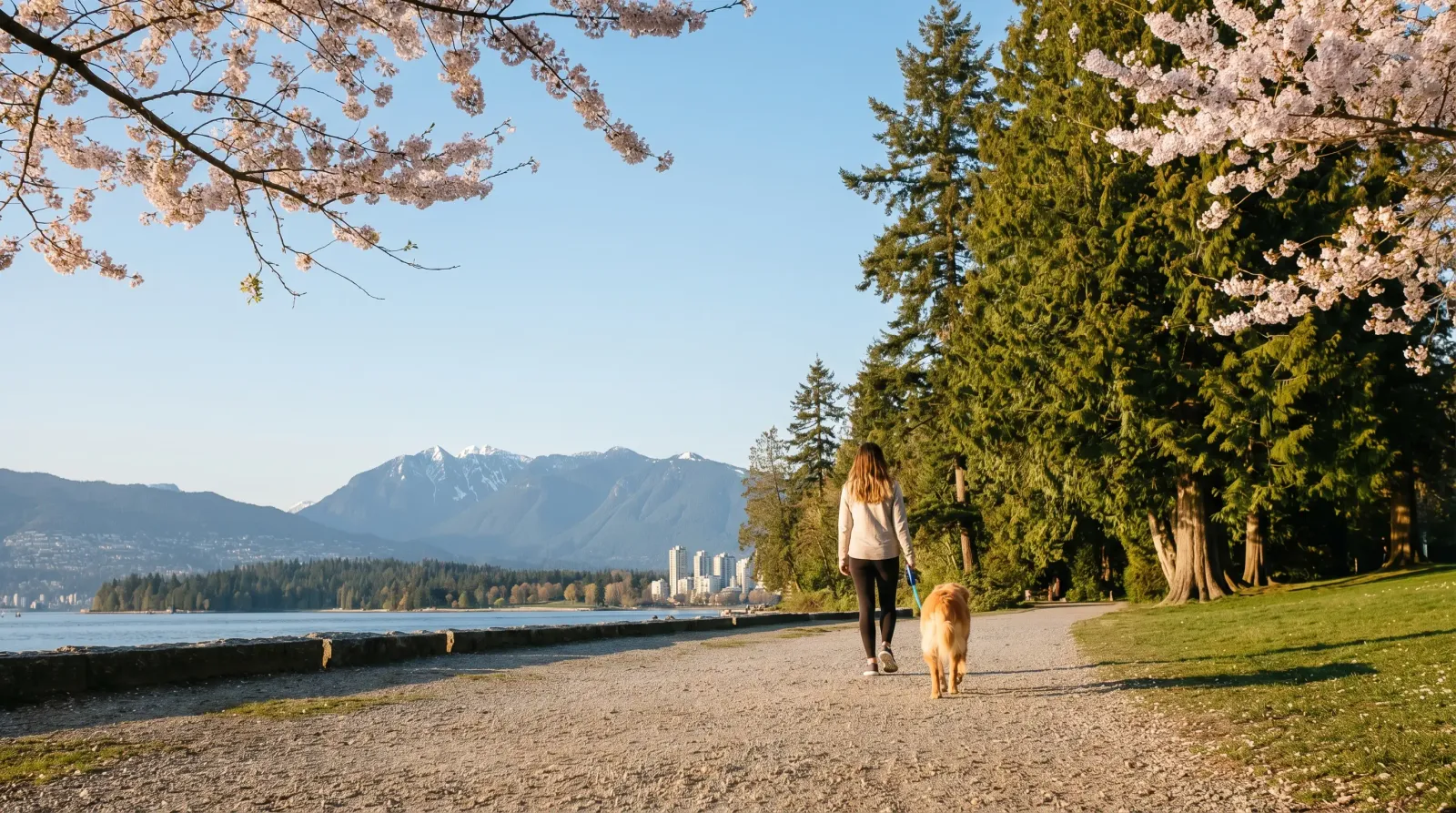
Two anchors. John Hendry Park (Trout Lake) at the southeast corner is the east side’s backyard — an actual lake, summer swimming, the farmers market, and the community centre. Grandview Park mid-Drive is the neighbourhood’s living room: playground, buskers, people-watching. Victoria Park adds the bocce courts. For families, the combination of Trout Lake plus Britannia’s facilities is hard to beat anywhere in the city at this price point.
What to Watch Out For
Old buildings need old-building diligence. Most condo stock predates modern building envelopes. Read depreciation reports and minutes carefully — our strata document guide covers exactly what to check — and budget realistically on character houses (oil tanks included, given the pre-1950s housing stock).
Inventory is thin. Large-scale redevelopment has mostly not arrived despite the Grandview-Woodland Community Plan, so listings are scarce and well-priced character homes draw multiple offers even in a balanced market.
The Drive’s edges are real. The blocks toward Hastings carry more visible street disorder, and opinions differ on how that’s trending. Walk your specific block at night before you write an offer.
Renovation surprises. Knob-and-tube wiring, asbestos-era materials, and unpermitted suites are all common in this housing stock. Inspection isn’t a formality here.
The Bottom Line
Commercial Drive is for people who want a neighbourhood with an identity — walkable, food-obsessed, politically awake, and genuinely diverse — and who’d rather have character and a basement suite than a concrete tower with a gym. You trade polish, new construction, and easy parking for the best transit access on the east side and a commercial strip that still belongs to independents.
I’ve helped buyers land everywhere from walk-up one-bedrooms to suited Edwardians in Grandview-Woodland, and the pattern holds: the people who choose the Drive on purpose never want to leave. If that sounds like you, contact Greyden Douglas directly at (604) 218-2289 or book a call and we’ll talk blocks, buildings, and timing.
Related Vancouver real estate pages
Continue with local service pages, neighbourhood guides, and actionable resources related to this topic.