Quick answer: Comprehensive relocation guide to Vancouver's West End covering housing costs (condos from mid-$500Ks), transit access, parking challenges, restaurant recommendations, and neighbourhood character for 2026 movers.
Everything you need to know before moving to Vancouver's West End — from condo prices and parking headaches to the best restaurants on Davie Street and why English Bay sunsets never get old.
Want a free assessment for your property?
Leave your name and phone — Greyden will call you back with a personalized market snapshot. No spam, no drip campaigns.
Join 1,000+ Vancouver homeowners. No spam, unsubscribe anytime.
If you ask a Vancouverite what the West End feels like, you’ll get some version of: “It’s like living on vacation, except you still have to go to work.” That’s not far off. The West End is one of those rare urban neighbourhoods where you can walk to a legitimate ocean beach, jog through a world-class park, grab dinner at a dozen excellent restaurants, and do it all without ever touching your car.
I’ve helped dozens of clients buy in the West End over the years. Some stay for decades. Others realize the trade-offs — the parking, the older buildings, the density — aren’t for them. This guide is meant to help you figure out which camp you’re in before you sign anything.
The Cost of Living
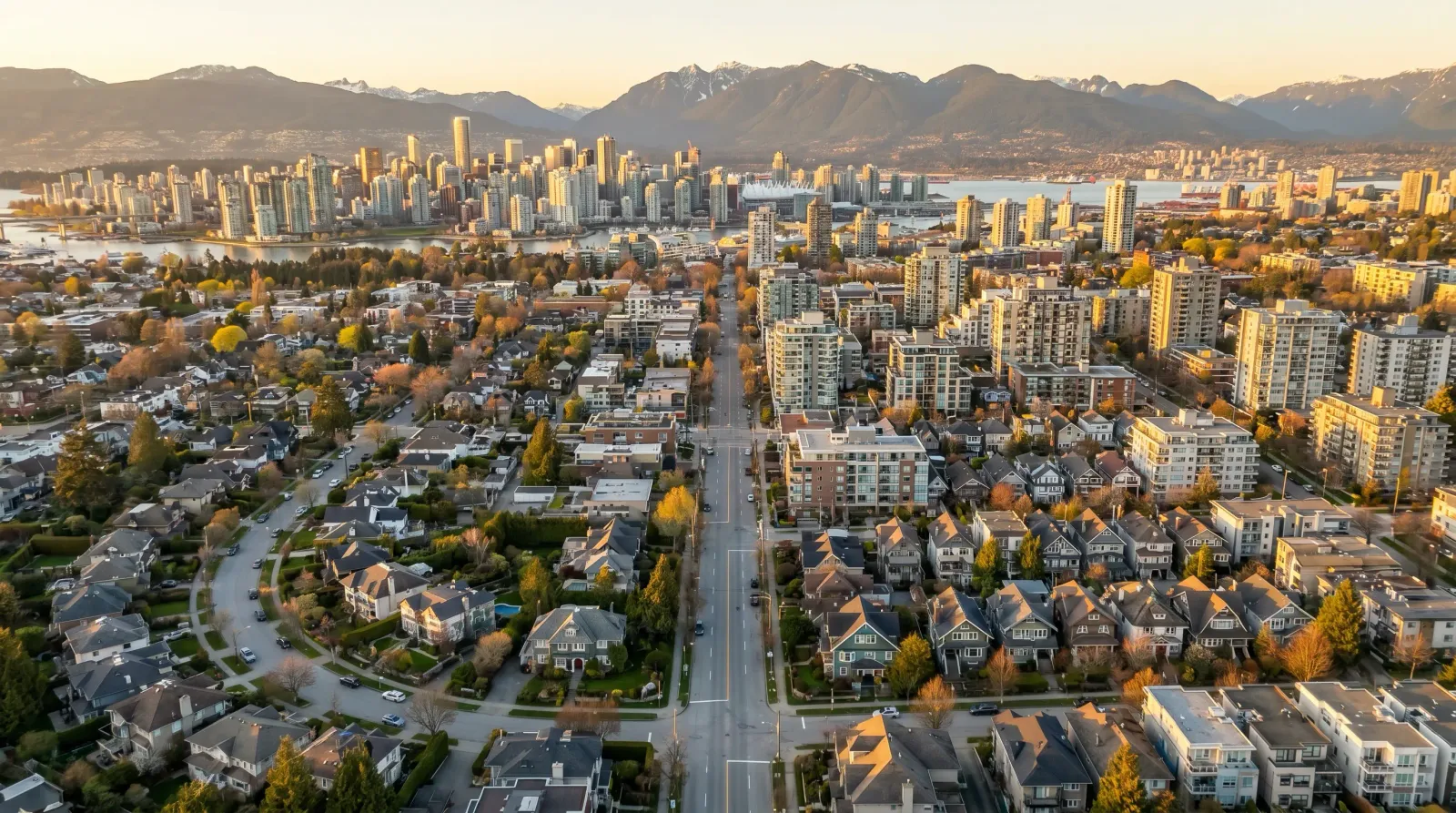
The West End is not cheap, but it’s more accessible than people assume. Because the housing stock is overwhelmingly condos and rentals — there are very few townhouses or detached homes — entry points are lower than in most of Vancouver’s westside neighbourhoods.
Condo prices in the West End currently range from the mid-$500,000s for a smaller one-bedroom to $750,000-$900,000 for a well-maintained two-bedroom with a view. Newer builds along Beach Avenue or Davie Street command a premium, and anything with an unobstructed English Bay view will add $50,000-$150,000 to the price tag depending on the floor and orientation.
Townhouses are rare here. The West End is almost entirely zoned for high-rise residential, so if you want a townhouse, you’re looking at a handful of older conversions or the edges near Coal Harbour.
Detached homes essentially don’t exist in the West End proper. If that’s your goal, this isn’t your neighbourhood.
Monthly strata fees tend to run higher than average because many buildings are older — 1960s to 1980s vintage — with larger common areas and sometimes pools or saunas. Budget $400-$700/month in strata fees depending on the building and unit size.
Groceries are reasonable. There’s a Safeway on Davie, a small IGA, and several Asian grocery stores along Denman and Robson. You’re not paying a premium compared to most of Vancouver, though the convenience stores scattered throughout will charge tourist prices for basics.
Housing Stock: What to Expect
The West End’s building stock tells its own story. Most of the neighbourhood was developed in the 1960s and 1970s during a period of aggressive high-rise construction. That means a lot of concrete towers with generous floor plans by today’s standards, but aging mechanical systems and the occasional special assessment.
Newer developments exist — particularly along the Beach Avenue corridor and near Davie Village — but they’re the exception, not the rule. If you’re buying in an older building, get a thorough inspection and read the depreciation report carefully. I’ve seen clients get surprised by $30,000 special assessments for envelope work or plumbing replacements.
The upside of older buildings is space. A 1970s-era one-bedroom in the West End might be 650-750 square feet, compared to 450-550 in a new build downtown. You’re trading modern finishes for liveable square footage.
The Parking Situation
Let me be direct: parking in the West End is painful. Street parking requires a residential permit (about $100/year), and even then, finding a spot after 6 PM on a summer evening can involve circling for 20 minutes. Many older buildings have limited parking — some one-bedroom units don’t come with a stall at all.
If your unit doesn’t include parking, you can rent a stall separately for $150-$250/month. Or you can go car-free, which honestly is the better play in this neighbourhood. Between transit, cycling infrastructure, and the sheer walkability of the area, most of my West End clients use their cars a few times a month at most.
If you absolutely need a vehicle, prioritize units with a parking stall. It’s both a quality-of-life issue and a resale consideration.
Getting Around: Transit and Walkability
The West End consistently scores 95+ on Walk Score, and it earns every point. You can walk to groceries, restaurants, the beach, Stanley Park, and most of downtown in under 15 minutes.
Transit options are solid:
- The #5 and #6 buses run along Davie and Beach Avenue, connecting you to downtown and further east
- The #19 runs along Stanley Park Drive to Metrotown
- Denman Street is serviced by the #5 heading to the West Side
- Burrard Station on the Expo/Millennium SkyTrain line is a 10-15 minute walk from most of the West End
- The Canada Line at Vancouver City Centre is also reachable on foot
For cycling, the Seaside Greenway connects through the neighbourhood, and there are protected bike lanes on Comox and Hornby streets. Mobi bike-share stations are everywhere.
The one gap: if you work in East Vancouver or the suburbs, your commute will involve at least one transfer. The West End’s transit is optimized for getting downtown, not across the city.
Noise Levels
This is worth discussing honestly. The West End is dense — about 46,000 people per square kilometre, making it one of the most densely populated neighbourhoods in Canada. With density comes noise.
Davie Street and Denman Street have nightlife activity, particularly on weekends. Units facing these streets will hear bar crowds and traffic. Beach Avenue gets loud during summer events and fireworks season — the Celebration of Light draws hundreds of thousands of people to English Bay.
Interior units on quieter streets (Comox, Pendrell, Haro) are noticeably calmer. Higher floors help too. If noise sensitivity is a concern, pay attention to unit placement and invest in good windows.
That said, the trade-off is energy. The West End feels alive in a way that’s genuinely unique in Vancouver. The streets are full of people walking dogs, heading to yoga, sitting in patios. It’s urban in the best sense.
The Neighbourhood Vibe: Who Lives Here
The West End is one of Vancouver’s most diverse and inclusive neighbourhoods. It’s home to a significant LGBTQ+ community centred around Davie Village, which hosts the annual Pride Parade and is marked by rainbow crosswalks and the Jim Deva Plaza.
Beyond that, the demographic is genuinely mixed: young professionals, long-time retirees who’ve lived here since the 1980s, international students, families (though they’re rarer), and creative types. The neighbourhood attracts people who value walkability and urban living over space and privacy.
Stanley Park is the West End’s backyard, and residents use it constantly — running the seawall, biking to Third Beach, walking dogs at the off-leash areas. English Bay Beach is the social centre of the neighbourhood in summer, with impromptu beach volleyball, sunset-watching, and the annual Polar Bear Swim on New Year’s Day.
Community engagement is strong. The West End has an active residents’ association, community gardens, and a strong sense of identity distinct from Downtown proper.
Where to Eat and Drink
The West End has one of Vancouver’s best restaurant-to-resident ratios. Here are the spots I send clients to:
- Score on Davie — A Davie Street institution. Great brunch, massive patio, and a sports bar atmosphere that manages to be welcoming rather than aggressive.
- Cardero’s — Waterfront dining at Coal Harbour’s edge. Go for the sunset patio and the seafood. It’s touristy, but locals eat here too because it’s genuinely good.
- Kingyo — Izakaya excellence on Denman. The small plates are inventive and the sake list is deep. Reservations recommended.
- Sylvia Hotel — The bar at the Sylvia is a Vancouver institution. It’s been here since 1912 and the English Bay views haven’t changed. Perfect for a quiet drink.
- Espana — Tapas on Denman that punch well above their price point. The patatas bravas are required eating.
- Banana Leaf — Malaysian cuisine on Denman with some of the best laksa in the city.
For coffee, Greenhorn Cafe on Davie and Breka Bakery (open 24 hours) are local staples.
What to Watch Out For
Older buildings with deferred maintenance. The West End has some beautiful mid-century towers, but not all of them have been well maintained. Always read the strata minutes, the depreciation report, and the engineering assessments. If the building is due for a major project and hasn’t started saving, prepare for a special assessment.
Lack of storage and parking. Many units are tight on closet space and don’t include storage lockers. If you’re downsizing from a larger home, plan accordingly.
Summer congestion. English Bay’s popularity means the neighbourhood gets crowded from May through September. If you like quiet weekends, the summer months will test you.
The homelessness situation. While the West End is generally safe, there are visible homelessness issues along Davie Street near the transition to the Downtown Eastside. This has increased over the past few years and is something to be aware of, particularly on the eastern edges of the neighbourhood.
Rental restrictions. Some buildings are heavily rental-restricted, which is good for owner-occupants but means you can’t easily rent your unit if your plans change. Others have no restrictions, which means more transient neighbours. Check the bylaws carefully.
The Bottom Line
The West End is Vancouver’s most liveable urban neighbourhood if you value walkability, beach access, and a progressive community over space and quiet. You’ll trade square footage and parking convenience for a lifestyle that most cities can’t offer: ocean beach, world-class park, dense restaurant scene, and reliable transit, all within a 15-minute walk.
It’s best suited for singles, couples, and active retirees who don’t need a lot of space and want to be in the centre of things. Families with young kids will find the lack of green space (beyond Stanley Park) and the high-rise living challenging.
If you’re considering the West End, I’d recommend spending a few weekday evenings in the neighbourhood before committing. Walk the streets at 9 PM on a Tuesday. See how it feels. The West End rewards people who embrace its energy, and it frustrates people who just want peace and quiet.
Ready to explore what’s available? Take a look at our West End neighbourhood page for current listings and market data, or get in touch directly — I’m happy to walk you through buildings I’d recommend and ones I’d avoid.
Related Vancouver real estate pages
Continue with local service pages, neighbourhood guides, and actionable resources related to this topic.