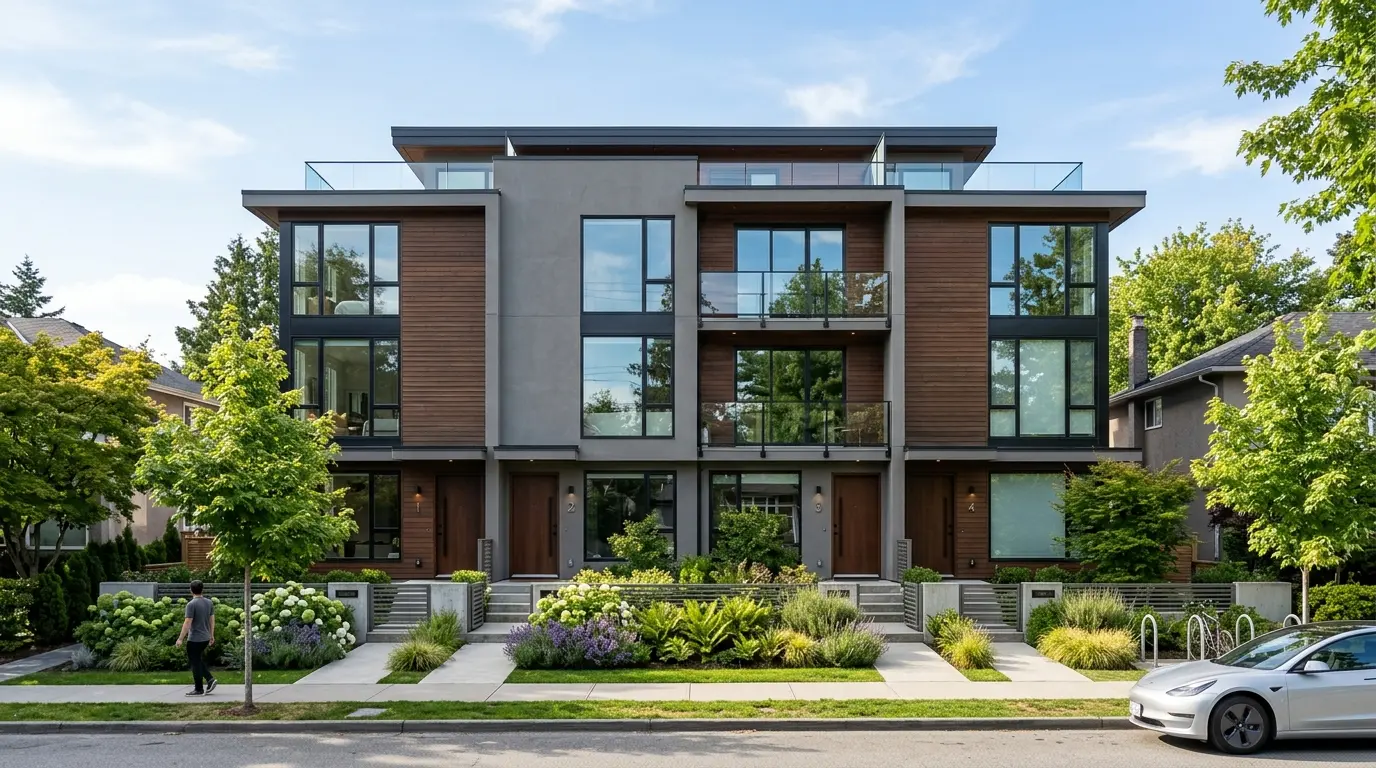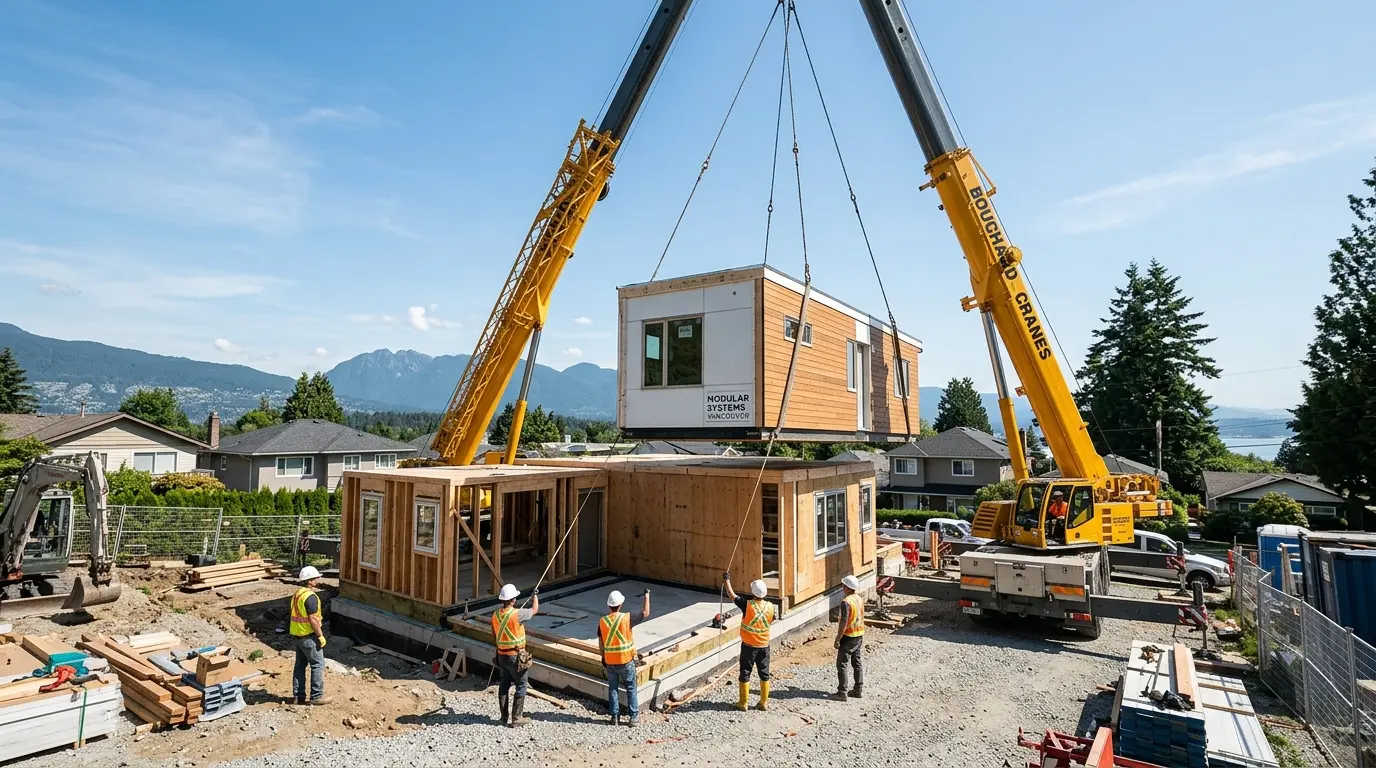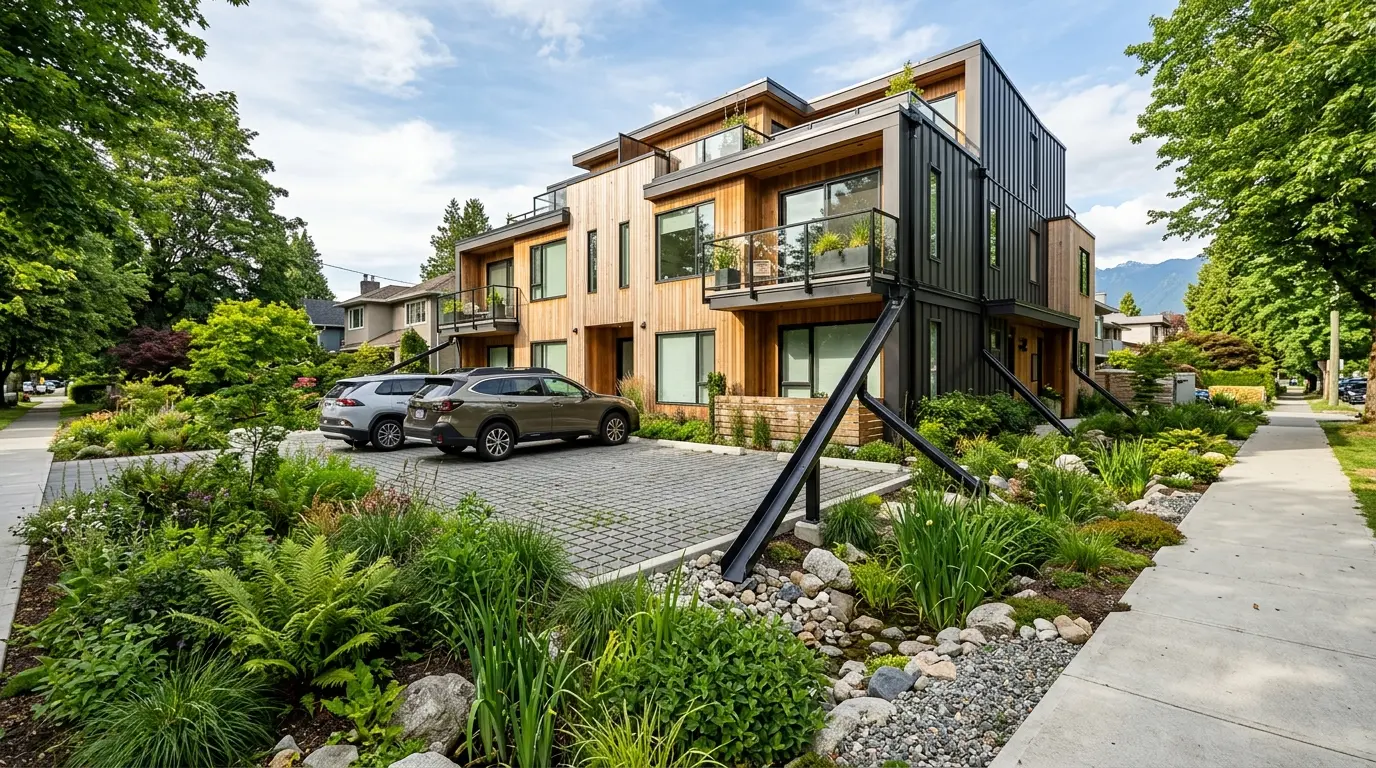
Quick answer: A 2026 guide comparing the BC Energy Step Code baseline required for a Vancouver multiplex with the optional Passive House standard, covering the cost premium, energy savings, and how each choice affects resale value and rental appeal.
A working realtor's plain guide to the choice every multiplex builder faces in Vancouver: meet the required Step Code level, or go all the way to Passive House. The cost premium, the energy savings, and how each one affects resale and rent.
Want a free assessment for your property?
Leave your name and phone — Greyden will call you back with a personalized market snapshot. No spam, no drip campaigns.
Join 1,000+ Vancouver homeowners. No spam, unsubscribe anytime.
A builder I know spent three weeks last winter stuck on one decision before he’d poured a single footing. His six-unit multiplex was designed, the lot was ready, and he could not decide whether to build to the required energy code and stop there, or push all the way to Passive House. He kept flipping between “it’s the future” and “it’ll wreck my budget.” Both statements had some truth. Neither one made the choice for him.
This is one of the most common questions I get from people building a small multiplex in Vancouver right now. So let me lay it out plainly: what the code actually forces you to do, what Passive House adds on top, what the extra cost really is, and how each choice plays out when it’s time to sell or rent.
The two things you’re comparing
First, let’s be clear about what these two terms mean, because they get mixed up constantly.
The BC Energy Step Code is a provincial framework. It has numbered steps, and higher steps mean a better-performing, more energy-efficient building. It sets the legal minimum you must hit. The City of Vancouver layers its own carbon and energy rules on top of the Step Code, and those targets have been getting stricter on a set schedule. So “meeting code” in Vancouver is a moving line, and it moves upward.
Passive House is a separate standard, and a much stricter one. It comes from an international body and focuses on a few hard targets: very low heating demand, high airtightness (measured by a blower door test), continuous fresh-air ventilation with heat recovery, and good windows. A Passive House build will comfortably clear the current Step Code minimum. It aims higher on purpose.
The simplest way to hold it in your head: Step Code is the floor you cannot go below. Passive House is a specific high target that sits well above that floor.
What Vancouver actually requires
New residential buildings in Vancouver, including multiplexes, have to meet the City’s energy and carbon rules, which are built on the Step Code. Over the last few years the City has pushed toward higher Step Code steps and tighter limits on carbon from heating. The direction is set, and it points toward lower-emission, better-insulated buildings.
Here is the important part, and I want to be careful with it: the exact required step and carbon limit for a small residential building changes on a schedule, and it can differ by building type and size. I am not going to quote you a specific step number and have it be wrong by the time you break ground. Confirm the current requirement for your project directly with the City of Vancouver before you design. That one call saves real money and real headaches.
Passive House is recognized as one path a builder can use to meet or exceed the City’s rules. It is not the only path. You can hit the required level with a well-built, conventional approach too.
The cost question, honestly
Everyone wants a single number for the Passive House premium. There isn’t one. But here is the honest range I see and hear from builders and reports.
The added hard-cost for a Passive House multiplex usually lands somewhere from a few percent up to around ten percent over a solid code-minimum build. Where you fall depends on three things:
- Your team’s experience. A crew doing its first Passive House project pays a learning-curve tax. By the third project, that tax is mostly gone.
- The shape of the building. A simple, boxy multiplex with a compact footprint is far cheaper to make airtight and well-insulated than a design with lots of corners, bump-outs, and glass. Every corner is a place heat escapes and a place the air barrier can fail.
- The size of the project. Fixed costs like design and testing spread across more units.
Where does the money go? Thicker, continuous insulation. Better windows, often triple-pane. A proper air barrier and the labour to get it right. A heat recovery ventilation system. And the certification and testing if you go for the official label.
If you want to understand how any of this flows into a real project budget, our multiplex page walks through how these builds pencil out, and our guide on building your own multiplex covers the full homeowner-to-builder path.
What you get back
The premium buys you real things, not just a certificate.
Lower operating cost. A Passive House uses far less energy to heat. If you’re holding the multiplex as a rental and you cover any of the utilities, that saving lands in your pocket every month for as long as you own it.
Comfort. These homes stay at an even temperature, with no cold spots by the windows and no drafts. The airtight envelope also makes them quiet inside, which people notice the moment they walk in.
Air quality. The continuous ventilation with heat recovery means fresh, filtered air all the time, without opening a window to the street.
Durability. A well-detailed, airtight, well-insulated wall manages moisture better, which protects the building over its life.
How it plays out at resale and rent
This is where I have to be straight with you, because it’s where builders most often expect too much.
High-performance homes do not always show a big price premium on paper. Appraisals still lean heavily on recent comparable sales, and an appraiser may not give you full credit for a blower door result. So do not build your whole proforma on the idea that Passive House automatically adds a fat number to the sale price.
What I do see, consistently, is this: these homes sell faster and rent faster. A growing group of buyers and tenants specifically want lower bills, quiet rooms, and clean air, and they will choose your unit over a code-minimum one nearby. For a long-term hold, the lower operating cost compounds year after year. That is the real return, and it’s easy to miss if you only look at the first sale price.
Which one suits you
Here’s how I frame the decision for clients.
Lean toward Passive House if you’re building to sell to owner-occupiers who plan to stay, if you’re holding as a long-term rental and pay some utilities, or if your brand is quality and you want a building that ages well and is easy to lease.
Lean toward the standard Step Code path if you’re building the leanest compliant product to sell quickly, if your margins are tight, or if the design is complex and would make Passive House expensive to hit.
Neither is a mistake. The mistake is choosing a standard because it sounds good, then discovering the numbers don’t work for your specific buyer and hold plan. If you want help running those numbers before you commit, that’s exactly the kind of call I like to have.
Key Takeaways
- BC Energy Step Code is the legal minimum, set by numbered steps that Vancouver has been raising over time. Passive House is a stricter, optional standard that sits well above that floor.
- Confirm the exact required Step Code level and carbon limit for your project with the City of Vancouver before designing. The targets tighten on a schedule, so a number that’s right today may be wrong at permit time.
- The Passive House premium usually runs from a few percent to around ten percent over a good code-minimum build, and it shrinks with an experienced crew and a simple, boxy design.
- The payoff is lower operating cost, better comfort, cleaner air, and durability, not always a large jump in the paper sale price.
- High-performance multiplexes tend to sell and rent faster because a growing group of buyers and tenants want low bills and quiet, healthy rooms.
- Choose based on your buyer and your hold plan, not on which standard sounds most impressive.
Frequently Asked Questions
What energy standard does a Vancouver multiplex have to meet in 2026?
New multiplexes in Vancouver must meet the City’s energy and carbon rules, which are built on the BC Energy Step Code. For small residential buildings the City has been moving toward higher Step Code levels and lower carbon limits over time. Passive House is one of the recognized paths a builder can choose to meet or exceed those rules, but it is not the only path. Always confirm the current required level with the City of Vancouver before you design, because the targets tighten on a set schedule.
How much more does Passive House cost than a code-minimum multiplex?
Most builders and reports put the added hard-cost of a Passive House build somewhere in the range of a few percent to around ten percent over a good code-minimum build, depending on the design, the team’s experience, and the size of the project. The premium tends to fall as your crew gets more Passive House projects under their belt. A simple, boxy multiplex is cheaper to hit the target than a complex shape with lots of corners and glass.
Is Passive House worth it for a small multiplex builder?
It depends on your buyer and your hold plan. If you are building to sell to owner-occupiers who care about comfort and low bills, or holding as a long-term rental where you pay some utilities, the lower operating cost and stronger comfort can justify the premium. If you are building the cheapest compliant product to flip fast, the standard Step Code path usually pencils better. There is no single right answer. It comes down to the numbers on your specific project.
What is the difference between Step Code and Passive House?
The BC Energy Step Code is a provincial framework with numbered steps, where higher steps mean better energy performance, and it sets the legal minimum you must meet. Passive House is a separate, stricter international standard focused on very low heating demand, high airtightness, and continuous fresh-air ventilation. A Passive House build will comfortably exceed the current Step Code minimum. Think of Step Code as the floor and Passive House as a specific high-performance target above it.
Do energy-efficient multiplexes rent or resell for more in Vancouver?
In my experience, high-performance homes hold their value well and appeal to a growing group of buyers and renters who want lower bills, quiet interiors, and better air quality. They do not always command a large price premium on paper, because appraisals still lean on comparable sales. The real payoff shows up as faster sales, easier rentals, and lower operating costs over the years you own the building.
Sources
- BC Energy Step Code - official provincial site
- City of Vancouver - building and energy requirements
- Province of BC - small-scale multi-unit housing (Bill 44)
- Passive House Canada
- Natural Resources Canada - energy-efficient housing
Work with Rain City Properties
The choice between meeting the required Step Code level and building to Passive House is not a matter of taste. It’s a matter of who your buyer is and how long you plan to hold. I’ve helped builders and homeowners think through this on real Vancouver multiplex projects, and I can help you weigh the premium against faster sales, easier rentals, and lower running costs for your specific plan.
Contact Greyden Douglas directly at (604) 218-2289 or book a call to discuss your Vancouver real estate goals.
Frequently asked questions
What energy standard does a Vancouver multiplex have to meet in 2026?
New multiplexes in Vancouver must meet the City's energy and carbon rules, which are built on the BC Energy Step Code. For small residential buildings the City has been moving toward higher Step Code levels and lower carbon limits over time. Passive House is one of the recognized paths a builder can choose to meet or exceed those rules, but it is not the only path. Always confirm the current required level with the City of Vancouver before you design, because the targets tighten on a set schedule.
How much more does Passive House cost than a code-minimum multiplex?
Most builders and reports put the added hard-cost of a Passive House build somewhere in the range of a few percent to around ten percent over a good code-minimum build, depending on the design, the team's experience, and the size of the project. The premium tends to fall as your crew gets more Passive House projects under their belt. A simple, boxy multiplex is cheaper to hit the target than a complex shape with lots of corners and glass.
Is Passive House worth it for a small multiplex builder?
It depends on your buyer and your hold plan. If you are building to sell to owner-occupiers who care about comfort and low bills, or holding as a long-term rental where you pay some utilities, the lower operating cost and stronger comfort can justify the premium. If you are building the cheapest compliant product to flip fast, the standard Step Code path usually pencils better. There is no single right answer. It comes down to the numbers on your specific project.
What is the difference between Step Code and Passive House?
The BC Energy Step Code is a provincial framework with numbered steps, where higher steps mean better energy performance, and it sets the legal minimum you must meet. Passive House is a separate, stricter international standard focused on very low heating demand, high airtightness, and continuous fresh-air ventilation. A Passive House build will comfortably exceed the current Step Code minimum. Think of Step Code as the floor and Passive House as a specific high-performance target above it.
Do energy-efficient multiplexes rent or resell for more in Vancouver?
In my experience, high-performance homes hold their value well and appeal to a growing group of buyers and renters who want lower bills, quiet interiors, and better air quality. They do not always command a large price premium on paper, because appraisals still lean on comparable sales. The real payoff shows up as faster sales, easier rentals, and lower operating costs over the years you own the building.
Related Vancouver real estate pages
Continue with local service pages, neighbourhood guides, and actionable resources related to this topic.