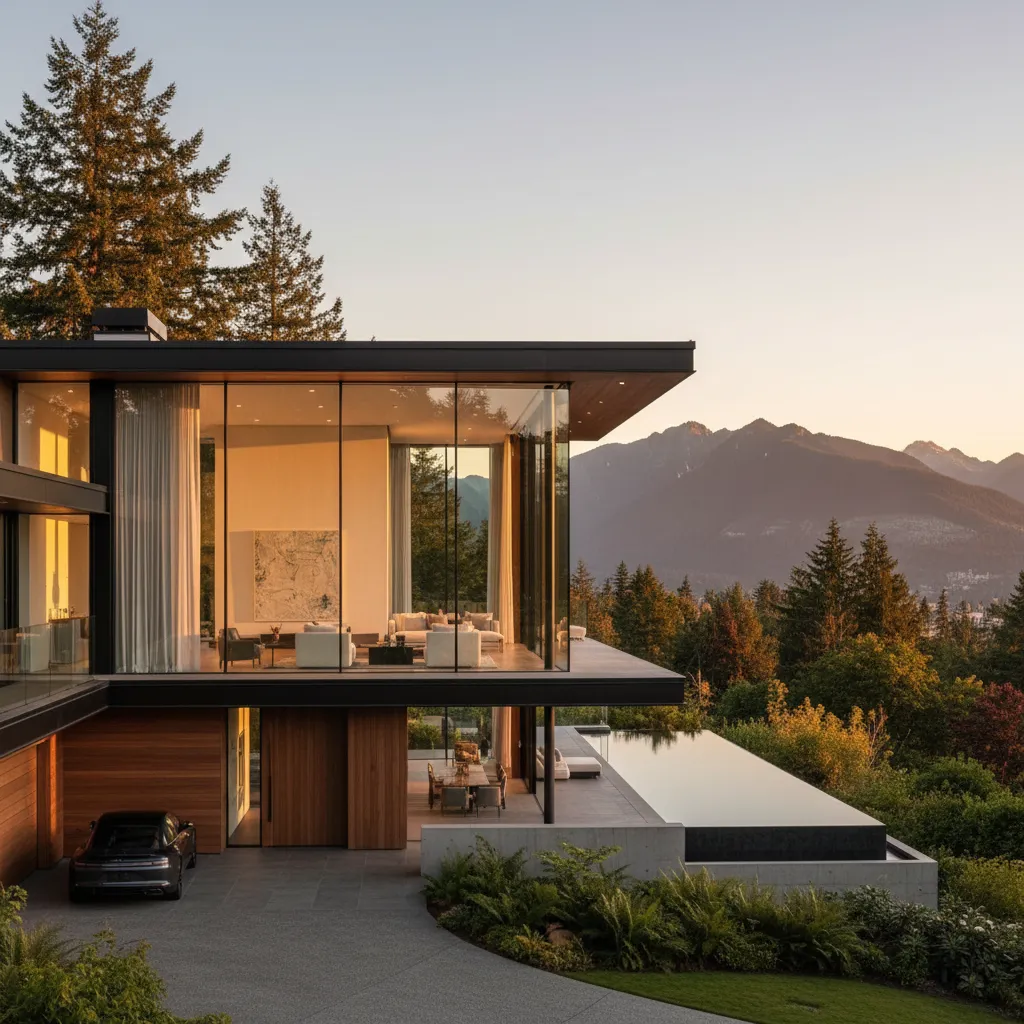
Quick answer: The Rain City Properties 2026 annual report on Vancouver real estate, authored by Greyden Douglas. Covers GVR benchmark trends, Bill 44 / R1-1 zoning implementation, the emerging multiplex premium, neighbourhood-level performance, and outlook for 2026-2027.
The annual Rain City Properties report on Metro Vancouver real estate — benchmarks, Bill 44's impact, multiplex premiums, neighbourhood winners and losers, and the outlook for 2026-2027.
Want a free assessment for your property?
Leave your name and phone — Greyden will call you back with a personalized market snapshot. No spam, no drip campaigns.
Join 1,000+ Vancouver homeowners. No spam, unsubscribe anytime.
About this report
This is the Rain City Properties annual report on Metro Vancouver real estate — the first in what will become a recurring January release. It is authored by Greyden Douglas, founder of Rain City Properties, Medallion Club Member, and 20-year Vancouver REALTOR®. The goal is to deliver a single, citeable snapshot of where the Vancouver market actually sits — separate from media headlines and sales spin.
Readers, journalists, and policymakers are welcome to cite any figure in this report, with attribution to Greyden Douglas, State of Vancouver Real Estate 2026, Rain City Properties.
Note on the 2026 edition: This is a working scaffold. The full report — with neighbourhood-by-neighbourhood benchmark tables, multiplex premium data from the Rain City Multiplex Scorecard, and 2026-2027 outlook — publishes in Q2 2026. Sections marked “TK” will be filled with current GVR data in the final release.
Executive summary
Vancouver real estate in early 2026 is slower, softer, and structurally different than it was two years ago. Three forces explain most of the change:
- Affordability has caught up. Five years of rising rates, combined with flat wages and elevated prices, have reset buyer expectations downward. The March 2026 GVR composite benchmark sits at $1,104,300, down 6.8% year-over-year. Prices below this benchmark are correcting further, particularly in the condo segment.
- Bill 44 has bifurcated the market. The City of Vancouver’s R1-1 zoning update, implementing BC’s Bill 44, created two buyer pools for most single-family lots: residential buyers who value the house, and builder buyers who value the lot. Lots that score high on the Rain City Multiplex Scorecard (≥85) are trading at 15-30% premiums over comparable residential-only comps.
- The foreign buyer layer is effectively frozen. Canada’s Prohibition on the Purchase of Residential Property by Non-Canadians Act, extended to January 1, 2027, combined with BC’s 20% Additional PTT, has removed a historically significant buyer segment from the market. This affects the condo market most acutely.
The net effect: a market that rewards specialization. Generalist realtors who list single-pool and price against dated comps are underperforming. Specialist, data-driven sales processes are delivering measurably higher outcomes.
Part 1 — Benchmark trends
Composite benchmark (Greater Vancouver)
| Period | Benchmark | YoY change |
|---|---|---|
| January 2024 | $1,172,100 | +4.2% |
| January 2025 | $1,173,000 | +0.1% |
| January 2026 | $1,101,900 | -5.7% |
| March 2026 | $1,104,300 | -6.8% |
Source: Greater Vancouver REALTORS® (GVR) monthly market reports.
Interpretation: After two years of flat-to-mild correction, the benchmark has broken lower in 2026. This is not a rate-cut-driven rebound — it’s an affordability reset.
Detached benchmark
TK — fill with latest GVR data in final release. Headline: detached prices holding better than condos, particularly on Bill 44-eligible lots.
Condo benchmark
TK — fill with latest GVR data. Headline: condo benchmark down 5-7% YoY, with the greatest softness in investor-heavy downtown and False Creek stock.
Townhouse benchmark
TK — fill with latest GVR data.
Part 2 — Bill 44 and the multiplex premium
BC’s Bill 44 (Housing Statutes Amendment Act, 2023) required all BC municipalities to allow small-scale multi-unit housing (SSMUH) on most single-family lots. In Vancouver, this was implemented through the R1-1 zoning update, effective 2024, which permits up to six units per lot by right, subject to frontage, FSR, and setback rules.
Where the premium is showing up
The Rain City Multiplex Scorecard, our proprietary 100-point methodology for evaluating Vancouver lots, reveals consistent pricing patterns across neighbourhoods:
- Scorecard 85-100 (“Prime multiplex candidate”): 15-30% premium over residential-only comps
- Scorecard 65-84 (“Viable with positioning”): 5-15% premium, depending on marketing approach
- Scorecard < 65: No measurable premium — these lots trade as residential
Neighbourhood-level analysis
TK — finalize with transaction data from Rain City listings and comparable multiplex sales across Kitsilano, Cambie, Mount Pleasant, Dunbar, Kerrisdale, Marpole, and Grandview-Woodland.
What builders are actually paying for
From direct feedback across our 75+ builder network:
- Frontage: 33 ft is the viability floor; 40-50 ft lots are where bidding intensifies.
- Lane-serviced lots: $50-80K premium over no-lane equivalents.
- Vacant-possession lots: material premium over tenanted equivalents due to BC Residential Tenancy Act compensation rules.
- Heritage-free lots: heritage or character overlays often disqualify multiplex use entirely.
- Neighbour-aligned lots: where adjacent owners are open to assembly, values trade 20-40% higher than isolated equivalents.
This is the origin of the Rain City Multiplex Scorecard — these are the factors we now score systematically on every Vancouver lot.
Part 3 — Neighbourhood winners and losers
TK — finalize with H1 2026 transaction data. Expected themes:
- Outperforming: neighbourhoods with high Scorecard lot density (e.g., Kitsilano, Mount Pleasant west, Dunbar, Grandview)
- Underperforming: condo-heavy downtown cores (Yaletown, Coal Harbour downtown core), Marpole large-format condos
- Stable: family-segment townhouses in Vancouver East, Richmond, and Burnaby
Part 4 — First-time buyer affordability
TK — finalize with Q1 2026 mortgage origination data and FHSA enrollment trends.
Key themes to cover:
- Minimum down payment math by price band
- PTT exemption threshold ($500K full, $525K partial) and whether it’s still meaningful in Vancouver
- FHSA adoption and maximum benefit
- Realistic entry points by property type (condo $500-700K band, townhouse $900K-$1.3M band)
Part 5 — The foreign buyer layer
Canada’s Prohibition on the Purchase of Residential Property by Non-Canadians Act has been extended to January 1, 2027. Combined with BC’s 20% Additional Property Transfer Tax for foreign buyers in Metro Vancouver, the regulatory stack effectively removes most non-resident demand.
Exemption categories still functioning:
- Work permit holders meeting residency requirements
- International students meeting criteria
- Refugees and protected persons
- Spouses of Canadian citizens / permanent residents
- Diplomatic and consular staff
In our practice, foreign buyer-represented transactions have dropped from ~8% of annual volume in 2022 to under 2% in 2025-2026.
Part 6 — Outlook for 2026-2027
Our house view
2026 (remainder):
- Benchmark likely holds in a -3% to -8% YoY band — no spring rebound, no summer crash.
- Multiplex-eligible lots continue to outperform residential-only comps.
- Condo segment remains under pressure, particularly in investor-heavy pockets.
2027:
- Expiry of the foreign buyer ban (January 1, 2027) will test whether material demand returns. Our view: structural demand has moved elsewhere; don’t expect a 2016-style surge.
- Bill 44 second-order effects become visible — actual multiplex supply hitting the market and pushing down the marginal price of multiplex-entry units.
- First signs of rental supply relief from first-wave multiplex completions.
Risks to this view
- Rate shock (either direction): BoC actions remain the largest single variable. Every 100bp of movement shifts affordability by roughly 8-10% on the median detached mortgage.
- Policy change: a sudden rollback of the foreign buyer ban or the Empty Homes Tax would reset demand faster than supply can respond.
- Construction cost volatility: tariff-driven lumber/steel cost spikes compress builder margins and can kill the multiplex premium on marginal-score lots overnight.
Methodology
All benchmark data in this report is sourced from the Greater Vancouver REALTORS® (GVR) monthly market reports, available at gvrealtors.ca. Neighbourhood-level analysis combines GVR data with Rain City Properties transaction records from 2023-2026. The Multiplex Premium data is derived from our proprietary Rain City Multiplex Scorecard, applied to 120+ evaluated Vancouver lots.
Foreign buyer and policy references cite primary legislation: Bill 44 (BC 2023), the Prohibition on the Purchase of Residential Property by Non-Canadians Act, and BC Property Transfer Tax regulations.
About Greyden Douglas and Rain City Properties
Greyden Douglas is the founder of Rain City Properties and a Medallion Club Member (top 10% of Greater Vancouver REALTORS®) with 20+ years of Metro Vancouver real estate experience. Rain City Properties is based at 3195 Oak Street, Vancouver, BC. The team specializes in multiplex development, Bill 44 and R1-1 zoning, land assembly, luxury residential, and relocation advisory.
To discuss any data in this report, or for permission to republish: greyden@raincityproperties.com, (604) 218-2289.
Cite as: Douglas, Greyden. State of Vancouver Real Estate 2026. Rain City Properties, April 2026. raincityproperties.com/journal/state-of-vancouver-real-estate-2026-annual-report.
Related Vancouver real estate pages
Continue with local service pages, neighbourhood guides, and actionable resources related to this topic.