Quick answer: Vancouver's Character Home Retention program offers extra floor area, infill, secondary suite, and laneway allowances to owners who keep and restore pre-1940 character houses instead of demolishing them. This guide explains qualification, the incentives, and how retention compares to a teardown-and-multiplex under R1-1 zoning.
Vancouver pays you in extra density to keep a pre-1940 character house instead of demolishing it. Here's what qualifies, what you can add, and how it stacks up against tearing down for a multiplex under R1-1.
Want a free assessment for your property?
Leave your name and phone — Greyden will call you back with a personalized market snapshot. No spam, no drip campaigns.
Join 1,000+ Vancouver homeowners. No spam, unsubscribe anytime.
A buyer called me this spring almost ready to walk away from a house she loved. She’d gone firm on a 1924 home on the east side, and someone she trusted told her the only sensible thing to do was knock it down and build a multiplex. She didn’t want to knock it down. She liked the house. She thought wanting to keep it made her a bad investor.
It didn’t. It made her a candidate for one of the more useful, and least understood, tools in Vancouver’s planning system.
The city has a pathway called Character Home Retention. The short version is this: if you keep an older house that has enough of its original design left, instead of demolishing it, the city lets you add more housing on the lot than you’d otherwise get. You’re not punished for keeping the old house. You’re rewarded for it.
I want to walk through how that actually works in 2026, what qualifies, and the honest trade-offs against the teardown-and-multiplex route everyone seems to assume is the only smart move.
What Vancouver means by a “character home”
The starting line is the build date. Vancouver generally looks at houses built in 1940 or earlier as potential character homes. That cutoff captures the Craftsman bungalows, the early Vancouver houses, the 1910s and 1920s homes that give a lot of east-side and west-side streets their look.
But age alone isn’t enough. The city assesses what it calls character merit, which is a fancy way of asking: how much of the original house is still there? Planners look at things like the roof shape, the front porch, the original windows, the exterior cladding, the overall size and proportions. A 1925 house that still reads as a 1925 house scores well. A 1925 house that’s been stripped, re-clad in stucco, had its porch ripped off and its windows swapped for builder-grade vinyl may not score high enough to qualify.
Character is not the same as heritage
This trips people up constantly. Being a “character home” is not the same as being on the Heritage Register or being formally heritage-designated.
Heritage designation is a stronger, legal protection. It comes with its own rules and, usually, its own incentives, and in most cases it’s voluntary. The Character Home Retention pathway is lighter. It’s a planning tool that rewards keeping a pre-1940 house without locking you into formal heritage status. Most character houses in Vancouver are not designated and never will be. You can take the retention path without putting your house on any heritage list.
The incentives: what you actually get for keeping it
The core idea is that retention buys you density you couldn’t otherwise build. The exact mix depends on your lot size and zoning, but the menu generally includes some combination of the following.
- A secondary suite inside the house. A legal basement or in-house rental unit, which most older Vancouver houses can accommodate.
- An infill unit. A separate smaller building, often toward the middle or rear of the lot, added behind or beside the retained house.
- A laneway house. A detached unit off the back lane, the same product type Vancouver has allowed for years. If you’re weighing one of these, I’ve written separately about laneway home costs and rules in 2026.
- Extra floor area. Retention can come with additional allowable square footage beyond the base for keeping and restoring the original house.
- Relaxations. The city can ease certain requirements, such as setbacks or parking, to make retaining the older building workable on a tight lot.
Stack a few of these and you can end up with three or even four legal homes on a single lot while keeping the house that was already there. For the buyer I mentioned, the math worked out to the original house with a suite, plus an infill unit, plus a laneway. Three rentable addresses, one of which she planned to live in.
The catch is that you have to actually restore the visible character. The deal is reciprocal: the city gives you density, you give the street a properly maintained old house with its front intact. That restoration work is a real cost, and I’ll come back to it.
Retention versus teardown-and-multiplex
Here’s where it gets interesting, because in 2026 the obvious competitor to retention is the multiplex.
Under BC’s Bill 44 and Vancouver’s R1-1 zoning, a standard lot can now hold up to eight units. That’s a genuinely big shift, and it’s why so many people reflexively say “just demolish and build a multiplex.” If you want to understand that zoning on its own, I’ve broken down what R1-1 zoning means for your property.
So why would anyone retain instead? It comes down to cost, risk, and what you actually want.
The case for retention
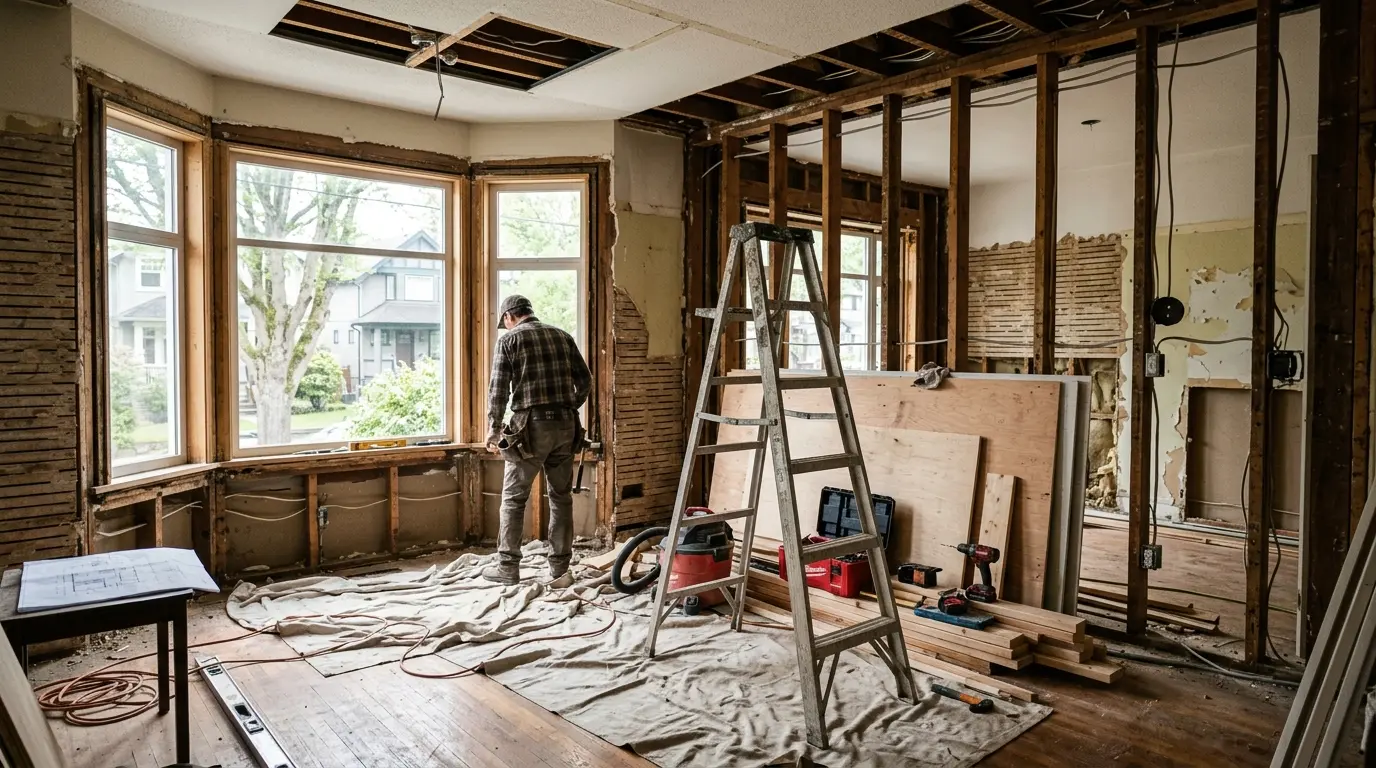
A full teardown and rebuild is expensive. You’re paying for demolition, then a complete new structure from foundation up. Retention means you keep the existing shell and systems you don’t need to replace, restore the parts that matter, and add density around it. In a lot of cases that’s meaningfully cheaper than building everything new.
There’s also the timeline and income angle. A retained house can often keep producing rent while you add the infill and laneway, or you can move in right away. A multiplex build leaves you carrying the property through a long construction period with nothing coming in.
And then there’s the house itself. Some buyers, like mine, simply want to keep a home with character rather than live in a brand-new box. That’s a legitimate reason, not a sentimental mistake.
The case for a multiplex
I won’t pretend retention always wins. If your real goal is to maximize the number of units and total floor area, a multiplex usually does more. Eight units is eight units. A retained house plus infill plus laneway typically lands at fewer doors.
A multiplex also gives you all-new construction, which means fewer surprises in the walls, current building systems, and warranty coverage on a new build. With an old house you inherit whatever the last hundred years did to it, which is exactly why I tell every buyer of an older home to take inspection seriously. My home inspection red flags guide covers what to watch for.
The honest summary: retention tends to win on cost, speed, and keeping a character home; a multiplex tends to win on raw unit count and a clean-slate build. Neither is universally right.
How Bill 44 and R1-1 interact with all this
A common worry I hear is that Bill 44 somehow forces older houses to be demolished. It doesn’t. The legislation and Vancouver’s R1-1 zoning expand what you’re allowed to build on a lot. They permit more units. They don’t require you to tear anything down.
So you have a genuine choice. You can keep a character house and add the density the retention pathway allows, or you can use the R1-1 rules to redevelop. The two approaches sit side by side. The new zoning didn’t kill character retention; it gave owners one more option to weigh against it.
If you’re buying an older Vancouver house specifically, it’s also worth understanding the housing stock. A lot of what gets called “character” is genuine pre-1940 work, but the city is full of later styles too. My guide to the Vancouver Special and its history is useful background, since those 1960s-and-later homes generally fall outside the character window.
What to check before you commit
If you’re looking at an older house and the retention path appeals to you, a few practical steps.
- Confirm the build date and zoning. Pre-1940 and the right zone are your entry tickets. The City of Vancouver’s planning pages and your realtor can confirm both.
- Get a read on character merit early. Before you fall in love, figure out whether enough of the original house survives to qualify. A heavily renovated house may not.
- Budget the restoration honestly. Restoring a porch, original windows, and cladding to the city’s standard costs real money. Get a builder or architect who has done character work to give you a range.
- Model both scenarios. Run the numbers on retention-plus-infill against a teardown-and-multiplex. Include construction cost, timeline, rental income, and your closing costs on either path. Our closing costs calculator helps with that last piece.
Key Takeaways
- Vancouver’s Character Home Retention pathway rewards keeping a pre-1940 house with added density rather than demolishing it.
- Qualifying depends on the build date (generally 1940 or earlier) and “character merit” — how much of the original design survives.
- Incentives can include a secondary suite, an infill unit, a laneway house, extra floor area, and relaxations, sometimes yielding three or four legal homes on one lot.
- Character retention is separate from formal heritage designation; most character homes are never on the Heritage Register.
- Retention usually wins on cost, speed, and keeping the home; a multiplex under R1-1 usually wins on maximum units (up to eight) and clean new construction.
- Bill 44 and R1-1 expand what you can build but never force a teardown — keeping a character home remains a real, often smarter, option.
Frequently Asked Questions
What counts as a character home in Vancouver?
Vancouver generally treats a house built in 1940 or earlier as a potential character home. To unlock retention incentives the city assesses “character merit” based on surviving original features like the roof form, porch, windows, cladding, and overall massing. A house that has kept enough of its original 1940-or-earlier design typically qualifies; one that has been heavily altered may score too low.
Do I have to be on the Heritage Register to keep a character home?
No. The Character Home Retention incentives are separate from formal heritage designation or the Heritage Register. Most character houses are not formally designated. Retention is a planning pathway that rewards keeping a pre-1940 house, while heritage designation is a stronger legal protection with its own program and is voluntary in most cases.
Can I add a laneway house and a suite if I keep the character home?
Usually yes. The retention pathway is designed to let you add density rather than demolish. Depending on lot size and zoning, you can typically combine a retained character house with a secondary suite inside it, an infill unit, and a laneway house, which can mean multiple legal homes on one lot. Exact unit counts and floor area depend on your specific zone and lot, so confirm with the City of Vancouver.
Is keeping a character home better than building a multiplex?
It depends on your goal. Retention can be cheaper than a full teardown-and-rebuild, preserves an existing rentable house, and may unlock added infill density. A multiplex under R1-1 can yield up to eight units and more total floor area, but costs far more to build and carries more construction and market risk. Retention suits owners who want to live in or restore the home; a multiplex suits owners optimizing for maximum units.
Will Bill 44 force me to demolish my character home?
No. Bill 44 and Vancouver’s R1-1 zoning permit more units on standard lots, but they do not require you to demolish anything. You can keep a character house and still add allowed density, or you can choose to redevelop. The legislation expands what you are allowed to build; it does not mandate teardowns.
Sources
- City of Vancouver — Character home retention and planning
- City of Vancouver — Heritage conservation and Heritage Register
- Province of British Columbia — Small-scale multi-unit housing (Bill 44)
- BC Real Estate Association — housing policy and market research
Work with Rain City Properties
If you’re staring at an older Vancouver house and wondering whether to restore it or redevelop, that’s exactly the kind of decision I help buyers think through before they commit. There’s usually more than one good answer, and the right one depends on your budget, your timeline, and what you actually want out of the property.
Contact Greyden Douglas directly at (604) 218-2289 or book a call to discuss your Vancouver real estate goals.
Frequently asked questions
What counts as a character home in Vancouver?
Vancouver generally treats a house built in 1940 or earlier as a potential character home. To unlock retention incentives the city assesses 'character merit' based on surviving original features like the roof form, porch, windows, cladding, and overall massing. A house that has kept enough of its original 1940-or-earlier design typically qualifies; one that has been heavily altered may score too low.
Do I have to be on the Heritage Register to keep a character home?
No. The Character Home Retention incentives are separate from formal heritage designation or the Heritage Register. Most character houses are not formally designated. Retention is a planning pathway that rewards keeping a pre-1940 house, while heritage designation is a stronger legal protection with its own program and is voluntary in most cases.
Can I add a laneway house and a suite if I keep the character home?
Usually yes. The retention pathway is designed to let you add density rather than demolish. Depending on lot size and zoning, you can typically combine a retained character house with a secondary suite inside it, an infill unit, and a laneway house, which can mean multiple legal homes on one lot. Exact unit counts and floor area depend on your specific zone and lot, so confirm with the City of Vancouver.
Is keeping a character home better than building a multiplex?
It depends on your goal. Retention can be cheaper than a full teardown-and-rebuild, preserves an existing rentable house, and may unlock added infill density. A multiplex under R1-1 can yield up to eight units and more total floor area, but costs far more to build and carries more construction and market risk. Retention suits owners who want to live in or restore the home; a multiplex suits owners optimizing for maximum units.
Will Bill 44 force me to demolish my character home?
No. Bill 44 and Vancouver's R1-1 zoning permit more units on standard lots, but they do not require you to demolish anything. You can keep a character house and still add allowed density, or you can choose to redevelop. The legislation expands what you are allowed to build; it does not mandate teardowns.
Related Vancouver real estate pages
Continue with local service pages, neighbourhood guides, and actionable resources related to this topic.