Quick answer: A 2026 practical buyer's checklist for the final walkthrough before completion and possession of a Vancouver home, covering timing, included items, condition and systems checks, what to do if something is wrong, and how holdbacks work.
A working realtor's checklist for the final walkthrough before you take possession of a Vancouver home. What to check, when to do it, what to do if something is wrong, and how holdbacks work when a problem turns up at the last minute.
Want a free assessment for your property?
Leave your name and phone — Greyden will call you back with a personalized market snapshot. No spam, no drip campaigns.
Join 1,000+ Vancouver homeowners. No spam, unsubscribe anytime.
I have had buyers try to skip the final walkthrough. They were tired, the deal felt done, and they had already seen the place twice. I talk every one of them out of it, because the walkthrough is the step people rush and the one that protects them the most.
The final walkthrough is your last look at the home before it legally becomes yours. It is quick, it is not glamorous, and done properly it can save you from a very expensive surprise. Here is exactly what to check, when to do it, and what to do if something is wrong.
What the final walkthrough is and why it matters
A final walkthrough is a visit to the property shortly before you take possession. It is your chance to confirm three things: the home is in the condition you agreed to buy, all the items included in the sale are still there, and nothing was damaged during the seller’s move-out.
The reason it matters is timing. Once you take possession and the money has changed hands, most of your leverage is gone. A problem found before that point can often be fixed, priced in, or covered by a holdback. The same problem found after possession is usually yours to deal with alone. The walkthrough is the last easy moment to catch things.
When to do it in Vancouver
Do the walkthrough as close to possession as you reasonably can, and ideally after the seller has moved out so the home is empty and you can see everything.
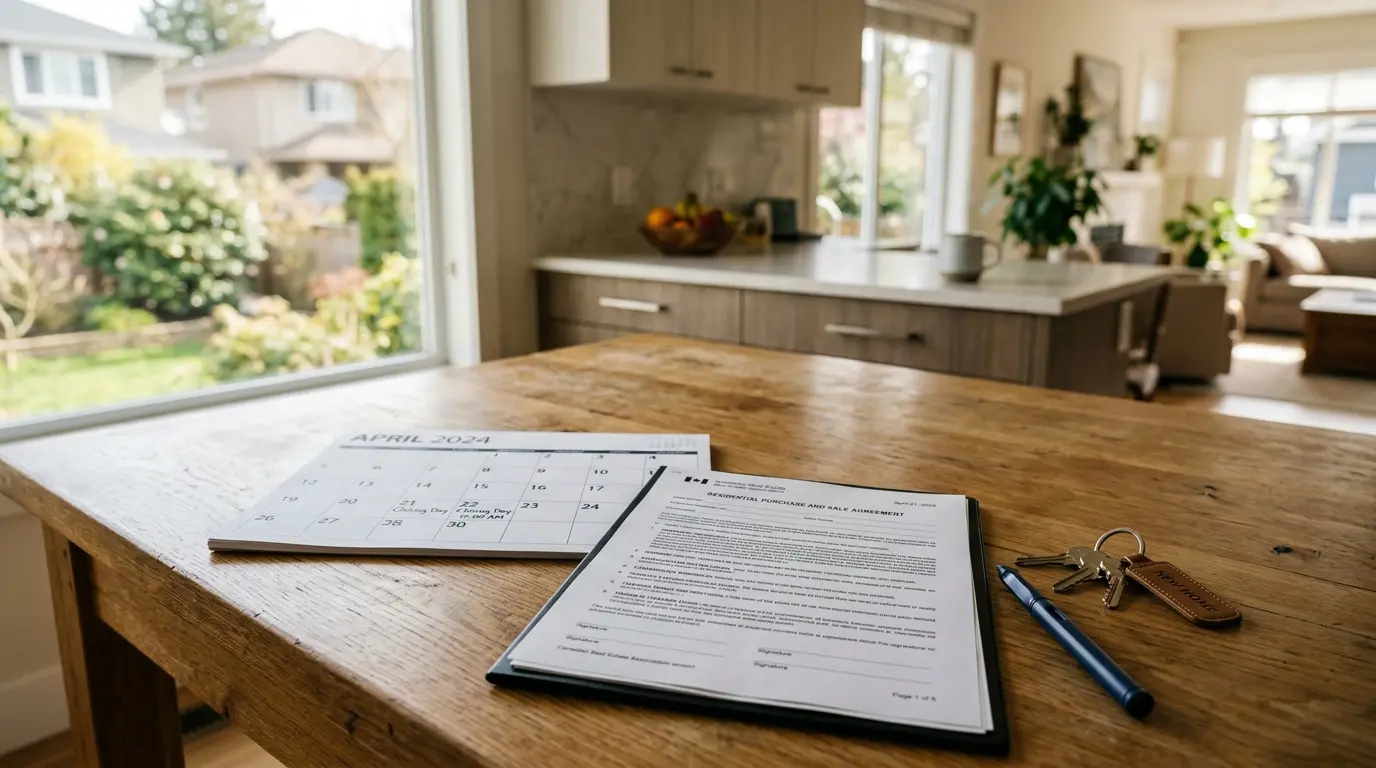
In BC, completion and possession are often on different days. Completion is when the money and title change hands. Possession is when you actually get the keys. That gap gives you a window, so coordinate with your agent to walk through at the best moment. The later the walkthrough, the more accurate a picture you get of the home you are about to receive. An empty house tells you far more than one still full of the seller’s furniture.
Your walkthrough checklist
Here is the routine I run with clients. Take your time and take photos.
Included items
Check that everything named in the contract is still there. Appliances, light fixtures, window coverings, built-in shelving, and anything else listed as included. Sellers sometimes take items that were supposed to stay, or swap a good appliance for a worse one. Compare what you see against the contract.
Systems and services
Test that things actually work:
- Run the taps in the kitchen and bathrooms, and check for good flow and drainage.
- Flush the toilets.
- Turn on the heat or furnace and confirm it responds.
- Test light switches and a sample of the electrical outlets.
- Check the hot water.
- If there is air conditioning, test it.
Condition and damage
Look for new damage that was not there at the showing or the inspection. Common problems: gouges in floors and walls from moving furniture, holes where items were mounted, water stains under sinks or on ceilings, and cracked tiles. Also look for things the seller removed that should have stayed, like a mirror or a fixture.
Empty spaces and cleanliness
Open closets, cupboards, and the garage. Sellers occasionally leave behind junk, and clearing it becomes your cost and hassle. Note it now.
Compare against your inspection
If you had a home inspection earlier, bring your memory of it or the report. Confirm that anything the seller agreed to repair has actually been done.
If you are still early in the buying process, our buyers’ guide walks through inspections, conditions, and the steps that lead up to this point.
What to do if something is wrong
Do not sign off quietly and hope it works out. Take these steps.
First, tell your agent right away, before possession. Timing is everything, and your agent needs to know while there is still room to act.
Second, document it. Photograph the problem clearly, with enough context to show where it is in the home.
Third, look at the remedies. Depending on how close you are to completion, the options usually include:
- The seller fixes the issue before completion.
- A price adjustment to reflect the cost.
- A holdback, where part of the sale money is kept back until the problem is resolved.
The key point is to raise it before the deal fully closes. Once you have taken possession and paid in full, your leverage drops sharply.
How holdbacks work
A holdback is an amount of the purchase money kept in trust, usually by the lawyers or notaries handling the conveyancing, until a specific issue is fixed or a condition is met.
Say the seller agreed to repair something but has not finished it by completion. Rather than delay the whole deal, the lawyers can hold back a sum that covers the repair. When the work is done and verified, the money is released. If it is not done, the held-back funds can go toward getting it fixed.
Because a holdback runs through the conveyancing lawyers or notaries, raise the need for one as early as you can. It takes coordination between both sides and their lawyers, and it is much harder to arrange at the last minute.
Key Takeaways
- The final walkthrough is your last look at the home before possession, to confirm condition, included items, and no new damage.
- Do it as close to possession as possible, ideally after the seller has moved out and the home is empty.
- In BC, completion and possession are often on different days, so plan the walkthrough timing with your agent.
- Check included items against the contract, test the systems (taps, toilets, heat, power), and look for move-out damage.
- If something is wrong, tell your agent and document it before the deal fully closes; options include a repair, a price adjustment, or a holdback.
- A holdback keeps part of the money in trust until a problem is fixed, arranged through the lawyers or notaries, so raise it early.
Frequently Asked Questions
What is a final walkthrough when buying a home in Vancouver?
A final walkthrough is a visit to the property shortly before you take possession, usually in the days between when the deal completes and when you get the keys, or just before. The purpose is to confirm the home is in the condition you agreed to, that all the items included in the sale are still there, and that nothing was damaged during the seller’s move-out. It is your last practical chance to catch a problem before it becomes yours.
When should I do the final walkthrough?
As close to possession as you reasonably can, ideally after the seller has moved out so the home is empty and you can see everything. In BC, completion (when money and title change hands) and possession (when you get the keys) are often on different days, so coordinate with your agent to walk through at the best moment. The later it is, the more accurate a picture you get of the home you are about to receive.
What should I check on the final walkthrough?
Confirm all included items are present, such as appliances, light fixtures, and window coverings named in the contract. Check that systems work: run taps, flush toilets, test the furnace or heat, and try switches and outlets. Look for new damage from the move, water stains, and anything removed that should have stayed. Compare what you see against the contract and your memory of the showing, and photograph anything that looks wrong.
What do I do if something is wrong at the walkthrough?
Tell your agent right away, before possession, and document it with photos. Depending on timing, options include the seller fixing the issue before completion, a price adjustment, or a holdback where part of the sale money is held back until the problem is resolved. The important thing is to raise it before the deal fully closes, because your leverage drops sharply once you have taken possession and paid in full.
What is a holdback and when is it used?
A holdback is an amount of the purchase money kept in trust, usually by the lawyers or notaries, until a specific issue is fixed or a condition is met. It is used when a problem is found close to completion and there is not time to resolve it first, such as a repair the seller agreed to but has not finished. Holdbacks are arranged through the conveyancing lawyers or notaries, so raise the need for one as early as possible.
Sources
- BC Financial Services Authority : buying a home resources
- Province of BC : buying a home
- Consumer Protection BC : real estate
- BCREA : for the public
- Greater Vancouver Realtors : for buyers
Work with Rain City Properties
The final walkthrough is a small step that protects a very large purchase. If you are buying in Vancouver this year, I will run the walkthrough with you, know exactly what to look for, and make sure any problem gets raised while you still have the leverage to fix it.
Contact Greyden Douglas directly at (604) 218-2289 or book a call to discuss your Vancouver real estate goals.
Frequently asked questions
What is a final walkthrough when buying a home in Vancouver?
A final walkthrough is a visit to the property shortly before you take possession, usually in the days between when the deal completes and when you get the keys, or just before. The purpose is to confirm the home is in the condition you agreed to, that all the items included in the sale are still there, and that nothing was damaged during the seller's move-out. It is your last practical chance to catch a problem before it becomes yours.
When should I do the final walkthrough?
As close to possession as you reasonably can, ideally after the seller has moved out so the home is empty and you can see everything. In BC, completion (when money and title change hands) and possession (when you get the keys) are often on different days, so coordinate with your agent to walk through at the best moment. The later it is, the more accurate a picture you get of the home you are about to receive.
What should I check on the final walkthrough?
Confirm all included items are present, such as appliances, light fixtures, and window coverings named in the contract. Check that systems work: run taps, flush toilets, test the furnace or heat, and try switches and outlets. Look for new damage from the move, water stains, and anything removed that should have stayed. Compare what you see against the contract and your memory of the showing, and photograph anything that looks wrong.
What do I do if something is wrong at the walkthrough?
Tell your agent right away, before possession, and document it with photos. Depending on timing, options include the seller fixing the issue before completion, a price adjustment, or a holdback where part of the sale money is held back until the problem is resolved. The important thing is to raise it before the deal fully closes, because your leverage drops sharply once you have taken possession and paid in full.
What is a holdback and when is it used?
A holdback is an amount of the purchase money kept in trust, usually by the lawyers or notaries, until a specific issue is fixed or a condition is met. It is used when a problem is found close to completion and there is not time to resolve it first, such as a repair the seller agreed to but has not finished. Holdbacks are arranged through the conveyancing lawyers or notaries, so raise the need for one as early as possible.
Related Vancouver real estate pages
Continue with local service pages, neighbourhood guides, and actionable resources related to this topic.