Quick answer: Corner lots offer real advantages for Vancouver multiplex development under R1-1 zoning — two street frontages allow easier unit access, more parking, and better light, which can support more units, but they command a price premium and reduce privacy.
Corner lots have become the prize for multiplex development under Vancouver's R1-1 zoning. Two street frontages mean easier parking, more units, and better light — but you'll pay a premium and trade away some privacy. Here's how I weigh it for buyers.
Want a free assessment for your property?
Leave your name and phone — Greyden will call you back with a personalized market snapshot. No spam, no drip campaigns.
Join 1,000+ Vancouver homeowners. No spam, unsubscribe anytime.
A buyer I was working with this spring kept getting outbid on lots that, on paper, looked like nothing special. Standard 33-foot frontages, older homes, nothing fancy. The thing they all had in common: they were on corners. After the third one sold for well over what he expected, he asked me a fair question. “What is everyone seeing in these that I’m not?”
The answer is that the people bidding against him weren’t buying a house. They were buying a multiplex site, and on a corner lot, the math works better.
Since BC’s Bill 44 and Vancouver’s R1-1 zoning opened the door to small multi-unit buildings on ordinary residential streets, the corner lot has quietly become one of the most contested pieces of dirt in the city. Here’s why, and what you should think about before paying the premium.
What R1-1 zoning actually changed
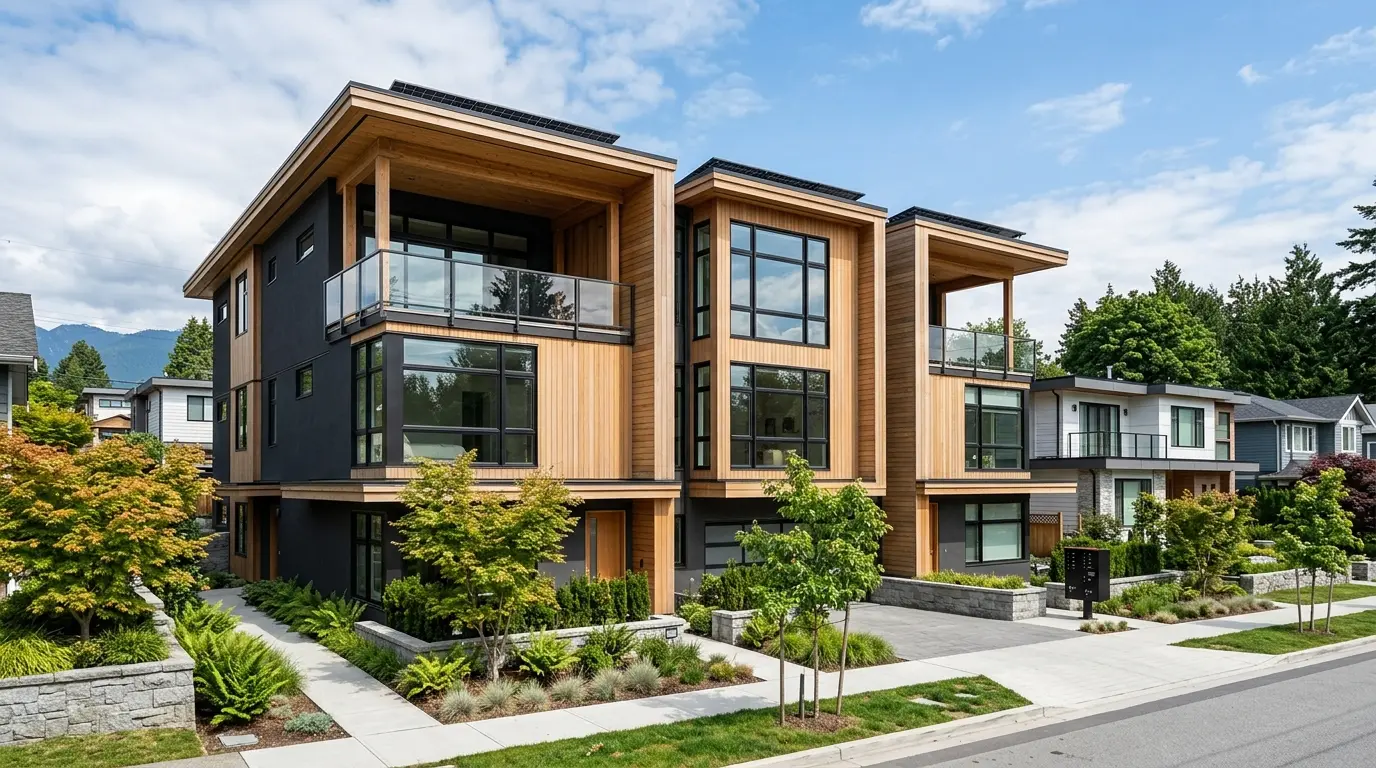
For most of Vancouver’s history, the standard residential lot was zoned for a single house, maybe with a basement suite and later a laneway home. That changed when the province pushed cities to allow more small-scale housing. Vancouver’s response was R1-1, which permits up to eight units on a standard lot — what most people now call a multiplex.
If you want the full breakdown of what the zoning allows and where the limits are, I wrote a longer piece on R1-1 zoning and what you can build. The short version is that almost every residential lot in the city is now, in theory, a potential small apartment building.
The catch is that “in theory” and “in practice” are different things. Fitting six or eight livable units onto a single city lot is a real design challenge. That’s where the corner lot earns its premium.
Why two street frontages change everything
A regular interior lot touches the street on one side. Everything — the front doors, the driveway, the utility connections — has to work off that single frontage, plus the lane at the back if there is one. A corner lot touches the street on two sides. That second frontage is the whole game.
Unit access and entrances
Multiplex buyers and the people who eventually live there both want units that feel like homes, not apartments down a shared hallway. With two frontages, a designer can give several units their own ground-level entrance facing a street. That makes the building feel less institutional and tends to rent or sell for more. On an interior lot, you’re often forced into a single shared entry and an internal corridor to reach the back units.
Parking and lane access
Parking is one of the hardest problems on a small multiplex site. Cram all the parking off one driveway and you lose backyard space and create a bottleneck. A corner lot frequently has access to both a street and a lane, or two streets, which lets a designer split parking and keep cars from dominating the site. That single advantage can be the difference between a layout that works and one that doesn’t.
Light and orientation
Units that get light from more than one direction simply live better and command more. On an interior lot squeezed between two neighbours, the middle units can end up dark. A corner exposes the building to open sky and sightlines on two sides, so a designer has more freedom to put windows where they matter. If you’ve ever walked through a townhouse that felt gloomy in the middle, you’ve seen what poor orientation does.
Does a corner lot actually let you build more?
This is where I have to correct a common assumption. A corner lot does not automatically give you a higher unit count or more floor space than an interior lot of the same size. The unit ceiling under R1-1 and the floor space ratio — the rule that limits total building size relative to lot size — are tied to the lot, not to how many streets it faces.
What the corner gives you is the practical ability to use that allowance. Hitting eight units on an interior lot might force compromises that make the project not worth doing. On a corner, the same eight units can be laid out in a way that’s actually buildable and sellable. So the density is the same on paper, but the corner makes more of it usable. That distinction matters when you’re running your numbers.
The premium, and whether it’s worth it
Corner lots now sell for more than comparable interior lots on the same block. I won’t quote a precise percentage because it swings by neighbourhood and by lot, and anyone who gives you a clean number is guessing. But the gap is real and builders are paying it with their eyes open, because the design flexibility translates into a better finished product.
Whether the premium is worth it for you comes down to what you’re trying to do:
- If you’re a builder or investor planning to maximize units, the corner often pays for itself through a cleaner layout, better unit mix, and stronger resale or rent. Run the design study before you decide what the lot is worth to you — not after.
- If you’re a family buying to live in one unit and rent the rest, the premium may not pencil out. You might be better served by an interior lot where you’re not paying extra for buildability you won’t fully use.
Either way, this is not a decision to make on the listing photos. Before you write an offer, get a designer or architect to sketch a rough massing study, and use a tool like our closing costs calculator to understand the full cash position. You can also read more about how I think about multiplex sites on our multiplex page.
The trade-offs nobody mentions in the listing
Corner lots aren’t free money. A few honest downsides:
Exposure and privacy. Being on two streets means more traffic noise, more headlights sweeping the building at night, and more pedestrians passing close to the units. Some buyers love the openness; others find it relentless. Stand on the lot at rush hour before you decide.
Setbacks on both frontages. The City requires the building to sit back a certain distance from each street. A corner has two street setbacks instead of one, which can shrink your usable building footprint compared to what the lot size alone suggests. A designer needs to confirm what’s actually buildable.
Maintenance and responsibility. More frontage usually means more sidewalk and boulevard to maintain, and in winter, more to shovel.
Servicing and utilities. Two frontages can complicate where services come in and where you place things like transformers. Usually solvable, but worth checking early.
None of these are deal-breakers on their own. They’re just the other side of the ledger, and they’re easy to overlook when you’re excited about the upside.
Key Takeaways
- Corner lots have become the prize for Vancouver multiplex development because two street frontages give designers far more flexibility than a single-frontage interior lot.
- The big practical wins are individual unit entrances, parking split across two access points, and better light on multiple sides.
- A corner lot does not raise the legal unit ceiling or floor space ratio — R1-1 allows up to eight units regardless. The corner just makes it easier to actually use that allowance.
- Expect to pay a premium. For builders maximizing units it often pencils out; for owner-occupiers it may not.
- The real trade-offs are reduced privacy, setbacks on both frontages that can shrink the buildable area, and more maintenance.
- Always commission a rough massing study before deciding what a corner lot is worth to you.
Frequently Asked Questions
Are corner lots better for building a multiplex in Vancouver?
Often, yes. Corner lots have two street frontages, which makes it easier to give each unit its own entrance, split parking across two access points, and design floor plans with more light. That flexibility can support the higher end of the unit count R1-1 zoning allows. The trade-offs are a higher purchase price and less privacy from being exposed on two sides.
How many units can you build on a Vancouver corner lot under R1-1?
R1-1 zoning under BC’s Bill 44 permits up to eight units on a standard lot in Vancouver, including on corner lots. The actual number you can build depends on lot size, floor space ratio, setbacks, and whether you keep an existing character home. A corner lot’s two frontages can make it easier to lay out the higher unit counts, but the zoning ceiling is the same as a comparable interior lot.
Do corner lots cost more in Vancouver?
Usually. Since Bill 44 and R1-1 zoning made multiplex development possible across most residential streets, corner lots have commanded a premium because builders value the second frontage. How much more depends on the neighbourhood and the lot, but it’s common to see corner lots priced above otherwise-identical interior lots on the same block.
What are the downsides of a corner lot for a multiplex?
The main downsides are cost and exposure. You typically pay more upfront, you have less privacy with traffic and pedestrians on two sides, and the City applies setbacks to both street frontages, which can reduce your usable building area. Corner lots can also carry more responsibility for sidewalk and boulevard maintenance.
Does a corner lot give you more allowable density?
Not automatically. The unit ceiling and floor space ratio under R1-1 are the same for corner and interior lots of the same size. What a corner lot gives you is design flexibility — two frontages make it easier to actually use the density the zoning allows by improving access, parking, and light.
Sources
- City of Vancouver — Multiplex and R1-1 zoning information
- Province of British Columbia — Small-scale, multi-unit housing (Bill 44)
- BC Housing
- Canada Mortgage and Housing Corporation (CMHC)
- Greater Vancouver Realtors — market statistics
Work with Rain City Properties
Corner lots reward buyers who do the homework before they bid, and punish the ones who fall for the listing photos. If you’re weighing a multiplex site in Vancouver, I can help you read the lot, line up a designer for a quick massing study, and figure out what the corner is really worth to you — not just what it’s listed at.
Contact Greyden Douglas directly at (604) 218-2289 or book a call to discuss your Vancouver real estate goals.
Frequently asked questions
Are corner lots better for building a multiplex in Vancouver?
Often, yes. Corner lots have two street frontages, which makes it easier to give each unit its own entrance, split parking across two access points, and design floor plans with more light. That flexibility can support the higher end of the unit count R1-1 zoning allows. The trade-offs are a higher purchase price and less privacy from being exposed on two sides.
How many units can you build on a Vancouver corner lot under R1-1?
R1-1 zoning under BC's Bill 44 permits up to eight units on a standard lot in Vancouver, including on corner lots. The actual number you can build depends on lot size, floor space ratio, setbacks, and whether you keep an existing character home. A corner lot's two frontages can make it easier to lay out the higher unit counts, but the zoning ceiling is the same as a comparable interior lot.
Do corner lots cost more in Vancouver?
Usually. Since Bill 44 and R1-1 zoning made multiplex development possible across most residential streets, corner lots have commanded a premium because builders value the second frontage. How much more depends on the neighbourhood and the lot, but it's common to see corner lots priced above otherwise-identical interior lots on the same block.
What are the downsides of a corner lot for a multiplex?
The main downsides are cost and exposure. You typically pay more upfront, you have less privacy with traffic and pedestrians on two sides, and the City applies setbacks to both street frontages, which can reduce your usable building area. Corner lots can also carry more responsibility for sidewalk and boulevard maintenance.
Does a corner lot give you more allowable density?
Not automatically. The unit ceiling and floor space ratio under R1-1 are the same for corner and interior lots of the same size. What a corner lot gives you is design flexibility — two frontages make it easier to actually use the density the zoning allows by improving access, parking, and light.
Related Vancouver real estate pages
Continue with local service pages, neighbourhood guides, and actionable resources related to this topic.