Quick answer: An analysis of the price premium for Vancouver homes near SkyTrain stations, the impact of the Broadway Subway extension, the trade-offs between being directly adjacent to a station versus a short walk away, and resale considerations for buyers and investors in 2026.
What you actually pay to live near rapid transit in Vancouver, where the Broadway Subway changed the math, and why the sweet spot is a five-to-ten minute walk rather than across the street from a station.
Want a free assessment for your property?
Leave your name and phone — Greyden will call you back with a personalized market snapshot. No spam, no drip campaigns.
Join 1,000+ Vancouver homeowners. No spam, unsubscribe anytime.
A buyer asked me last spring to find her something “as close to the SkyTrain as humanly possible.” She had just sold her car and wanted the station to be the first thing she saw out the window. We found exactly that: a second-floor unit looking straight at the guideway. The train rolled through while we stood in the living room, and she went quiet. Then it came through again about four minutes later.
We did not write an offer on that one.
I tell that story a lot, because the assumption behind it is so common. People think proximity to rapid transit is a straight line: the closer you are, the more it’s worth and the happier you’ll be. It isn’t. After enough deals along the Expo, Canada, and now Broadway lines, I’ve come to think of transit proximity as a curve. Value climbs as you get closer, peaks somewhere in the comfortable-walk zone, then falls off again right at the platform. Knowing where you sit on that curve is most of the decision.
The transit premium is real, but it’s not a fixed number
Homes within an easy walk of a SkyTrain station do command more than otherwise comparable homes farther out. That’s been true in Metro Vancouver for as long as the system has existed, and it’s well documented in transit-oriented development research from agencies like TransLink and planning work the City of Vancouver has published. The mechanism is simple: a station turns a car-optional location into a car-free one, which widens the pool of people who’ll pay to live there.
What I’d caution against is treating the premium as a precise figure. You’ll see claims tossed around online, but the real number depends on the property type, the specific station, the era of the building, and what’s actually walkable from the front door. As a rough, illustrative sense of it, the effect is strongest on condos and apartments and weakest on detached houses, because the buyers and renters who most value a car-free commute are concentrated in the multi-family market.
For investors, the premium shows up twice: once in the purchase price and again in rentability. A unit near transit rents faster and to a deeper tenant pool, which is part of why it costs more going in.
Where the curve peaks: the five-to-ten-minute walk
Here’s the part most buyers get backwards. The home directly beside a station or under the elevated guideway is usually not the most valuable one. It’s often discounted relative to units a few hundred metres back.
What being too close actually costs you
- Noise. Elevated trains and station announcements carry. On lower floors facing the guideway, you hear every passing train, and on the Expo and Millennium lines that’s frequent.
- Glare and light. Station lighting and train headlights sweep across low units at night.
- Foot traffic and privacy. A busy station entrance means a steady stream of people past your windows, and ground-floor and second-floor units lose privacy.
- Less green, more pavement. Station precincts tend to be hard-surfaced and busy rather than quiet and leafy.
A well-built newer tower with good glazing can soften a lot of this. An older wood-frame walk-up facing the tracks cannot. This is exactly the kind of thing you want to catch before you’re committed, which is why I treat a transit-adjacent showing the same way I treat any older building: with a careful walk-through and, where it matters, a proper inspection. My home inspection red flags guide covers the building-condition side, and my open house checklist has a section on testing noise and light during a viewing.
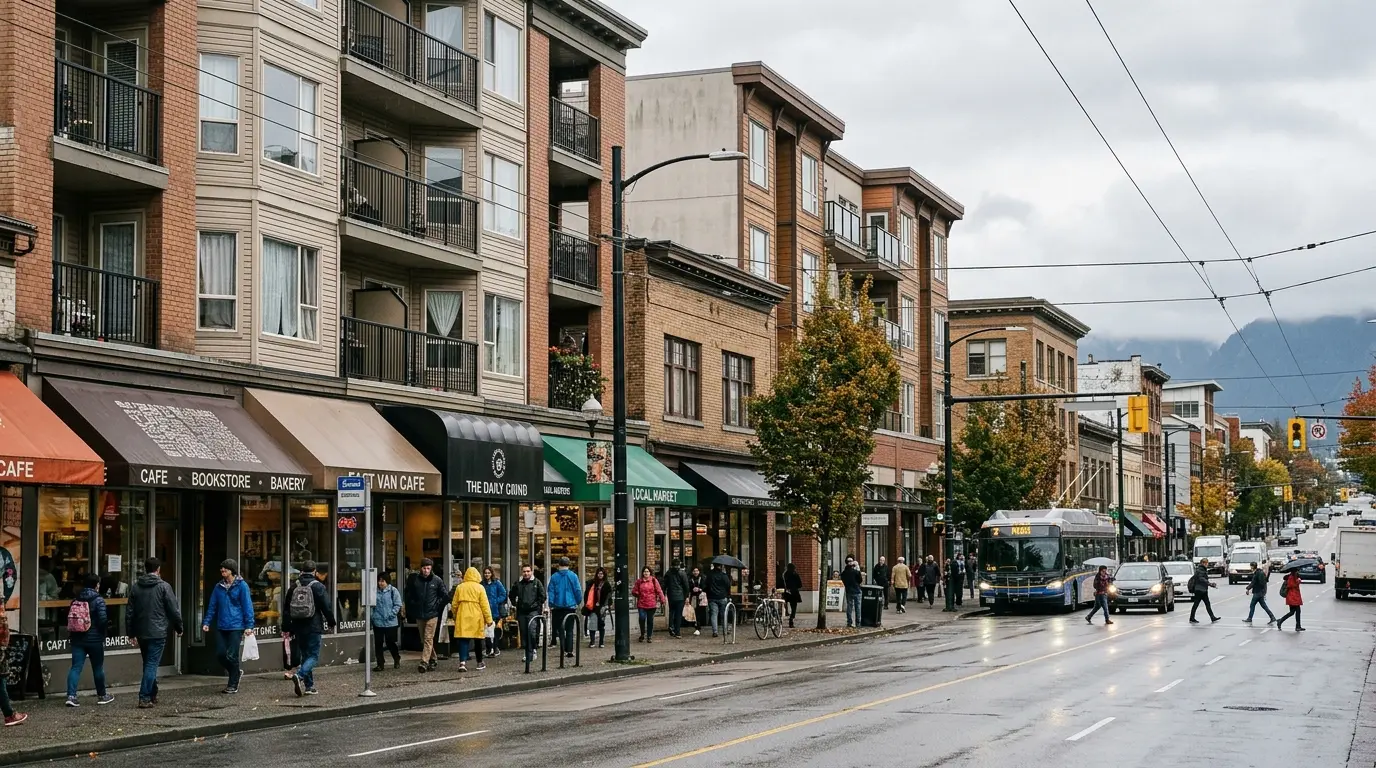
The sweet spot, in my experience, is a five-to-ten-minute walk. Close enough that you actually use transit every day and can sell the car if you want to. Far enough that the train fades into background and your windows look at a street, not a platform. That band is where livability and resale both hold up best.
The Broadway Subway effect
Nothing has reshaped this conversation more recently than the Millennium Line Broadway extension. The new underground stations along the Broadway corridor between Cambie and Arbutus did two things at once.
First, they put genuine rapid transit through a dense, employment-heavy part of the city that previously leaned on an overcrowded bus. Second, and just as important, the City’s Broadway Plan rezoned a wide area around the corridor for taller, denser development. So the value story along Broadway isn’t only “a station is coming.” It’s “a station is coming and you may be allowed to build a lot more here than before.”
That combination pulled land and condo values up along the corridor in anticipation, which is the normal pattern: the market prices in a transit improvement well before the first train runs. If you bought early, that worked in your favour. If you’re buying now, the easy gains are largely already in the price, and you’re betting on the area maturing into the walkable, transit-rich neighbourhood the plan envisions.
One nuance for buyers: because the Broadway stations are underground, you avoid the guideway-noise problem that affects the elevated Expo and Millennium line stations. The trade-off shifts to construction disruption in the near term and the density of new towers going up around you over the next several years.
Which lines and stations matter most in 2026
Within the City of Vancouver, three corridors carry the most weight for buyers and investors:
- The Canada Line along the Cambie corridor. Long-established, underground through much of Vancouver, and feeding both downtown and the airport. Cambie has seen steady redevelopment around its stations.
- The Expo Line on the east side, especially the Commercial-Broadway interchange. This is the busiest transfer point in the system and anchors a lot of east-side demand.
- The Millennium Line Broadway extension. The newest and, for appreciation-minded buyers, the one drawing the most investor attention, partly because of the planned future push toward UBC.
If you’re buying with future appreciation in mind, the corridors with planned extensions tend to attract the most speculative interest. That can cut both ways: more upside if the project proceeds on schedule, more disappointment if timelines slip. I’d never buy a home purely on a transit promise that hasn’t broken ground. Buy a place you’d be happy to own if the line opened five years late.
Resale liquidity: the quiet advantage
The part of the transit premium that doesn’t show up on a price tag is liquidity, meaning how quickly and reliably you can sell. Homes near SkyTrain generally sell faster, because the buyer pool is wider. You’re not just selling to people who like the unit; you’re selling to everyone who’s structured their life around not driving, plus investors who know it’ll rent.
That matters most in a slower market. When sales cool across Metro Vancouver, transit-connected homes tend to hold their relative position better than car-dependent ones farther out. With the Bank of Canada’s policy rate sitting at 2.25% in mid-2026 and benchmark prices off their highs year over year, the homes that keep moving are the ones with the broadest appeal, and transit access is near the top of that list. If you want a sense of where the all-in numbers land before you shop, my closing costs calculator and the buyers guide are good starting points.
Key Takeaways
- Transit proximity does add value in Vancouver, most strongly for condos and apartments, but the premium is a range, not a fixed percentage, and depends heavily on the specific station and building.
- The value curve peaks at a five-to-ten-minute walk, not at the station doorstep. Directly adjacent units often trade at a discount because of noise, glare, foot traffic, and reduced privacy.
- The Broadway Subway lifted corridor values through a combination of new stations and the Broadway Plan’s added density. Most of the anticipatory gain is already priced in for buyers entering now.
- Underground stations (Canada Line, Broadway extension) avoid guideway noise; elevated Expo and Millennium line stations don’t, so read each building on its own.
- Transit-connected homes generally sell faster and hold their relative value better in slower markets because the buyer and renter pool is wider.
- Never buy on a transit promise that hasn’t broken ground. Buy a home you’d be content to own even if the line opens years late.
Frequently Asked Questions
How much more does a home near SkyTrain cost in Vancouver?
There is no single fixed number, but homes within a short walk of a SkyTrain station generally carry a noticeable premium over otherwise comparable homes farther from transit. The premium is strongest for condos and apartments, where buyers and renters value the car-free commute most. Being directly beside a station or guideway does not add the most value and can subtract it because of noise.
Did the Broadway Subway raise property values along the corridor?
Land and condo values along the Broadway corridor between Cambie and Arbutus rose in anticipation of the Millennium Line extension, which is largely driven by the new stations plus the City of Vancouver’s Broadway Plan allowing taller, denser buildings nearby. Once stations open and operate, the value tends to hold as the area becomes more walkable and transit-connected.
Is it bad to buy a condo right next to a SkyTrain station?
It depends on the building. Directly adjacent units can suffer from train and platform noise, headlight glare, foot traffic, and reduced privacy, especially on lower floors facing the guideway. Well-built newer towers with good glazing can mitigate this. The general sweet spot for resale and livability is a five-to-ten minute walk: close enough to use transit daily, far enough to avoid the downsides.
Do homes near SkyTrain sell faster?
In most cases yes. Transit proximity widens the buyer pool to include people who do not drive or want to avoid car costs, and it appeals to renters, which matters to investors. That broader demand usually means more showings and shorter time on market compared with a similar home in a car-dependent area.
Which SkyTrain lines matter most for Vancouver buyers in 2026?
Within the City of Vancouver, the Canada Line (Cambie corridor), the Expo Line (Commercial-Broadway and the eastern stations), and the new Millennium Line Broadway extension are the most relevant. For buyers weighing future appreciation, stations on the Broadway extension and any planned extension toward UBC draw the most investor interest.
Sources
- TransLink — Metro Vancouver transit network, SkyTrain lines, and transit-oriented development information.
- City of Vancouver — Broadway Plan and area rezoning around transit corridors.
- Government of British Columbia — provincial transit-oriented development policy and housing legislation.
- Greater Vancouver REALTORS — monthly benchmark prices and market statistics for Metro Vancouver.
- Bank of Canada — policy interest rate decisions affecting mortgage borrowing.
Work with Rain City Properties
Buying near transit is one of those decisions where a little local knowledge saves you from an expensive mistake, like that second-floor unit facing the guideway. I’ll walk the route to the station with you, read the building, and tell you honestly where it sits on the value curve. If transit access is high on your list, let’s talk through the corridors and stations that fit your budget and your commute.
Contact Greyden Douglas directly at (604) 218-2289 or book a call to discuss your Vancouver real estate goals.
Frequently asked questions
How much more does a home near SkyTrain cost in Vancouver?
There is no single fixed number, but homes within a short walk of a SkyTrain station generally carry a noticeable premium over otherwise comparable homes farther from transit. The premium is strongest for condos and apartments, where buyers and renters value the car-free commute most. Being directly beside a station or guideway does not add the most value and can subtract it because of noise.
Did the Broadway Subway raise property values along the corridor?
Land and condo values along the Broadway corridor between Cambie and Arbutus rose in anticipation of the Millennium Line extension, which is largely driven by the new stations plus the City of Vancouver's Broadway Plan allowing taller, denser buildings nearby. Once stations open and operate, the value tends to hold as the area becomes more walkable and transit-connected.
Is it bad to buy a condo right next to a SkyTrain station?
It depends on the building. Directly adjacent units can suffer from train and platform noise, headlight glare, foot traffic, and reduced privacy, especially on lower floors facing the guideway. Well-built newer towers with good glazing can mitigate this. The general sweet spot for resale and livability is a five-to-ten minute walk: close enough to use transit daily, far enough to avoid the downsides.
Do homes near SkyTrain sell faster?
In most cases yes. Transit proximity widens the buyer pool to include people who do not drive or want to avoid car costs, and it appeals to renters, which matters to investors. That broader demand usually means more showings and shorter time on market compared with a similar home in a car-dependent area.
Which SkyTrain lines matter most for Vancouver buyers in 2026?
Within the City of Vancouver, the Canada Line (Cambie corridor), the Expo Line (Commercial-Broadway and the eastern stations), and the new Millennium Line Broadway extension are the most relevant. For buyers weighing future appreciation, stations on the Broadway extension and any planned extension toward UBC draw the most investor interest.
Related Vancouver real estate pages
Continue with local service pages, neighbourhood guides, and actionable resources related to this topic.