Quick answer: Comprehensive relocation guide to Downtown Vancouver, covering condo prices (one-beds from $480K, two-beds from $750K), transit hub access (Burrard, Granville, Waterfront stations), Robson Street shopping, entertainment district, noise considerations, dining recommendations, and honest pros/cons for prospective residents in 2026.
Everything you need to know before moving to Downtown Vancouver — housing costs, walkability, transit options, noise realities, restaurants, and the honest pros and cons of living in the city core.
Want a free assessment for your property?
Leave your name and phone — Greyden will call you back with a personalized market snapshot. No spam, no drip campaigns.
Join 1,000+ Vancouver homeowners. No spam, unsubscribe anytime.
Downtown Vancouver is the most polarizing neighbourhood in the city. Some people move here and cannot imagine living anywhere else — everything is walkable, the transit is the best in Metro Vancouver, and the combination of ocean, mountains, and urban energy is unmatched in Canada. Other people last six months and flee to a quieter neighbourhood, overwhelmed by the noise, density, and pace.
The difference usually comes down to expectations. If you know what you are getting into, downtown can be an exceptional place to live. Here is the unfiltered version.
Housing Prices: What You Will Pay
Downtown Vancouver is almost entirely condos and apartments. There are no detached homes, very few townhouses, and the real estate conversation here is about towers, floor plans, and views.
One-bedroom condos start around $480,000 to $650,000 depending on building age, location, and floor level. Units on lower floors in older buildings (early 2000s) trade at the lower end. Newer construction with modern finishes and higher floors push the upper boundary. Studios — which are more common downtown than in other neighbourhoods — start as low as $380,000 to $450,000 but are genuinely small, often under 400 square feet.
Two-bedroom condos range from $750,000 to $1.3 million. Location matters significantly: a two-bedroom near the Granville Entertainment District will price differently than one overlooking Coal Harbour. Building quality and amenity packages also drive the spread.
Luxury and penthouse units — downtown has some of the city’s most expensive residential product, particularly in Coal Harbour and the newer towers along West Georgia. Expect $2 million to $5 million+ for premium high-floor units with water and mountain views.
Townhouses are rare. When they appear in newer mixed-use developments, pricing typically starts at $1.3 million.
Rentals are abundant downtown, which is partly why inventory stays available. One-bedrooms average $2,100 to $2,600 per month; two-bedrooms run $2,800 to $3,800. Studios can be found for $1,700 to $2,100, making downtown one of the more accessible rental markets for smaller units.
For a detailed look at the downtown market, visit our Downtown neighbourhood page.
Cost of Living Beyond Housing
Downtown living costs vary dramatically depending on your habits. You can live frugally or spend without limit — the infrastructure supports both.
Groceries are well-served compared to Yaletown. Nesters Market on Seymour Street is a solid mid-range option. T&T Supermarket on Keefer Place offers exceptional variety and value, particularly for Asian groceries. Safeway on Robson covers the basics. Urban Fare in Coal Harbour is premium-priced. For budget shopping, the No Frills on Seymour keeps costs down.
Dining out ranges widely. You can eat a filling bowl of ramen for $15 or spend $200 per person at a fine dining establishment. The diversity of food options downtown is unmatched in Vancouver, and that extends across every price range.
Entertainment costs add up because everything is at your doorstep. Movies, concerts at Rogers Arena, Canucks and Whitecaps games, shows at the Queen Elizabeth Theatre, and Granville Street nightlife are all within walking distance. The convenience makes it easy to overspend.
Fitness options include community centres (notably the West End Community Centre), multiple gym chains, and boutique studios. Monthly costs range from $30 to $40 at the community centre to $200+ at boutique studios.
Transit: Getting Around Without a Car
Downtown Vancouver has the best transit access in British Columbia. Full stop.
Three SkyTrain stations serve the downtown core:
- Waterfront Station — the hub. Connects the Expo Line, Canada Line, and SeaBus to North Vancouver. Walking distance from Gastown, the waterfront, and Canada Place.
- Burrard Station — centrally located for the business district and Robson Street shopping. Expo Line and Millennium Line access.
- Granville Station — the deepest station in the system, serving the Granville entertainment strip and connecting to the Expo and Millennium Lines.
The Canada Line from Waterfront gets you to the airport in 25 minutes and to Richmond in 20. The Expo Line connects you to Burnaby, New Westminster, and Surrey. The Millennium Line reaches SFU and the northeast suburbs.
Bus service is dense. Dozens of routes converge on downtown, making virtually every corner of Metro Vancouver accessible by bus. Key routes include the #5 Robson, #6 Davie, and multiple express routes along Hastings and Georgia.
Walking is the primary mode of transportation for downtown residents. The entire peninsula is walkable — from the Convention Centre to BC Place is about 20 minutes on foot. Stanley Park is at the northwest tip.
Cycling infrastructure includes the Dunsmuir and Hornby separated bike lanes, connecting downtown to the Seawall and beyond.
Car ownership downtown is genuinely optional. Many buildings have car-share vehicles (Modo, Evo) available on-site or within a block.
Parking: The Honest Truth
If you do own a car, downtown parking is the most expensive in the city.
Condo parking stalls sell for $50,000 to $120,000 depending on the building. Monthly stall rentals within buildings typically run $200 to $350. Not all units come with a stall, and in some older buildings, available parking is extremely limited.
Street parking is metered throughout downtown, typically $4 to $7 per hour, with time limits. Finding a street spot during business hours is difficult. Evenings and weekends near the entertainment district are worse.
Parkades charge $15 to $30 per day for daily parking, with monthly passes running $250 to $500 depending on location.
The financial argument for going car-free downtown is strong. Between parking, insurance, gas, and maintenance, you can save $600 to $1,000 per month and use transit, car-share, and ride-hailing for everything.
Noise Levels
This is where downtown requires honest expectations. It is a city centre. It makes noise.
Granville Street from Robson to Drake is the entertainment strip. On Friday and Saturday nights, it is loud. People leaving bars, street musicians, occasional confrontations, and general crowd energy continue until 2 to 3 a.m. If you are in a building on or near Granville between Smithe and Helmcken, this will be part of your weekend soundtrack. There is no way around it.
Robson Street and Georgia Street carry heavy traffic noise throughout the day and into the evening. Emergency vehicle sirens are frequent — downtown has the highest concentration of hospitals, police, and fire services in the city.
Construction is perpetual. There is always a tower going up somewhere downtown. Morning jackhammering starting at 7 a.m. on a weekday is a regular occurrence.
Events at BC Place and Rogers Arena generate crowd and traffic noise that radiates several blocks.
The quieter pockets: Coal Harbour, the north side of West Georgia (away from Granville), and the residential blocks near Nelson Park and the West End boundary are noticeably calmer. Higher floors in concrete towers with double-glazed windows significantly reduce noise impact.
If noise sensitivity is a major factor for you, avoid Granville Street, avoid lower floors, and focus on the Coal Harbour or West End boundary areas.
The Vibe: Who Lives Here
Downtown Vancouver is the most diverse neighbourhood in the city in almost every dimension — age, income, ethnicity, and lifestyle.
You will find young professionals in their first condos, international students attending nearby colleges, retirees who downsized from the suburbs, shift workers in hospitality and healthcare, and newcomers to Canada who chose downtown as their landing spot. The neighbourhood does not have a single identity — it has dozens, layered on top of each other.
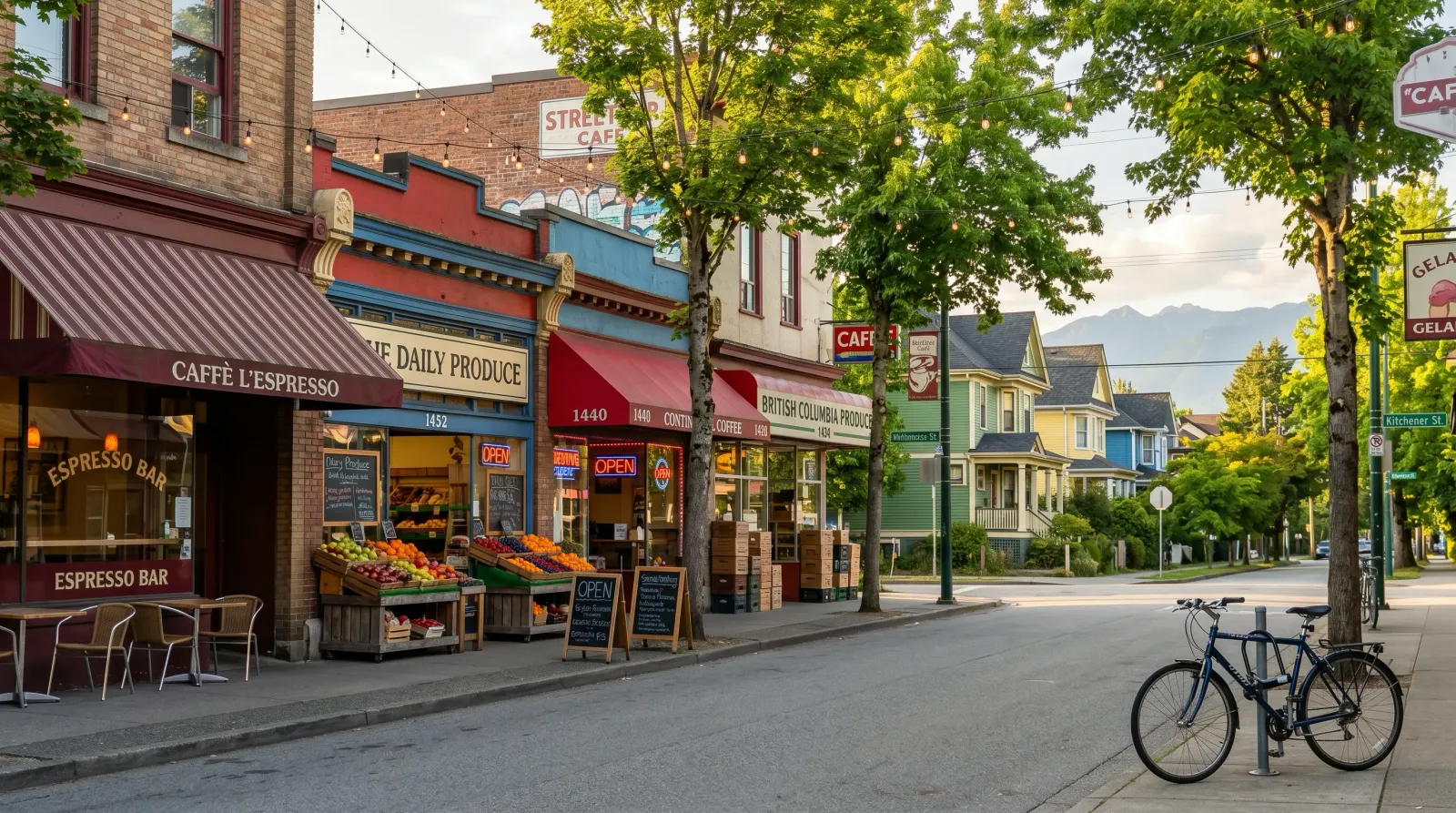
Robson Street is the commercial spine — international brands, smaller retailers, and a rotating cast of restaurants. It feels busier and more global than any other street in Vancouver.
Granville Street is the entertainment corridor — clubs, live music venues, theatres, and late-night food. It is lively, occasionally messy, and full of energy.
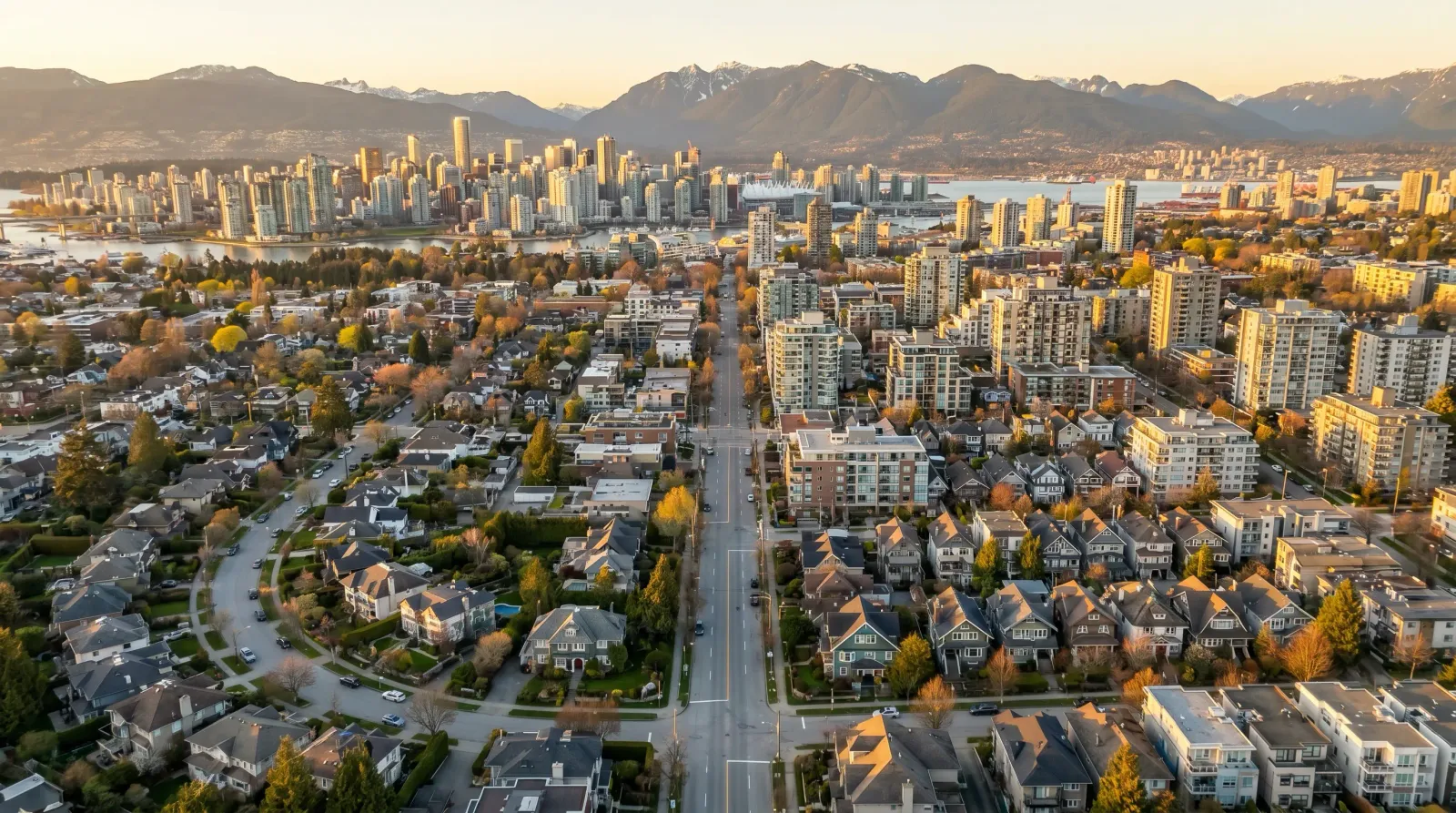
Canada Place and the waterfront are where downtown meets the ocean. The Convention Centre, cruise ship terminal, and the public pier create a different energy — more tourist-oriented, but the waterfront walk toward Stanley Park is genuinely beautiful.
The neighbourhood feels safe in most areas during the day. At night, the blocks around Granville Street south of Robson and the area near East Hastings require more awareness. This is not unique to downtown — it is the reality of city-centre living everywhere — but it is worth noting honestly.
Where to Eat and Drink
Downtown’s dining scene benefits from scale and competition. The variety is unmatched anywhere in Metro Vancouver.
Hawksworth Restaurant — located in the Rosewood Hotel Georgia, this is one of Vancouver’s finest dining experiences. Contemporary Canadian cuisine with impeccable service. A special-occasion spot that consistently delivers.
The Botanist — in the Fairmont Pacific Rim, with a stunning interior and creative cocktails. The food is excellent, but the atmosphere is the real draw. One of the most beautiful restaurant spaces in the city.
Japadog — a Vancouver original. Japanese-inspired hot dogs from a street cart that became an institution. The Robson Street location is the flagship. Affordable, unique, and genuinely good.
Miku — waterfront Japanese restaurant specializing in aburi sushi. The combination of food quality and harbourfront setting makes it a perennial favourite.
Sai Woo — Chinatown-adjacent, serving modern Chinese-Canadian cuisine. Creative cooking in a beautifully designed space.
For casual dining, Ramen Butcher on Robson is reliable, Nuba on Seymour serves excellent Lebanese food, and Meat & Bread on Cambie provides the best sandwich in the neighbourhood. Late-night options include Breka Bakery (open 24 hours) and the various Granville Street eateries that serve until 2 a.m.
The coffee scene is strong. Revolver on Cambie is the third-wave standard-bearer. Elysian Coffee on West Georgia and Platform 7 are excellent alternatives.
Grocery Stores and Daily Errands
- Nesters Market on Seymour — mid-range grocery, good selection
- T&T Supermarket on Keefer Place — excellent Asian grocery with wide variety
- Safeway on Robson — conventional grocery, solid basics
- No Frills on Seymour — budget grocery option
- Urban Fare in Coal Harbour — premium grocery, higher prices
- London Drugs on Granville — pharmacy, electronics, household
- Shoppers Drug Mart multiple locations — pharmacy and essentials
- Vancouver Public Library central branch on Georgia — world-class library a few blocks away
Daily errands are easily handled on foot. Banking, pharmacy, dry cleaning, and personal services are all within walking distance from virtually any downtown address.
What to Watch Out For
The Granville Street factor. If your unit faces Granville between Robson and Drake, you will experience noise, occasional street-level disorder, and a lively nightlife scene. This is not inherently bad — some people love the energy — but go in with open eyes. Visit on a Friday night at midnight before you sign.
Investor-heavy buildings. Downtown has a higher concentration of investor-owned units than most neighbourhoods. Buildings with low owner-occupancy can have maintenance issues, less engaged strata councils, and a more transient feel. Always ask about the rental-to-owner ratio.
Small unit sizes. To hit accessible price points, many downtown condos are compact. Studios under 400 square feet and one-bedrooms under 550 square feet are common. If you are coming from a house or a larger suburban apartment, the adjustment can be significant. Tour units carefully and think about how you actually live — where your desk goes, where you store things.
Street-level challenges. Parts of downtown, particularly near East Hastings and certain blocks along Granville, have visible homelessness, open drug use, and associated social issues. These challenges are concentrated in specific areas and are not representative of the entire downtown, but they are real and should factor into your decision about which block and building you choose.
Strata fees and building age. Many downtown towers from the early 2000s are now 20+ years old and facing significant maintenance expenditures. Elevator replacements, facade work, and mechanical system upgrades can trigger special assessments. Review the depreciation report and strata minutes carefully before buying.
Lack of green space. Stanley Park is magnificent, but it is at the tip of the peninsula. For residents in the southern parts of downtown, meaningful green space means David Lam Park, Emery Barnes Park, or Nelson Park — all pleasant but small. If daily access to nature is important, the West End (adjacent to Stanley Park) or a different neighbourhood entirely may serve you better.
The Bottom Line
Downtown Vancouver works best for people who thrive on convenience, diversity, and urban energy. Everything you need is within walking distance. Transit access is the best in the region. The dining and entertainment options are limitless. And the combination of ocean, mountains, and cityscape visible from a single rooftop is something that very few cities on earth can offer.
It works for young professionals who want to walk to work. It works for retirees who want culture and restaurants at their doorstep. It works for newcomers who want to land in the centre of things and explore outward.
It does not work for people who need quiet, space, or a strong neighbourhood community. Downtown is a collection of buildings and services, not a village. You may know your barista but not your neighbours. If that matters to you, neighbourhoods like Mount Pleasant, Kitsilano, or the West End will feel more like home.
If you are weighing downtown against other options, or if you have zeroed in on a specific building and want an informed opinion, reach out to me. I will give you the unvarnished assessment and help you find a unit that matches how you actually want to live — not just the listing photos.
Related Vancouver real estate pages
Continue with local service pages, neighbourhood guides, and actionable resources related to this topic.