Quick answer: A 2026 buyer's guide to Shaughnessy, Vancouver, covering First Shaughnessy heritage conservation rules, estate lot pricing tiers, typical buyers, and why Bill 44 multiplex zoning largely does not apply here.
A working realtor's guide to buying in Shaughnessy in 2026 — how First Shaughnessy heritage controls work, what the estate lots actually cost, who buys here, and why the multiplex rules that reshaped the rest of Vancouver mostly don't apply.
Want a free assessment for your property?
Leave your name and phone — Greyden will call you back with a personalized market snapshot. No spam, no drip campaigns.
Join 1,000+ Vancouver homeowners. No spam, unsubscribe anytime.
A buyer called me a few months back, genuinely thrilled. He’d found a dated house sitting on an enormous lot in Shaughnessy and had already done the math in his head: scrape the house, build eight units like he’d watched go up across the east side, sell or rent them out. He wanted to know how fast I could get him in to see it.
I told him to slow down, because the lot was in First Shaughnessy, and First Shaughnessy doesn’t work the way the rest of Vancouver does.
That conversation happens more than you’d think. Shaughnessy is one name on the map, but it’s really three areas with three different sets of rules, and the difference between them can be the difference between a clean purchase and a very expensive misunderstanding. This is what I tell people before they get attached to a listing here.
The three Shaughnessys
Most people picture Shaughnessy as a single grand neighbourhood of mansions and old trees. On paper it splits into three.
First Shaughnessy is the original core, roughly bounded by 16th Avenue, Oak Street, King Edward Avenue, and Granville Street. This is the part with the curving streets, the estate lots, and the strictest rules. It’s a designated Heritage Conservation Area, which I’ll get into below.
Second and Third Shaughnessy sit to the south, running down toward King Edward and beyond. These areas still have big lots and a lot of older, substantial homes, but they’re zoned as residential like much of the west side. They don’t carry First Shaughnessy’s heritage controls. Plenty of buyers don’t realize there’s a legal line running through the neighbourhood until I point it out.
The practical takeaway: when someone says “a house in Shaughnessy,” the very first thing I check is which Shaughnessy. It changes what you can do with the property, how the approval process works, and frankly what you’re paying for.
Why the lots are so big
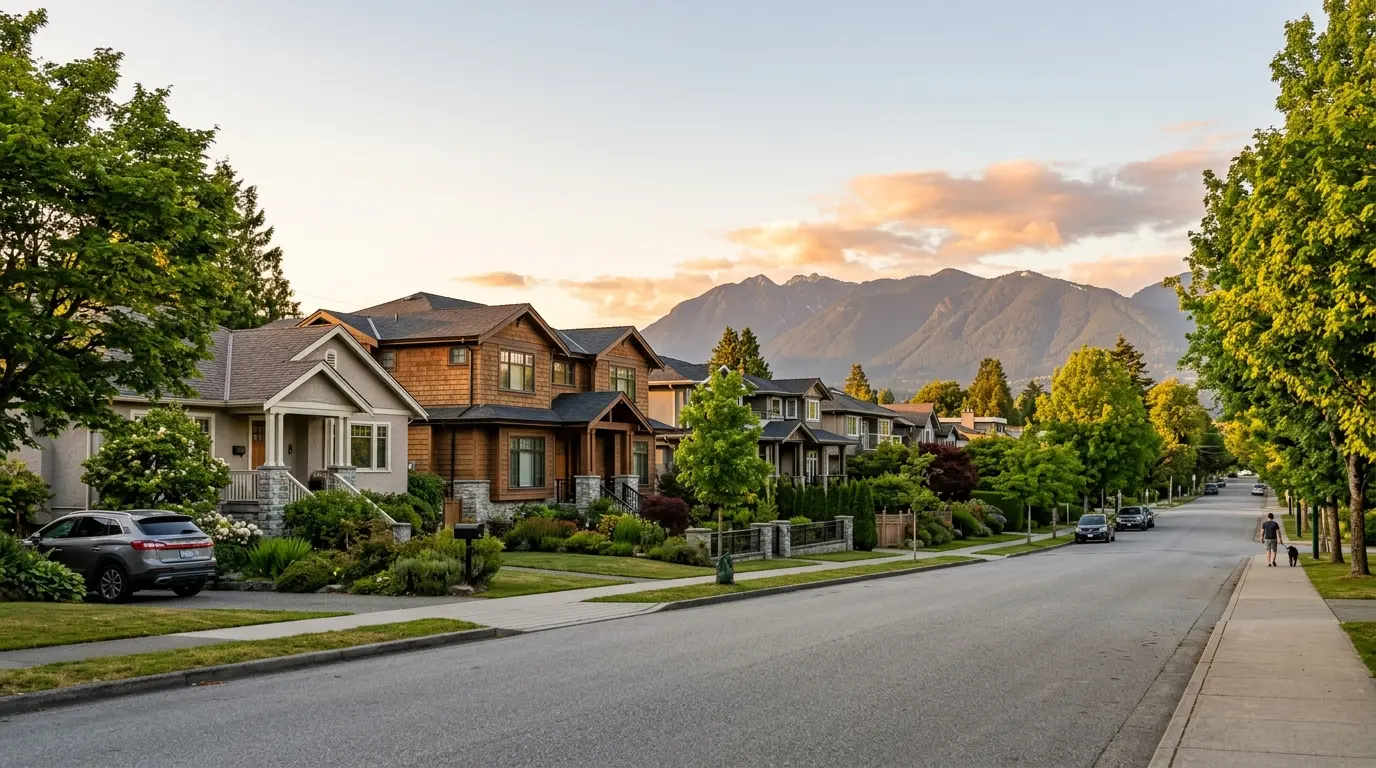
Shaughnessy didn’t grow the way the rest of Vancouver did. The Canadian Pacific Railway laid it out in the early 1900s as an exclusive enclave for the city’s wealthy, with curving roads that ignore the standard grid and estate-sized parcels meant for large single homes.
Many of those original lots were never subdivided. That’s why you still find lots of a third of an acre or more, especially in First Shaughnessy, with mature gardens and long setbacks from the street. In a city where a standard lot is 33 feet wide, that scale is rare and it’s a big part of what people are buying.
It also means land, not the house, drives most of the price. I’ve walked clients through homes here where the building was genuinely tired, and the value was almost entirely in the ground underneath it.
First Shaughnessy: how the heritage rules actually work
This is the section I wish more buyers read before they fall for a listing.
First Shaughnessy is a Heritage Conservation Area with its own district schedule and design guidelines administered by the City of Vancouver. The whole point of those rules is to keep the existing character buildings and the streetscape intact. In plain terms, that means:
- Demolition is discouraged and hard to get. If a house is identified as a character or heritage building, tearing it down generally needs City approval that is difficult to obtain. Buyers planning a teardown should treat First Shaughnessy as off the table for that.
- Renovations and additions are guided, not free. You can absolutely update and expand a home here, but the work goes through a design review process meant to keep it in keeping with the area. That adds time and professional fees.
- The process is slower. Expect to involve a heritage consultant and the City’s planning staff early, not after you’ve drawn up plans.
None of this makes First Shaughnessy a bad buy. For the right owner, the protection is the appeal: you’re buying into a streetscape that legally can’t be torn up and redeveloped around you. But you have to want the house and the neighbourhood as they are, not as a blank lot.
If heritage character is your thing across the city, the same care applies to older homes everywhere. My guides on the Vancouver Special and on underground oil tanks in older homes cover other things to check before you commit to an aging house.
The multiplex question
Here’s where my excited buyer ran aground.
Under BC’s Bill 44, the province pushed cities to allow small-scale multi-unit housing, and in much of Vancouver that translated to R1-1 zoning permitting up to eight units on a standard lot. That change quietly reshaped what’s possible on thousands of east-side and west-side lots.
The legislation, though, lets cities exempt designated heritage conservation areas. First Shaughnessy’s protected status means the standard multiplex allowance does not apply there the way it does elsewhere. You generally cannot treat a First Shaughnessy lot as a multiplex development site.
Second and Third Shaughnessy are a different and less clear-cut story. Because they fall under broader city residential zoning, some parcels may allow more than they used to. But I never assume. The only safe move is to confirm the specific address with the City of Vancouver before you write anything into an offer. I’ve seen buyers talk themselves into density that the parcel simply doesn’t allow.
If multiplex development is genuinely your goal, you’re almost always better off looking outside First Shaughnessy. My multiplex resources walk through where those projects actually pencil out.
Even where the rules don’t apply directly, the uncertainty still shapes how buyers think about the block. I’ve written more on how multiplex zoning is affecting Vancouver’s luxury market more broadly, including why the redevelopment fear in west side neighbourhoods is usually bigger than the actual economics.
Price tiers and who buys here
Shaughnessy prices cover an enormous range, and I’m careful not to quote a single number because it would mislead you.
At the lower end, a smaller or dated home on a more standard lot can trade in the low several-million-dollar range. From there it climbs steeply. Restored heritage mansions on large estate lots in First Shaughnessy regularly sell well into the tens of millions. The spread between a tired house and a fully restored estate on a comparable street is enormous, because so much of the value sits in the land and the lot’s size and position.
As for who buys here, in my experience it’s a mix:
- Established families who want space, privacy, and proximity to the west side’s top schools.
- Heritage enthusiasts who specifically want a character home and are comfortable with the renovation rules.
- Long-term wealth holders treating a Shaughnessy estate as a generational asset rather than a quick flip.
What I rarely see succeed here is the speculative developer hoping to maximize density. The rules are built to prevent exactly that, at least in First Shaughnessy.
If you’re comparing Shaughnessy against other west-side options, it’s worth browsing the broader neighbourhood guides to see how it stacks up on lot size, price, and lifestyle.
What I tell buyers before they commit
A few practical things, learned from watching deals here go smoothly or sideways:
- Get the heritage status of the specific building in writing. Don’t rely on the listing.
- Budget for time, not just money. Approvals and design review in First Shaughnessy stretch timelines.
- Order a proper inspection. These are old houses, and old houses hide things. My home inspection red flags guide covers what to watch for.
- Confirm the zoning yourself. With the City, for that exact parcel, before the subject-removal date.
Key Takeaways
- Shaughnessy is really three areas: First (heritage-protected core), plus Second and Third to the south under broader residential zoning.
- First Shaughnessy is a designated Heritage Conservation Area where demolition is hard, renovations are design-reviewed, and the process is slower.
- Bill 44’s multiplex allowance largely does not apply in First Shaughnessy, because the province lets cities exempt heritage conservation areas.
- Lots are unusually large because the CPR laid out the area as an estate enclave and many parcels were never subdivided.
- Prices range from the low several millions to the tens of millions, driven mostly by land and lot size.
- The neighbourhood suits long-term owners and heritage enthusiasts far more than speculative developers.
Frequently Asked Questions
Is all of Shaughnessy a heritage conservation area?
No. Only First Shaughnessy — roughly the area bounded by 16th Avenue, Oak Street, King Edward Avenue and Granville Street — is a designated Heritage Conservation Area with its own district schedule and design guidelines. Second and Third Shaughnessy, to the south, are zoned residential like much of the west side and do not carry the same heritage controls, though many still have large lots and older homes.
Can you build a multiplex in Shaughnessy under Bill 44?
Mostly no, in First Shaughnessy. BC’s Bill 44 small-scale multi-unit housing rules let the province exempt designated heritage conservation areas, and First Shaughnessy’s protected status means the standard R1-1 allowance of up to eight units does not apply the way it does elsewhere in Vancouver. Parts of Second and Third Shaughnessy may fall under broader city zoning, so always confirm the specific parcel with the City before assuming you can add units.
What does a house in Shaughnessy cost in 2026?
It spans a wide range. Smaller or dated homes on standard lots can trade in the low several-million-dollar range, while restored heritage mansions on large estate lots regularly sell well into the tens of millions. Land value drives most of the price, so lot size and location within First, Second, or Third Shaughnessy matter more than the house itself.
Can I tear down a heritage house in First Shaughnessy?
It is very difficult. In the First Shaughnessy Heritage Conservation Area, demolition of a character or heritage building generally requires City approval and is discouraged. The rules are designed to retain existing buildings and guide renovations and additions so they fit the area’s character. Buyers planning a teardown should treat First Shaughnessy as off-limits for that and confirm the building’s status before any offer.
Why are Shaughnessy lots so large?
Shaughnessy was laid out by the Canadian Pacific Railway in the early 1900s as an exclusive enclave with curving streets and generous estate-sized lots, unlike the standard grid found in most of Vancouver. Many original parcels were never subdivided, which is why lots of a third of an acre or more are still common, especially in First Shaughnessy.
Sources
- City of Vancouver — First Shaughnessy
- City of Vancouver — Heritage conservation
- Province of BC — Small-scale multi-unit housing (Bill 44)
- City of Vancouver — Zoning and land use
Work with Rain City Properties
Shaughnessy rewards buyers who understand exactly which version of the neighbourhood they’re in and what they can and can’t do with the property. If you’re considering a purchase here, I can help you read the heritage status, confirm the zoning on the specific lot, and figure out whether the home fits what you actually want.
Contact Greyden Douglas directly at (604) 218-2289 or book a call to discuss your Vancouver real estate goals.
Frequently asked questions
Is all of Shaughnessy a heritage conservation area?
No. Only First Shaughnessy — roughly the area bounded by 16th Avenue, Oak Street, King Edward Avenue and Granville Street — is a designated Heritage Conservation Area with its own district schedule and design guidelines. Second and Third Shaughnessy, to the south, are zoned residential like much of the west side and do not carry the same heritage controls, though many still have large lots and older homes.
Can you build a multiplex in Shaughnessy under Bill 44?
Mostly no, in First Shaughnessy. BC's Bill 44 small-scale multi-unit housing rules let the province exempt designated heritage conservation areas, and First Shaughnessy's protected status means the standard R1-1 allowance of up to eight units does not apply the way it does elsewhere in Vancouver. Parts of Second and Third Shaughnessy may fall under broader city zoning, so always confirm the specific parcel with the City before assuming you can add units.
What does a house in Shaughnessy cost in 2026?
It spans a wide range. Smaller or dated homes on standard lots can trade in the low several-million-dollar range, while restored heritage mansions on large estate lots regularly sell well into the tens of millions. Land value drives most of the price, so lot size and location within First, Second, or Third Shaughnessy matter more than the house itself.
Can I tear down a heritage house in First Shaughnessy?
It is very difficult. In the First Shaughnessy Heritage Conservation Area, demolition of a character or heritage building generally requires City approval and is discouraged. The rules are designed to retain existing buildings and guide renovations and additions so they fit the area's character. Buyers planning a teardown should treat First Shaughnessy as off-limits for that and confirm the building's status before any offer.
Why are Shaughnessy lots so large?
Shaughnessy was laid out by the Canadian Pacific Railway in the early 1900s as an exclusive enclave with curving streets and generous estate-sized lots, unlike the standard grid found in most of Vancouver. Many original parcels were never subdivided, which is why lots of a third of an acre or more are still common, especially in First Shaughnessy.
Related Vancouver real estate pages
Continue with local service pages, neighbourhood guides, and actionable resources related to this topic.