Quick answer: A 2026 decision guide for Vancouver landowners weighing whether to hold a detached house as-is or redevelop the lot into a multiplex under Bill 44, comparing cash flow, appreciation, risk, capital needed, timeline, and tax, and describing who each path suits.
You own a Vancouver lot with a detached house. Do you hold it as-is, or redevelop it into a multiplex under Bill 44? A working realtor's honest comparison of cash flow, appreciation, risk, capital, timeline, and tax, and who each path suits.
Want a free assessment for your property?
Leave your name and phone — Greyden will call you back with a personalized market snapshot. No spam, no drip campaigns.
Join 1,000+ Vancouver homeowners. No spam, unsubscribe anytime.
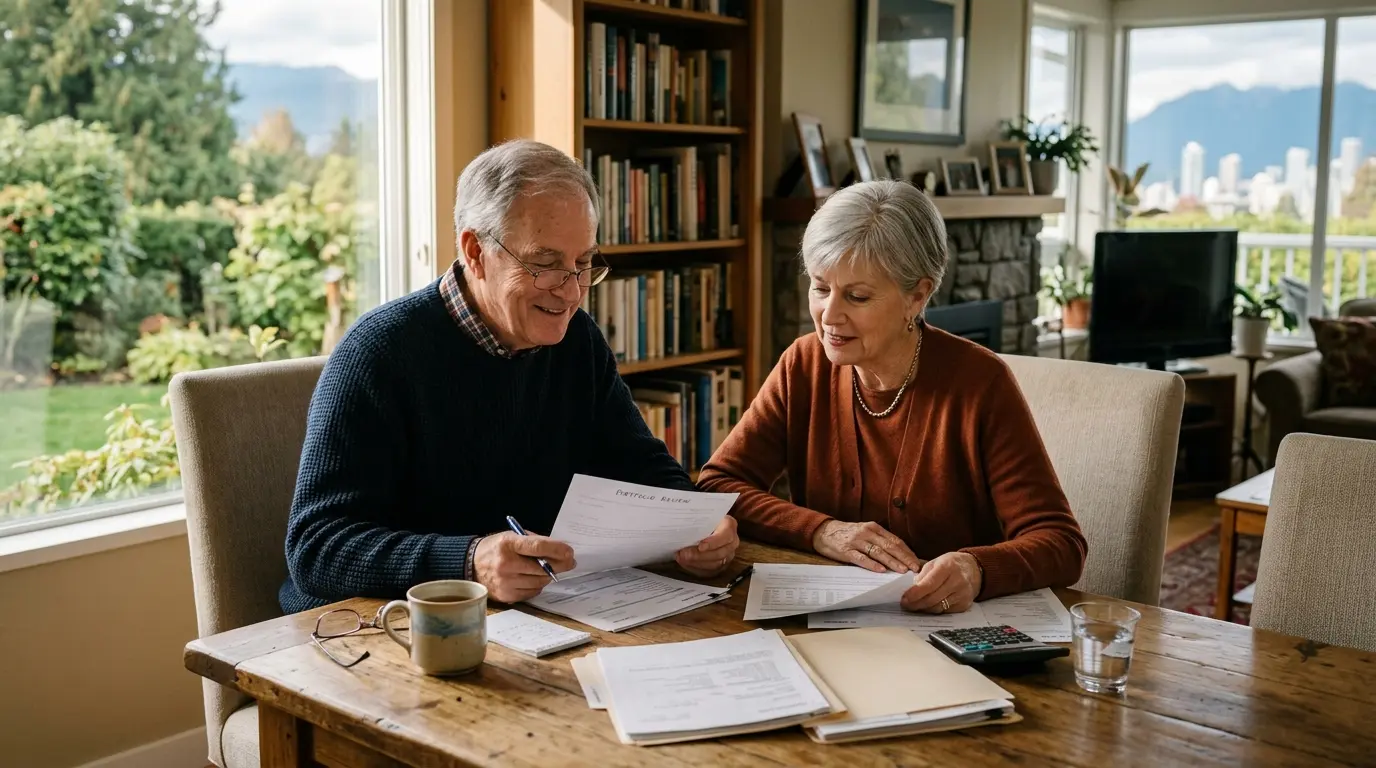
A couple in their sixties sat across from me last year with a question I hear more and more. They’d owned their east-side lot for thirty years. The neighbours on both sides were talking about building multiplexes. And they wanted to know if they were making a mistake by just holding the old house with a suite in the basement.
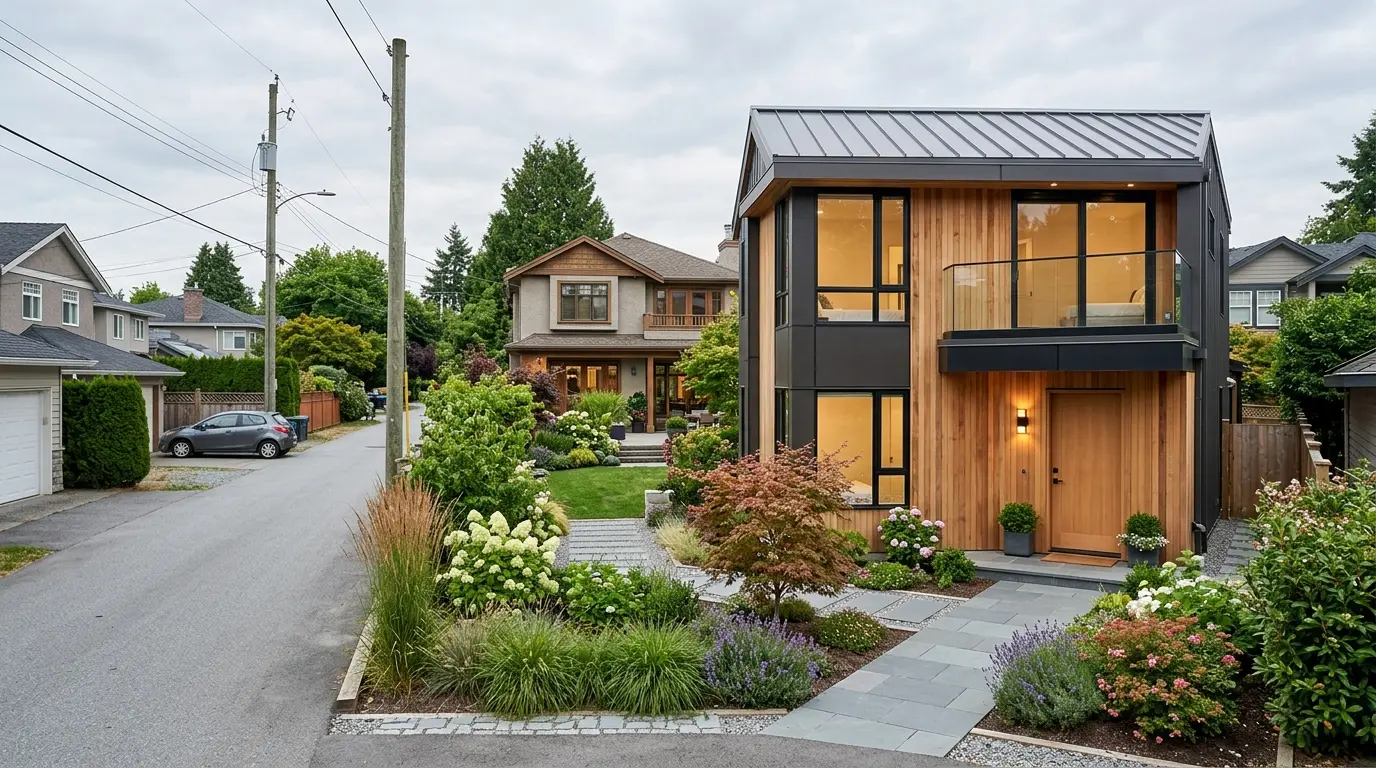
It’s a fair question, and it doesn’t have a slogan for an answer. Under BC’s Bill 44, most standard Vancouver lots can now hold up to eight units, which means a lot of ordinary homeowners are suddenly sitting on a development opportunity they never planned for. The choice between holding what you have and building something bigger is real, and it deserves an honest comparison rather than a pitch in either direction.
So here it is, the way I lay it out for owners: cash flow, appreciation, risk, capital, timeline, and tax. Then who each path actually suits.
The two paths in one sentence each
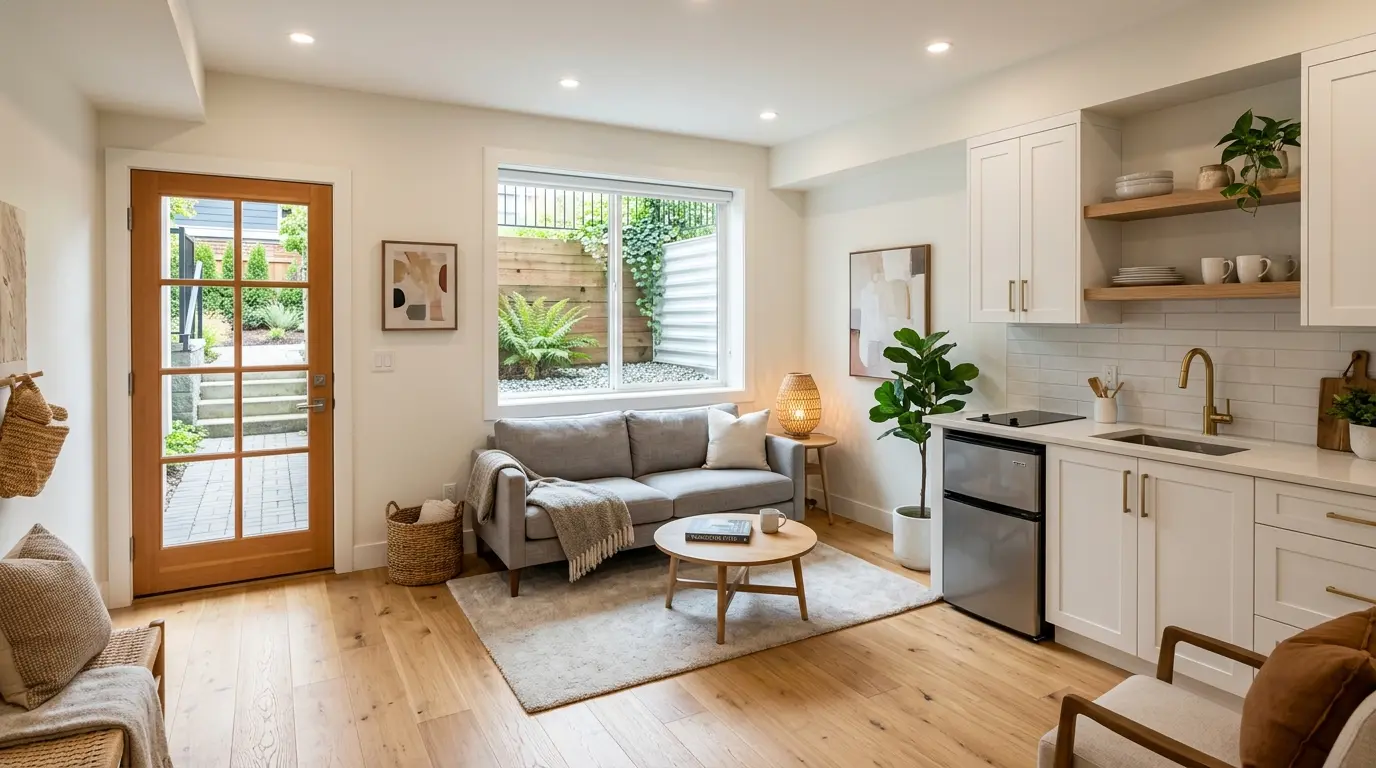
Hold the detached house. Keep the property as-is, collect rent (often from a basement suite), and let the land keep appreciating while you do very little.
Build a multiplex. Redevelop the lot into several units under Bill 44, creating more total value and more rental income, at the cost of significant capital, a couple of years, and construction risk.
Everything below is just detail on those two sentences.
Cash flow
Holding a detached house in Vancouver usually produces thin cash flow. Prices here are high relative to rents, so even with a mortgage helper suite, the rent often just covers or slightly beats your costs. You’re not holding for the monthly income. You’re holding for the land.
A finished multiplex produces much stronger rental income, because you’ve turned one dwelling into several. More units, more rent. But you don’t get any of that during the build. For most of a couple of years, the lot earns nothing while you carry costs. So multiplex cash flow is far better at the end and far worse in the middle.
If you want to see how rental math actually works on a Vancouver property, our rental property ROI guide walks through real numbers.
Appreciation
Both paths benefit from land appreciation, because in both cases you own the land. That’s the shared engine underneath everything.
The difference is what sits on top. A detached house is one dwelling’s worth of building value on the land. A multiplex adds far more building value and creates units you can sell or rent individually. So building can unlock value that’s locked up in the land right now: the gap between what the lot is worth as a home and what it’s worth as a completed multiplex. That gap is often the whole reason to build.
Risk
This is where the two paths split hardest.
Holding is low-risk. You already own it, you know your costs, and short of a major market drop, there are few surprises. The main risk is opportunity cost: you might be leaving value locked in the land.
Building carries real risk. Construction costs can run over. Timelines can slip. Interest rates can move against you while you’re carrying financing. The market can soften between the day you decide to build and the day your units are ready to sell or rent. None of these are reasons not to build. They’re reasons to build with a realistic budget, a cash buffer, and eyes open.
Capital
Holding needs no new capital. You already own the asset.
Building needs a lot of capital on top of the land. Design and permit costs come first, then construction financing, the build itself, and carrying costs while the lot earns nothing. Most owners fund this with construction financing secured against the land and the project, but you’ll still need real money and real borrowing capacity. Sit down with a lender and a builder early to get numbers for your specific lot, because the figure swings widely by design and unit count. Don’t guess at this.
Timeline
Holding has no timeline. You do it for as long as you want.
Building takes time, usually a couple of years from decision to finished, tenanted units, and sometimes longer. That includes design, the City of Vancouver permit process, financing, construction, and leasing up. Permitting in particular can be slow and hard to predict. Plan for the whole stretch during which the lot earns no rent, and make sure your finances can carry it.
Tax
I’m going to be careful here, because tax is the part owners most often get wrong, and the stakes are high.
Building a multiplex can change your tax situation in several ways. Whether your home keeps its principal residence status, how the sale of new units is taxed, whether the project is treated as a business, and whether GST applies to newly built units, all of these can significantly change what you actually keep. These rules are detailed and they depend on your exact facts.
Please do not make a decision this size on general advice. Speak with a tax accountant who knows Vancouver real estate before you commit. A good one can sometimes reshape a project to a much better after-tax result, and can flag traps that would have cost you far more than their fee.
Who each path suits
Here’s how I sort it out with clients.
Holding suits you if you want simplicity and low stress, you don’t have or don’t want to commit large capital, you’re near retirement and don’t want a multi-year project, or the land appreciation alone already meets your goals. Many owners are in exactly this spot, and holding is the correct, unglamorous answer.
Building suits you if you have the capital and borrowing capacity, you can carry construction risk and a couple of years without rental income, you’re motivated by creating the most value from the land, and you either want to keep several income units or sell them. Younger, builder-minded owners and investors often land here.
The couple I mentioned chose to hold. In their sixties, with thin appetite for a two-year construction project, that was clearly right for them. A different owner on an identical lot might correctly choose the opposite. The mistake isn’t picking one. The mistake is picking based on what the neighbour did.
If you’re weighing this on your own lot, our multiplex page goes deeper on how these projects pencil out, and our guide to building your own multiplex walks the full path. If you’d rather understand your options as a seller instead, our sellers’ guide is a good starting point.
Key Takeaways
- Under Bill 44 most standard Vancouver lots can hold up to eight units, so many ordinary homeowners now face a real hold-versus-build decision.
- Holding a detached house is simple and low-risk with thin cash flow. A finished multiplex produces far more income but earns nothing during the build.
- Both paths benefit from land appreciation. Building can unlock the gap between the lot’s value as a home and its value as a completed multiplex.
- Building needs significant capital beyond the land, a couple of years or more, and carries genuine construction and market risk.
- Tax is the most overlooked factor. Principal residence status, GST on new units, and business treatment can all change your result, so consult a Vancouver real estate tax accountant before committing.
- Holding suits owners who want simplicity or are near retirement. Building suits owners with capital, risk tolerance, and time. Choose for your situation, not your neighbour’s.
Frequently Asked Questions
Should I hold my Vancouver house or build a multiplex?
It depends on your capital, your appetite for risk, and your timeline. Holding the detached house is simple, low-effort, and lets you keep benefiting from land appreciation while collecting rent, but the cash flow is often thin. Building a multiplex under Bill 44 can create far more value and more units of income, but it needs significant capital, takes a couple of years, and carries real construction risk. There is no single right answer. It comes down to your situation and your goals.
How much capital do I need to build a Vancouver multiplex?
Building a multiplex needs substantial capital beyond the land you already own. You are looking at design and permit costs, construction financing, the build itself, and carrying costs while there is no rental income. Most owners fund this with construction financing secured against the land and the project. You should sit down with a lender and a builder early to get real numbers for your specific lot before you decide, because the figure varies a lot by design and unit count.
Is a multiplex a better investment than holding a detached house?
A multiplex can produce more total value and more rental income than a single detached house, because you are turning one dwelling into several. But better on paper does not mean better for you. Building carries construction risk, needs a large capital commitment, and takes time before it earns anything. Holding is safer and simpler but usually earns less. The right choice depends on whether you can carry the risk and the capital, and how long you plan to hold.
What are the tax implications of building a multiplex on my lot?
Tax is one of the most important and most overlooked parts of this decision. Whether your home keeps its principal residence status, how a sale of new units is taxed, and whether the project is treated as a business can all change your result significantly. GST can apply to newly built units. These rules are detailed and depend on your exact situation, so speak with a tax accountant who knows Vancouver real estate before you commit. Do not rely on general advice for a decision this size.
How long does it take to build a multiplex in Vancouver?
Plan for a couple of years from decision to finished, tenanted units, and sometimes longer. The timeline includes design, the City of Vancouver permit process, financing, construction, and lease-up. Permitting timelines in particular can be slow and are hard to predict. During most of that time the lot earns no rent and you are carrying costs, so build a realistic timeline and a cash buffer into your plan.
Sources
- Province of BC - small-scale multi-unit housing (Bill 44)
- City of Vancouver - home and property development
- Canada Revenue Agency - principal residence and GST/HST new housing
- Greater Vancouver Realtors - monthly market reports
- Canada Mortgage and Housing Corporation - construction financing
Work with Rain City Properties
Whether to hold your house or build a multiplex is one of the biggest financial decisions a Vancouver landowner can face, and it deserves real numbers, not a slogan. I’ve walked owners through this comparison on their actual lots, connected them with lenders, builders, and tax professionals, and helped them choose the path that fits their life and their money.
Contact Greyden Douglas directly at (604) 218-2289 or book a call to discuss your Vancouver real estate goals.
Frequently asked questions
Should I hold my Vancouver house or build a multiplex?
It depends on your capital, your appetite for risk, and your timeline. Holding the detached house is simple, low-effort, and lets you keep benefiting from land appreciation while collecting rent, but the cash flow is often thin. Building a multiplex under Bill 44 can create far more value and more units of income, but it needs significant capital, takes a couple of years, and carries real construction risk. There is no single right answer. It comes down to your situation and your goals.
How much capital do I need to build a Vancouver multiplex?
Building a multiplex needs substantial capital beyond the land you already own. You are looking at design and permit costs, construction financing, the build itself, and carrying costs while there is no rental income. Most owners fund this with construction financing secured against the land and the project. You should sit down with a lender and a builder early to get real numbers for your specific lot before you decide, because the figure varies a lot by design and unit count.
Is a multiplex a better investment than holding a detached house?
A multiplex can produce more total value and more rental income than a single detached house, because you are turning one dwelling into several. But better on paper does not mean better for you. Building carries construction risk, needs a large capital commitment, and takes time before it earns anything. Holding is safer and simpler but usually earns less. The right choice depends on whether you can carry the risk and the capital, and how long you plan to hold.
What are the tax implications of building a multiplex on my lot?
Tax is one of the most important and most overlooked parts of this decision. Whether your home keeps its principal residence status, how a sale of new units is taxed, and whether the project is treated as a business can all change your result significantly. GST can apply to newly built units. These rules are detailed and depend on your exact situation, so speak with a tax accountant who knows Vancouver real estate before you commit. Do not rely on general advice for a decision this size.
How long does it take to build a multiplex in Vancouver?
Plan for a couple of years from decision to finished, tenanted units, and sometimes longer. The timeline includes design, the City of Vancouver permit process, financing, construction, and lease-up. Permitting timelines in particular can be slow and are hard to predict. During most of that time the lot earns no rent and you are carrying costs, so build a realistic timeline and a cash buffer into your plan.
Related Vancouver real estate pages
Continue with local service pages, neighbourhood guides, and actionable resources related to this topic.