Quick answer: A guide to legalizing a secondary basement suite in Vancouver: the difference between unauthorized and legal suites, City building requirements, the permit process and costs, and how a legal suite affects mortgage qualification and rental income.
What separates an unauthorized basement suite from a legal one in Vancouver — ceiling height, egress, fire separation, the permit process, rough costs, and how a legal suite changes your mortgage and rental income. Plus what to ask before you buy a home with a 'mortgage helper'.
Want a free assessment for your property?
Leave your name and phone — Greyden will call you back with a personalized market snapshot. No spam, no drip campaigns.
Join 1,000+ Vancouver homeowners. No spam, unsubscribe anytime.
A buyer called me in May, excited about a house off Victoria Drive. Three bedrooms up, a tidy one-bedroom suite down, already rented for $1,650 a month. The listing called it a “mortgage helper,” and the math looked good. That rent was the difference between the payment being a stretch and being comfortable.
My first question wasn’t about the kitchen or the paint. It was: is the suite on a permit?
The agent didn’t know. We found out it wasn’t. The bedroom had no egress window, the ceiling was about an inch short of code, and there was no real fire separation between the suite and the upstairs. The rent was real. The suite was not legal. And when we called the buyer’s lender, they wouldn’t count a dollar of that income because the suite wasn’t permitted.
That gap — between a suite that earns rent and a suite the bank, the insurer, and the City all recognize — is what this post is about. If you own a Vancouver home with an unauthorized suite, or you’re shopping for one, it’s worth understanding exactly what legal means here.
Unauthorized vs. legal: the difference that matters
A lot of Vancouver homes have a suite in the basement. Many of them were finished decades ago without permits, and they’ve been quietly rented ever since. That’s an unauthorized suite. It exists, it earns money, and on the surface it looks like any other apartment.
A legal secondary suite is one the City of Vancouver has permitted and inspected, built to the BC Building Code. The physical space might look nearly identical. The difference is paperwork and a handful of safety features you can’t always see: a proper exit, fire separation, interconnected alarms.
Why does the distinction matter so much? Three reasons that all hit your wallet.
- Your lender. Most lenders will only count rental income toward your mortgage qualification if the suite is legal, and some are stricter than others. An unauthorized suite’s rent often counts for nothing on paper.
- Your insurer. If a fire starts in an undisclosed, unpermitted suite, your insurer may reduce or deny the claim. You’re carrying the risk yourself.
- The City. Vancouver can require an owner to bring an unauthorized suite up to code or decommission it, usually after a complaint or during a permit application for other work.
None of these mean an unauthorized suite is worthless. Plenty change hands every year. But you should buy one knowing it’s a project, not a finished income stream.
What the City actually requires
The requirements come from the BC Building Code and the City of Vancouver’s own bylaws. The details get technical, and they change, so treat the figures below as the general shape of it rather than gospel — your designer or the City will confirm the current numbers for your specific house.
Ceiling height
A suite needs adequate headroom over the required floor area, generally around 6 feet 6 inches. This is the requirement that sinks the most basement projects. Older Vancouver homes often have basements at 6 feet 2 or 6 feet 4. Gaining a few inches usually means digging down and underpinning the foundation, which is expensive structural work.
Egress
Every suite needs a safe way out in a fire. That means a compliant exit — often a separate door at grade, plus an egress window in each bedroom that’s large enough to climb through and low enough to reach. Cutting an egress window into a concrete foundation wall is a common, doable job, but it’s not trivial. See our full guide to egress window requirements for sizing rules and typical costs.
Fire separation
The suite has to be separated from the main dwelling by fire-rated construction — typically specific drywall assemblies on the ceiling and shared walls — so a fire in one unit doesn’t immediately spread to the other. Interconnected smoke alarms and carbon monoxide alarms across both units are part of this.
Separate entrance, parking, and services
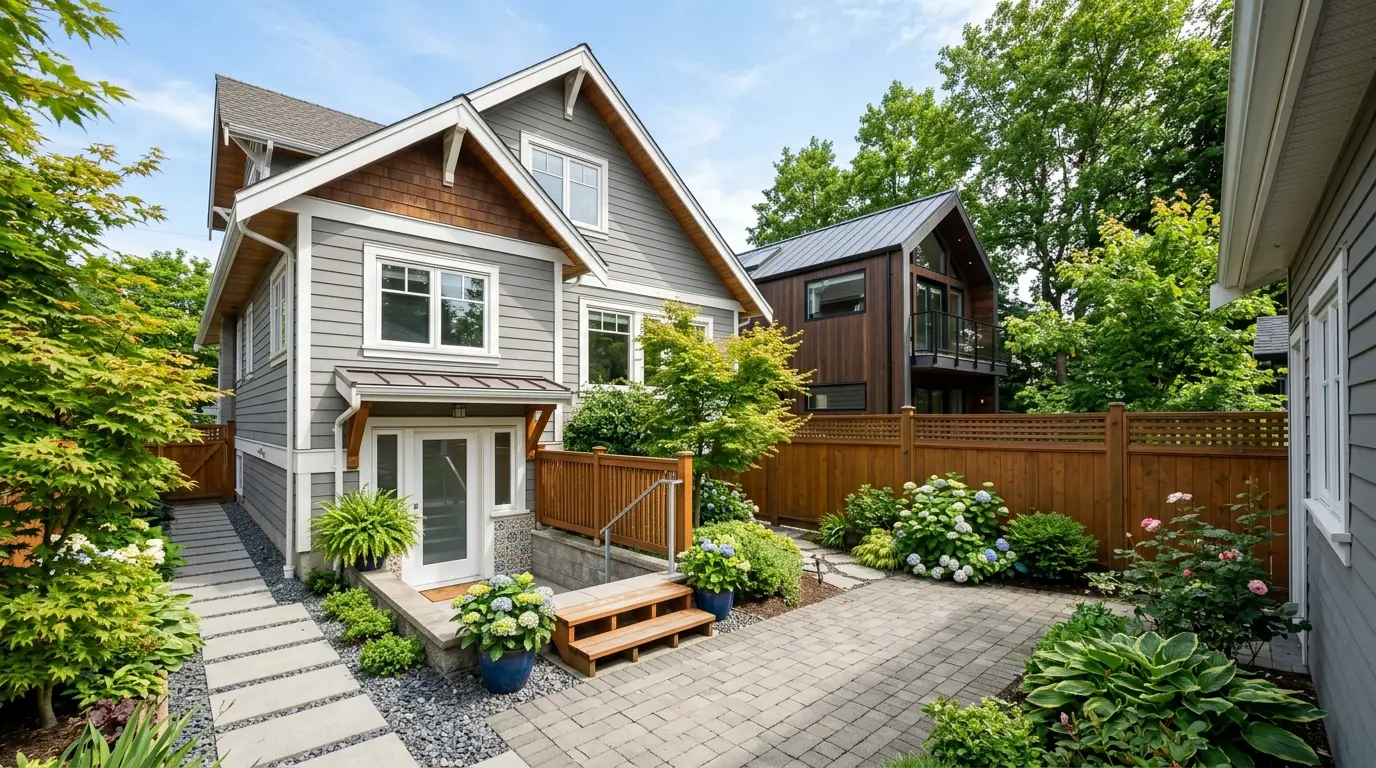
A suite needs its own entrance, usually to the side or rear. The City has parking expectations, though these have loosened in recent years as Vancouver has pushed to add rental housing. There are also rules about the suite’s size relative to the main home, and about heating, ventilation, electrical, and plumbing meeting code.
If you’ve looked at the laneway home option, some of this will sound familiar. A basement suite and a laneway house are the two main ways to add a legal rental unit to a single-family lot, and they get compared a lot. The suite is usually cheaper because you’re working with existing space; the laneway is a standalone building with its own appeal and rent.
The permit process and rough costs
Legalizing an existing suite generally runs like this. You hire a designer or draftsperson to produce drawings of the existing space and the proposed legal suite. You submit a development and building permit application to the City. The City reviews it, you do the work with licensed trades where required (electrical and plumbing permits are separate), and inspectors sign off at stages until you get final approval.
Costs vary enormously, and anyone who gives you a single number without seeing the space is guessing. Here’s the honest range, all approximate and meant only as illustration:
- If the suite is already close to code — good ceiling height, a separate entrance, sensible layout — you might be looking at a few thousand dollars for drawings, permits, fire-separation upgrades, and alarms.
- If you need real construction — lowering the floor for height, cutting egress windows, reframing, upgrading panels or plumbing — the number commonly climbs into the tens of thousands, sometimes well past $50,000 once underpinning is involved.
The permit and design fees are usually the smaller part. The construction is where the money goes. Get two or three quotes from contractors who do suites regularly, and ask them specifically about ceiling height and egress, because those two items drive most of the cost.
The upside: income and borrowing power
Here’s why people do this despite the cost. A legal suite changes two financial things at once.
First, the rent. A one-bedroom suite in much of Vancouver rents in a broad range depending on the neighbourhood, size, and finish — treat any single figure as a rough placeholder and check current listings for your area. That income offsets your mortgage every month, which is exactly why “mortgage helper” is such a common phrase in local listings.
Second, and less obvious, is borrowing power. When a suite is legal, most lenders will count a share of the rental income as part of your qualifying income. That can raise the mortgage you qualify for, which matters a lot in a market where the composite benchmark price sits around $1.10 million and the detached benchmark is near $1.85 million. With the Bank of Canada’s policy rate holding at 2.25% through mid-2026, qualifying income is often the binding constraint, not the rate.
How much income a lender counts, and what proof they want — a signed lease, an appraiser’s market-rent estimate, or both — varies by lender. This is a conversation to have with a mortgage broker before you write an offer, not after. The difference between a legal and unauthorized suite can be the difference between qualifying and not.
If the lot also has laneway potential, it’s worth comparing the two rental-income paths directly. I’ve written more on how a basement suite stacks up against a laneway house for rental income, since the better option depends heavily on your lot and budget.
Buying a home with a “mortgage helper”: what to ask
If a listing advertises a suite or a mortgage helper, slow down and get answers to a few questions before the rent fantasy takes over.
- Is the suite on a City permit? Ask for the permit number or documentation. “It’s always been rented” is not the same as legal.
- What’s the ceiling height and is there egress in the bedroom? These are the two items most likely to make legalization expensive if it’s not already done.
- Is there a tenant, and on what terms? A suite with a tenant comes with that tenant’s rights under BC’s Residential Tenancy Act. You can’t simply assume vacant possession at closing.
- Will my lender count this income? Get this answered in writing by your broker against the specific property, not in general.
- What would legalization cost here? If it’s unauthorized, factor a contractor’s estimate into your offer. Sometimes the suite is a genuine bonus; sometimes it’s a $40,000 project dressed up as a feature.
A home inspection helps with some of this, and a good inspector will flag obvious code and safety issues in a suite. If you want a sense of what they look for, our home inspection red flags guide covers the big ones. But an inspector won’t tell you the suite’s permit status — that comes from the City and the seller’s disclosure.
Key Takeaways
- A legal secondary suite is permitted by the City and built to code: adequate ceiling height, proper egress, fire separation, interconnected alarms, and a separate entrance. An unauthorized suite has none of that paperwork even if it’s been rented for years.
- The three reasons legal matters: lenders count the income, insurers cover the unit, and the City won’t make you decommission it.
- Ceiling height and egress are the two requirements that drive most legalization costs. A near-code suite might be a few thousand dollars; one needing a dug-out floor can run past $50,000.
- A legal suite can increase how much mortgage you qualify for, because most lenders count a portion of documented rental income. Confirm the details with a broker before writing an offer.
- When a listing advertises a “mortgage helper,” ask for the permit number first. Rent that’s real isn’t the same as a suite that’s legal.
Frequently Asked Questions
What makes a basement suite legal in Vancouver?
A legal secondary suite in Vancouver is permitted by the City and built to the BC Building Code: it meets minimum ceiling height (generally about 6 feet 6 inches over the required floor area), has proper egress (a code-compliant exit, usually a door or an egress window in each bedroom), fire separation between the suite and the main dwelling, interconnected smoke and carbon monoxide alarms, and a separate entrance. The suite must appear on a City permit. An unauthorized suite is one that exists without these permits and inspections, even if it has been rented for years.
How much does it cost to legalize a basement suite in Vancouver?
It depends entirely on what already exists. If the space is close to code — adequate ceiling height, a separate entrance, decent layout — you might spend a few thousand dollars on permits, drawings, and minor fire-separation and alarm work. If you need to lower a floor for ceiling height, cut in egress windows, reframe walls, or upgrade electrical and plumbing, costs commonly run into the tens of thousands. Permit and drawing fees are a smaller line item than the construction itself.
Can I use rental income from a suite to qualify for a mortgage?
Often yes. Most lenders will count a portion of documented suite rental income toward your qualifying income, which can meaningfully increase how much you can borrow. Lenders vary on how much they count and what proof they need — typically a lease, an appraiser’s market-rent estimate, or both. A legal, permitted suite is treated more favourably than an unauthorized one, and some lenders won’t count income from a suite that isn’t legal at all. Confirm the specifics with a mortgage broker before you write an offer.
Is it legal to rent out an unauthorized basement suite in Vancouver?
Many unauthorized suites are rented in Vancouver, but doing so carries real risk. The City can require the owner to bring the suite up to code or decommission it, insurance may not pay out on a claim involving an undisclosed suite, and tenants still have full rights under BC’s Residential Tenancy Act regardless of whether the suite is legal. Lenders and insurers increasingly ask about suites directly. Legalizing protects you on all three fronts.
Does a basement suite affect my property taxes or Empty Homes Tax?
A legal suite can change your home’s assessed value, which feeds into property tax. On the occupancy side, a self-contained suite is treated as its own dwelling for Vancouver’s Empty Homes Tax and the provincial Speculation and Vacancy Tax, so each unit generally needs to meet the occupancy or rental rules to avoid the tax. If you live in the main home and rent the suite to a long-term tenant, both are typically exempt, but you still have to file the declarations.
Sources
- City of Vancouver — secondary suites and permits
- BC Housing — building standards and the BC Building Code
- Province of BC — Residential Tenancy Act and tenancy rules
- CMHC — financing and rental income guidelines
- Greater Vancouver Realtors — benchmark prices and market data
Work with Rain City Properties
A suite can be one of the best financial features of a Vancouver home, or a hidden liability you spend years untangling. The difference usually comes down to a few questions asked before you write the offer. If you’re buying a home with a mortgage helper, or thinking about legalizing the suite you already have, I can help you read the situation honestly and bring in the right people to cost it out.
Contact Greyden Douglas directly at (604) 218-2289 or book a call to discuss your Vancouver real estate goals.
Frequently asked questions
What makes a basement suite legal in Vancouver?
A legal secondary suite in Vancouver is permitted by the City and built to the BC Building Code: it meets minimum ceiling height (generally about 6 feet 6 inches over the required floor area), has proper egress (a code-compliant exit, usually a door or an egress window in each bedroom), fire separation between the suite and the main dwelling, interconnected smoke and carbon monoxide alarms, and a separate entrance. The suite must appear on a City permit. An unauthorized suite is one that exists without these permits and inspections, even if it has been rented for years.
How much does it cost to legalize a basement suite in Vancouver?
It depends entirely on what already exists. If the space is close to code — adequate ceiling height, a separate entrance, decent layout — you might spend a few thousand dollars on permits, drawings, and minor fire-separation and alarm work. If you need to lower a floor for ceiling height, cut in egress windows, reframe walls, or upgrade electrical and plumbing, costs commonly run into the tens of thousands. Permit and drawing fees are a smaller line item than the construction itself.
Can I use rental income from a suite to qualify for a mortgage?
Often yes. Most lenders will count a portion of documented suite rental income toward your qualifying income, which can meaningfully increase how much you can borrow. Lenders vary on how much they count and what proof they need — typically a lease, an appraiser's market-rent estimate, or both. A legal, permitted suite is treated more favourably than an unauthorized one, and some lenders won't count income from a suite that isn't legal at all. Confirm the specifics with a mortgage broker before you write an offer.
Is it legal to rent out an unauthorized basement suite in Vancouver?
Many unauthorized suites are rented in Vancouver, but doing so carries real risk. The City can require the owner to bring the suite up to code or decommission it, insurance may not pay out on a claim involving an undisclosed suite, and tenants still have full rights under BC's Residential Tenancy Act regardless of whether the suite is legal. Lenders and insurers increasingly ask about suites directly. Legalizing protects you on all three fronts.
Does a basement suite affect my property taxes or Empty Homes Tax?
A legal suite can change your home's assessed value, which feeds into property tax. On the occupancy side, a self-contained suite is treated as its own dwelling for Vancouver's Empty Homes Tax and the provincial Speculation and Vacancy Tax, so each unit generally needs to meet the occupancy or rental rules to avoid the tax. If you live in the main home and rent the suite to a long-term tenant, both are typically exempt, but you still have to file the declarations.
Related Vancouver real estate pages
Continue with local service pages, neighbourhood guides, and actionable resources related to this topic.