Quick answer: A buyer-focused guide to Vancouver house foundation types — full basement, crawlspace, and slab-on-grade — covering how local soils affect them, signs of settlement and water intrusion, weeping tile lifespan, and inspection priorities.
Full basement, crawlspace, or slab-on-grade? Here's how Vancouver's clay, fill, and high water table affect house foundations, what settlement and water intrusion look like, and what a good inspection should flag before you buy.
Want a free assessment for your property?
Leave your name and phone — Greyden will call you back with a personalized market snapshot. No spam, no drip campaigns.
Join 1,000+ Vancouver homeowners. No spam, unsubscribe anytime.
A couple I was helping last fall found a 1958 house on the east side they loved. Good bones, fair price, the right block. Then they went into the basement, saw a couple of vertical cracks running down the concrete wall, and nearly called the whole thing off on the spot. They’d been reading forums and convinced themselves the foundation was failing.
It wasn’t. Those cracks were the most normal thing in the room. What actually mattered was the thing they’d walked straight past on the way in: the downspouts emptied right next to the house, and the original drainage around the footing was almost certainly clogged with 60 years of silt.
That’s the gap I want to close in this guide. Most buyers fixate on the crack they can see and miss the system they can’t. If you’re shopping for a detached house or an older townhouse in Vancouver, here’s how to actually read a foundation — and what to make your inspector look at before you commit.
The three foundation types you’ll see in Vancouver
Almost every home you tour here sits on one of three foundation types. Knowing which one you’re looking at changes what can go wrong and what it costs to fix.
Full or partial basement
This is the default for Vancouver detached houses built from the 1920s through today. The house sits on a cast concrete perimeter wall, the footing goes below the frost line, and the space inside is either a full basement or a partial one. On the east side and in older West Side neighbourhoods, you’ll see a lot of these — including the Vancouver Special, which usually has a full basement built right into the design.
The upside is usable space and easy access to plumbing and the foundation itself. The downside is that a basement is a hole in the ground in a wet city. Everything about keeping it dry — grading, gutters, perimeter drainage, waterproofing — has to work, and any one of them failing shows up as a damp floor.
Crawlspace
A crawlspace raises the house a few feet off the ground over a short perimeter wall or piers, leaving a low gap underneath. You’ll find these on some older homes, on additions, and on houses built over ground that’s awkward to dig. They’re cheaper to build than a basement and they keep the wood structure up off the soil.
The trade-off is moisture management. A crawlspace with poor ventilation, no ground vapour barrier, or standing water becomes a source of damp, mould, and rot in the floor framing above. When I tour a house on a crawlspace, the crawlspace is the first place I want the inspector to go, not the last.
Slab-on-grade
A slab-on-grade pours the concrete floor directly on prepared ground, with no basement or crawlspace under it. It’s uncommon for older Vancouver detached houses, but you’ll see it in some flat-roofed mid-century homes, in garages and additions, and very commonly in townhouse complexes.
Slabs are simple and there’s no underfloor space to flood. The catch is that plumbing and wiring are cast into or run under the slab, so a leak or a repair means cutting concrete. Slabs also rely heavily on the soil underneath being stable and properly drained, which in parts of this city is not a safe assumption.
Why Vancouver’s ground is hard on foundations
The reason foundations matter more here than in a lot of cities comes down to what we build on.
Much of Vancouver sits on glacial till and clay, and clay holds water. It swells when it’s wet and shrinks when it dries, and that seasonal movement works against a footing year after year. Add our rainfall — long wet winters, heavy downpours — and any foundation that isn’t draining properly is sitting in moisture for months at a time.
Then there’s fill. A lot of older lots, especially near former ravines, creeks, and the old shoreline, were levelled with whatever was available decades ago. Build on poorly compacted fill and you get uneven settling over time. The water table is also high in low-lying areas near False Creek, the Fraser, and the historic waterways, which is why some basements stay damp no matter what you do at the surface.
The one to take seriously is peat. Parts of southeast Vancouver and other former wetland pockets have peat or deep soft organic soils that compress slowly under load and can keep settling for decades. If a home is built on this kind of ground without the right foundation, the consequences are expensive and slow to show. I wrote a full breakdown of where these soils are and how to buy carefully in the Vancouver peat bog guide, and it’s worth reading before you make an offer anywhere in those areas.
Reading settlement: which cracks matter and which don’t
Every concrete foundation cracks a little. The skill is telling apart the cosmetic from the structural.
Usually not a problem
Thin vertical or diagonal hairline cracks in a poured concrete wall are normal. Concrete shrinks as it cures, and houses settle slightly in their first years. A hairline crack you can barely fit a fingernail into, that isn’t leaking and isn’t getting wider, is almost always cosmetic.
Worth a closer look, possibly an engineer
These are the signs I don’t let a buyer brush off:
- Horizontal cracks running along a wall, especially with the wall bowing inward. This can mean soil pressure is pushing on the foundation.
- Stair-step cracks in a concrete block or brick foundation, following the mortar joints.
- Cracks wider than about 5 millimetres, or cracks that are clearly wider at one end.
- Cracks that are still moving — a monitoring tell-tale or a crack with fresh, clean edges suggests active movement.
- Cracks plus other symptoms: doors and windows that stick or won’t latch, floors that slope noticeably, gaps opening between walls and trim.
When several of those show up together, that’s when I bring in a structural engineer rather than relying on the home inspection alone. A home inspector flags concerns; an engineer tells you what it means and what it costs. For the broader list of things that should make you pause during a walkthrough, see my home inspection red flags guide.
Water intrusion and perimeter drainage
In my experience this is where the real money is, and it’s the part buyers understand least.
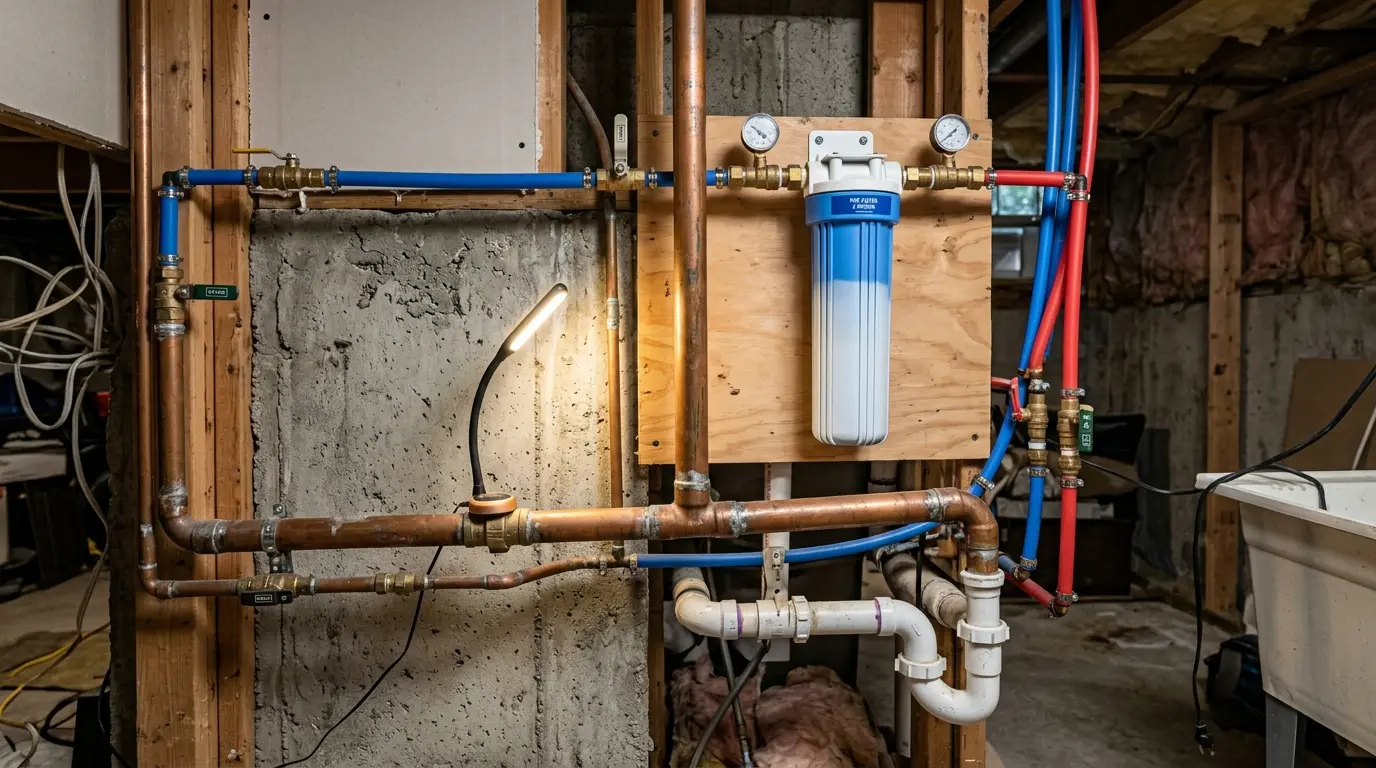
Around the footing of most Vancouver homes runs perimeter drainage — what people still call weeping tile. It’s a perforated pipe that collects groundwater and carries it away from the foundation to the storm system or a sump. When it works, the basement stays dry. When it clogs or collapses, water backs up against the wall and finds its way in.
How long drainage lasts
Perimeter drainage is not forever. Depending on the material and the soil, many systems last somewhere in the range of 30 to 50 years before silt, fine roots, and sediment choke them. The old clay tile and early plastic pipe used on mid-century homes fail sooner. So on a 1960s house with original drainage, you should assume the system is at or past the end of its life, even if the basement looks dry the day you visit.
Replacing perimeter drainage is real work — excavating around the foundation, replacing pipe, often re-waterproofing the wall and restoring landscaping. Costs vary widely with access and the size of the house, but it commonly lands in the low tens of thousands of dollars. That’s a number you want to know about before you write the offer, not after.
Cheap causes versus expensive causes
Not every wet basement is a drainage replacement. A lot of moisture problems come from the surface and are cheap to fix: downspouts dumping next to the wall, gutters that overflow, or ground that slopes toward the house instead of away. Redirecting water at the surface can solve a damp basement for a few thousand dollars or less.
The expensive cases are failed perimeter drainage, a genuinely high water table, or foundation cracks actively letting water through. The whole game is figuring out which one you’re dealing with before you decide. Don’t accept “oh, that’s just a bit of moisture” from a seller — get the source diagnosed.
What a good inspection should flag
A competent home inspection in this market should give you a clear read on the foundation. Here’s what I want to see addressed in the report:
- Grading and drainage at the surface — does the ground slope away from the house, where do the downspouts discharge, are there obvious signs of pooling.
- The foundation walls inside and out — crack type and width, any bowing, signs of past or active water entry, efflorescence (the white mineral staining that says water has been moving through concrete).
- The crawlspace, if there is one — vapour barrier, ventilation, standing water, condition of the floor framing above.
- Floors and openings — level floors, doors and windows that operate properly, gaps at trim that hint at movement.
- Age and condition of perimeter drainage — even an estimate of remaining life is useful, and a sump pump if present.
- Signs of moisture in finished basements — finished basements can hide a lot, so I want the inspector probing for it, not just looking.
If the inspector raises a structural question, bring in a structural engineer before you remove conditions. If the property is in a peat or soft-soil area, a geotechnical engineer is the right call. The few hundred to low four figures you spend on a specialist is cheap next to the cost of being wrong. The same discipline applies before you even book the inspection — my open house checklist covers what to eyeball yourself on the first visit.
Key Takeaways
- Vancouver homes sit on three main foundation types: full or partial basements (most common), crawlspaces, and slab-on-grade (common in townhouses, rare in older detached houses).
- Our soils make foundations harder to keep dry — water-holding clay, pockets of old fill, a high water table in low areas, and peat in parts of southeast Vancouver.
- Thin vertical hairline cracks are usually normal. Horizontal cracks, stair-step cracks, cracks over about 5 mm, and cracks paired with sticking doors or sloping floors deserve a structural engineer.
- Perimeter drainage (weeping tile) commonly lasts 30 to 50 years. On older homes, assume it’s near the end of its life and budget for replacement.
- Many wet-basement problems are cheap surface fixes (downspouts, grading). The expensive ones are failed drainage, a high water table, or active foundation leaks — diagnose the source before you buy.
Frequently Asked Questions
What foundation type is most common in older Vancouver houses?
Most pre-1980 Vancouver detached homes sit on a cast concrete perimeter foundation with a full or partial basement. Crawlspace foundations are common in some areas and in additions, and true slab-on-grade is rare for older detached houses but appears in some flat-roofed mid-century homes and many townhouse complexes.
Do all foundation cracks mean a serious problem?
No. Thin vertical hairline cracks in poured concrete are common and usually come from normal curing and minor settling. The cracks that warrant a structural engineer are horizontal cracks, stair-step cracks in block, cracks wider than about 5 millimetres, cracks that are still moving, or any crack paired with sticking doors, sloping floors, or active water entry.
How long does perimeter drainage (weeping tile) last in Vancouver?
It varies with material and soil, but many systems last roughly 30 to 50 years before they clog with silt and fine roots or collapse. Older clay tile and early plastic pipe fail sooner. On a Vancouver home with a chronically wet basement and original drainage, budget for replacement, which commonly runs into the low tens of thousands of dollars depending on access and landscaping.
Is a wet basement a deal-breaker when buying in Vancouver?
Not necessarily. Many wet-basement issues come from surface water, gutters, and grading that are fixable for a few thousand dollars. The expensive cases involve failed perimeter drainage, a high water table, or foundation cracks letting water in. Get the source diagnosed before you decide, and price the fix into your offer.
Should I worry about foundations on Vancouver’s peat bog soils?
Yes, in specific areas. Parts of southeast Vancouver and former wetland areas have peat or deep soft soils that compress over time and can cause long-term settlement. If a property is in or near a known peat area, ask whether the home was built on piles or a reinforced raft, and have an inspector and possibly a geotechnical engineer review it.
Sources
- City of Vancouver — building, permits, and property information
- CMHC — home maintenance and inspection resources
- BC Housing — licensing and home warranty information
- Technical Safety BC — safety and permitting in BC
- Canada Mortgage and Housing — moisture and basement guidance
Work with Rain City Properties
Foundations are one of those things where a calm, experienced read saves you from either overpaying for a problem that isn’t there or buying a problem you never saw coming. If you’re looking at an older Vancouver home this year and want help separating the cosmetic from the serious — and getting the right specialists in before you remove conditions — that’s exactly the kind of thing I do alongside my clients every week.
Contact Greyden Douglas directly at (604) 218-2289 or book a call to discuss your Vancouver real estate goals.
Frequently asked questions
What foundation type is most common in older Vancouver houses?
Most pre-1980 Vancouver detached homes sit on a cast concrete perimeter foundation with a full or partial basement. Crawlspace foundations are common in some areas and in additions, and true slab-on-grade is rare for older detached houses but appears in some flat-roofed mid-century homes and many townhouse complexes.
Do all foundation cracks mean a serious problem?
No. Thin vertical hairline cracks in poured concrete are common and usually from normal curing and minor settling. The cracks that warrant a structural engineer are horizontal cracks, stair-step cracks in block, cracks wider than about 5 millimetres, cracks that are still moving, or any crack paired with sticking doors, sloping floors, or active water entry.
How long does perimeter drainage (weeping tile) last in Vancouver?
It varies with material and soil, but many systems last roughly 30 to 50 years before they clog with silt and fine roots or collapse. Older clay tile and early plastic pipe fail sooner. On a Vancouver home with a chronically wet basement and original drainage, budget for replacement, which commonly runs into the low tens of thousands of dollars depending on access and landscaping.
Is a wet basement a deal-breaker when buying in Vancouver?
Not necessarily. Many wet-basement issues come from surface water, gutters, and grading that are fixable for a few thousand dollars. The expensive cases involve failed perimeter drainage, a high water table, or foundation cracks letting water in. Get the source diagnosed before you decide, and price the fix into your offer.
Should I worry about foundations on Vancouver's peat bog soils?
Yes, in specific areas. Parts of southeast Vancouver and former wetland areas have peat or deep soft soils that compress over time and can cause long-term settlement. If a property is in or near a known peat area, ask whether the home was built on piles or a reinforced raft, and have an inspector and possibly a geotechnical engineer review it.
Related Vancouver real estate pages
Continue with local service pages, neighbourhood guides, and actionable resources related to this topic.