Quick answer: A 2026 neighbourhood guide to West Point Grey, Vancouver — covering Jericho and Locarno beaches, Point Grey Road estates, UBC proximity, price tiers, school catchments, and the impact of Bill 44 multiplex zoning.
A working realtor's guide to buying in West Point Grey — Jericho and Locarno beaches, Point Grey Road estates, UBC proximity, school catchments, price tiers, and what Bill 44 multiplex rules mean for the neighbourhood.
Want a free assessment for your property?
Leave your name and phone — Greyden will call you back with a personalized market snapshot. No spam, no drip campaigns.
Join 1,000+ Vancouver homeowners. No spam, unsubscribe anytime.
A buyer told me last month that she’d been watching West Point Grey listings for a year and still couldn’t make sense of the prices. One house at $3.2 million, another two blocks away at $11 million, and a townhouse near Macdonald in between. She wanted to know why the same neighbourhood swung that wide.
The honest answer is that West Point Grey isn’t really one market. It’s several, stacked on top of each other across about twenty blocks between Alma Street and the University Endowment Lands, with the water on one side and Pacific Spirit Park on the other. Once you understand the tiers, the prices stop looking random.
This is the part of Vancouver’s west side where the city runs out before the ocean does. You get beaches, big lots, mature trees, and some of the best public school catchments in the city. You also pay for all of it. Here’s how I’d walk a buyer through it.
The lay of the land
West Point Grey sits at the northwest corner of the city, roughly bounded by Alma Street to the east, the University Endowment Lands and UBC to the west, 16th Avenue to the south, and the waterfront — Jericho, Locarno, and Spanish Banks beaches — to the north.
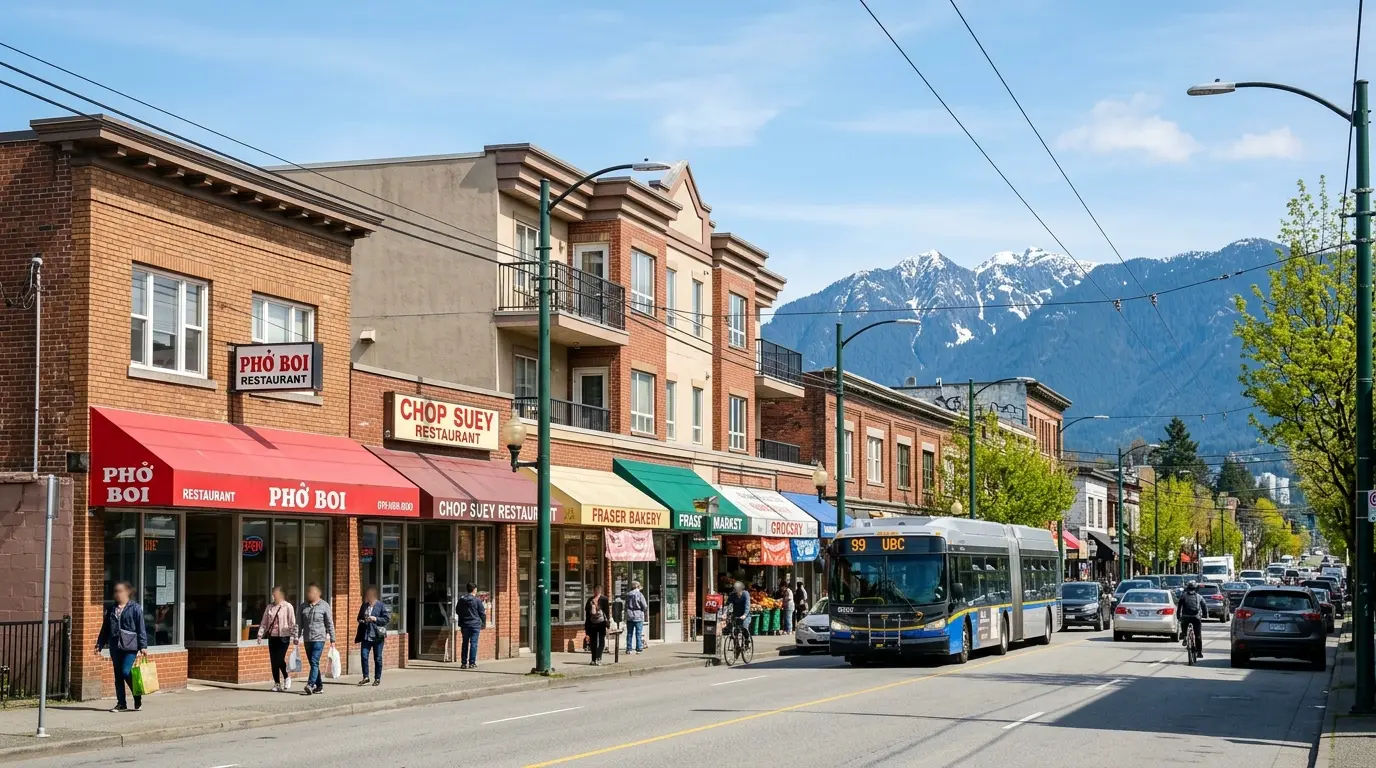
It’s a genuinely walkable, low-traffic residential neighbourhood. The commercial spine runs along West 10th Avenue near Sasamat, where you’ll find the coffee shops, the bakery, the small grocers, and the kind of village feel that’s getting rare on the west side. West 4th Avenue carries more of the through-traffic and the bus routes east toward Kitsilano and downtown.
What sets the neighbourhood apart is the access to nature. You can be on the sand at Jericho in a five-minute walk from much of the area, and Pacific Spirit Park’s trails sit right at the western edge. For a lot of my buyers, that combination of beach and forest inside the city is the whole reason they’re looking here and not in a more central neighbourhood.
The three price tiers
When I’m helping someone shop here, I split West Point Grey into three sub-markets. Treating it as one blended “average price” is the fastest way to chase the wrong listings.
Point Grey Road and the waterfront
This is the top of the market in all of Vancouver, not just the west side. Point Grey Road runs along the bluff above the water, and the homes on the north side look straight out at English Bay and the North Shore mountains. These are eight-figure estates, and many of them trade privately and quietly rather than through public listings.
If you’re shopping at this level, the inventory you see online is only part of what’s actually available. A good portion of waterfront activity happens through agents’ networks before anything hits the public market.
Mid-block character homes and renovated houses
This is the heart of the neighbourhood and where most families end up competing. You’re looking at detached houses on standard lots — a mix of original character homes from the early-to-mid twentieth century, homes that have been renovated or rebuilt, and the occasional new build. Prices here generally land in the mid-to-high single-digit millions, depending on lot size, condition, and exactly which school catchment the address falls into.
The catchment matters more here than almost anywhere else in the city, which I’ll come back to.
The eastern edge near Macdonald and Alma
The most realistic entry point into West Point Grey is usually an older home that needs work on the eastern side, closer to Alma and Macdonald. You’ll also find the rare townhouse or low-rise condo on this edge, which is unusual for a neighbourhood that’s overwhelmingly single-family. If your budget can’t reach a mid-block house but you want the schools and the beach access, this is where I’d point you first.
For a sense of how this compares to the rest of the city, the Vancouver detached benchmark sat around $1.85 million in early 2026 and the composite benchmark near $1.10 million. West Point Grey trades well above both of those citywide figures, which is worth keeping in mind before you set a budget.
Who actually buys here
In my experience, West Point Grey buyers fall into a few groups.
The largest is move-up families — people who’ve outgrown a condo or a smaller house and want a big lot, a yard, and a strong school catchment in one place. They’re often coming from Kitsilano or the east side and stretching to get in.
The second group is UBC-connected: faculty, researchers, and medical professionals who want to be close to the university without living in the Endowment Lands. The short commute to campus is a real draw, and it’s a different lifestyle than living right on UBC’s grounds.
The third is the luxury and waterfront buyer, who is shopping Point Grey Road specifically and often comparing it to Shaughnessy or the British Properties rather than to the rest of West Point Grey.
If you’re a first-time buyer, this is a tough neighbourhood to break into, and I’d usually have a frank conversation about whether your budget stretches further in Kitsilano, Dunbar, or further east. Our first-time home buyer guide walks through the programs that can help.
Schools and family life
For a lot of buyers, the schools are the entire reason West Point Grey is on the list. The public catchments in the area include Queen Mary Elementary and Lord Byng Secondary, with Queen Elizabeth Elementary serving part of the neighbourhood depending on the address. The area is also close to several well-known independent schools.
I want to be careful here: catchment boundaries change, and they don’t follow neat straight lines. Two houses on the same block can sometimes fall into different catchments, and a desirable catchment can add real money to a sale price. Never assume — confirm the current catchment for a specific address on the Vancouver School Board’s website before you write an offer based on it.
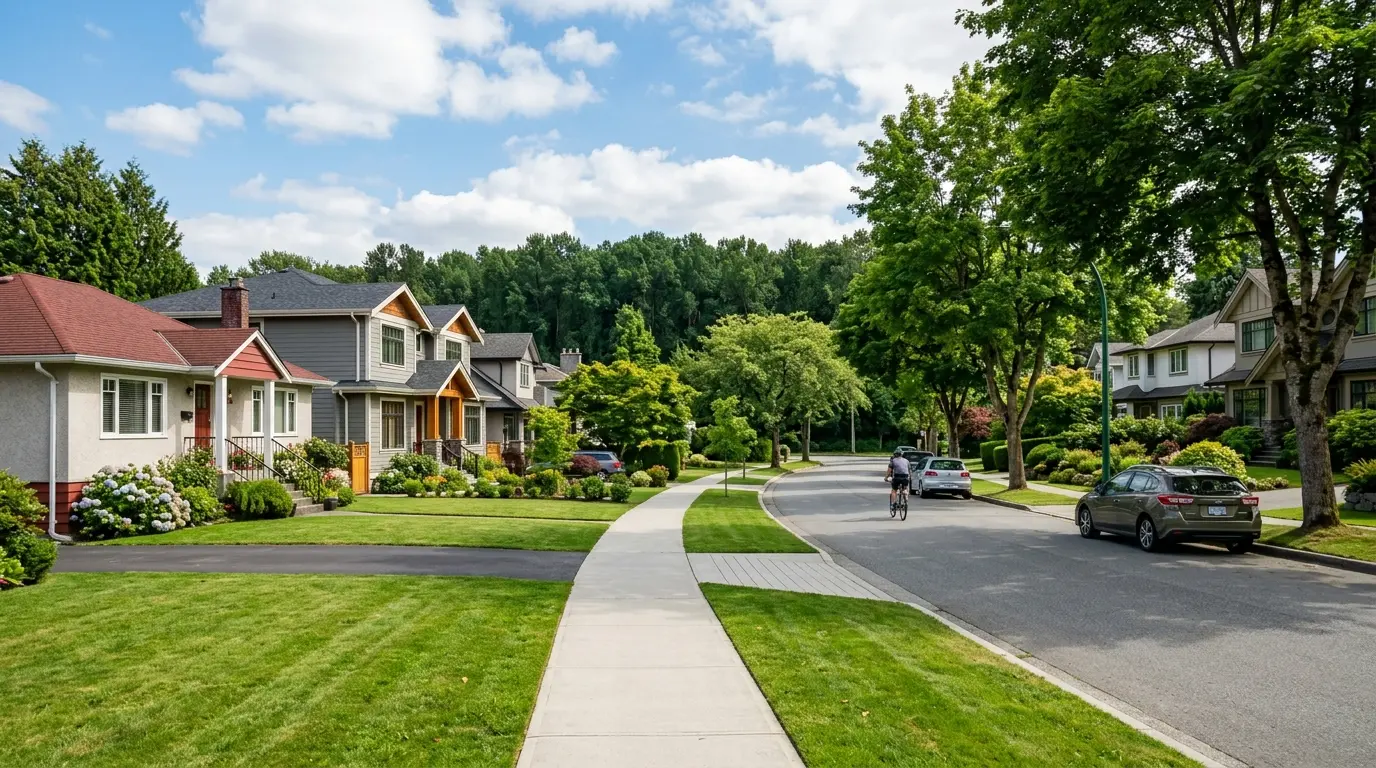
Beyond schools, the family appeal is straightforward. Quiet streets, big lots, beaches you can walk to, and Pacific Spirit Park on your doorstep. The trade-off is the cost of entry and the fact that almost everything is a detached house, so families wanting a lower-maintenance option have very few condo or townhouse choices to pick from.
The multiplex and redevelopment outlook
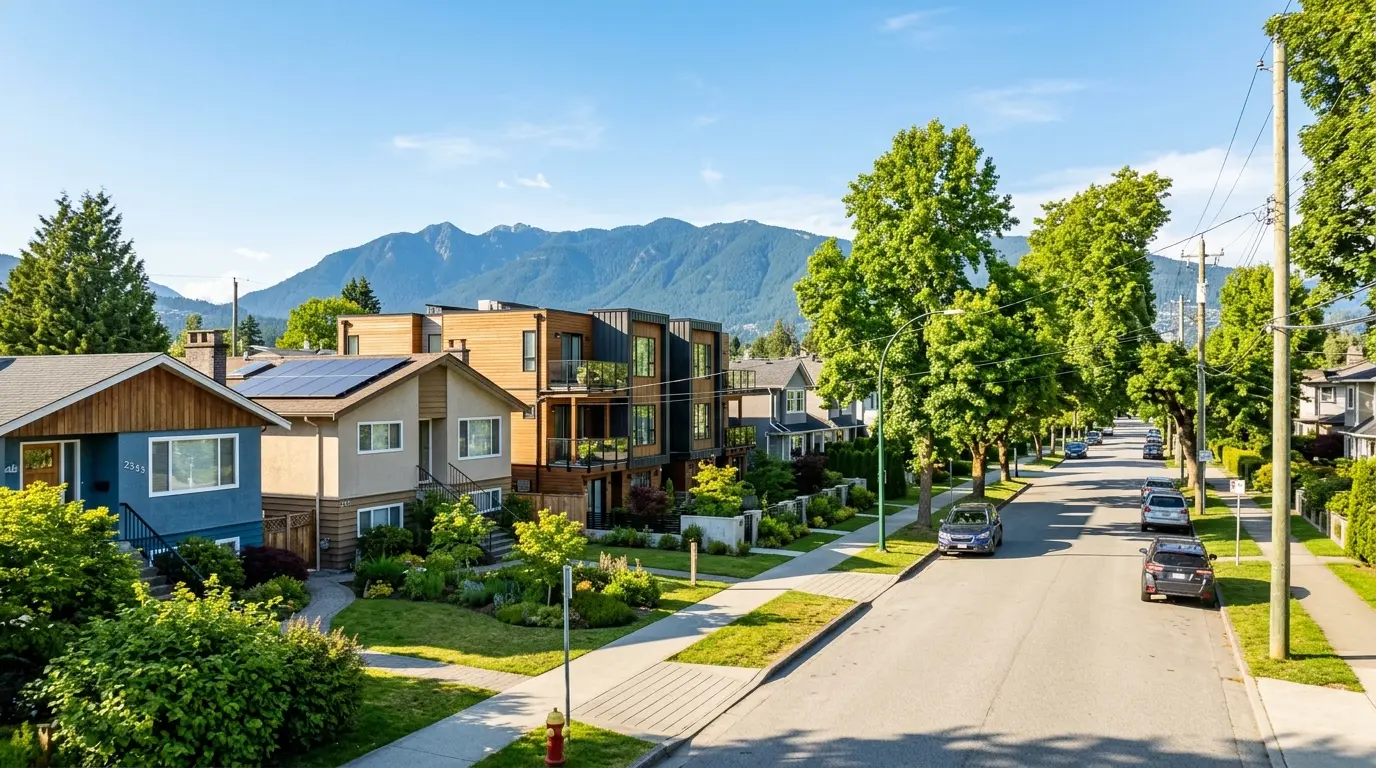
This is the part of the conversation that’s changed the most in the last couple of years. Most standard single-family lots in West Point Grey are now zoned R1-1, which under British Columbia’s Bill 44 small-scale multi-unit housing rules permits up to eight units on a typical lot. That’s a significant shift for a neighbourhood that was effectively single-family for a century.
In practice, what this means for a buyer here is more nuanced than “you can build eight units.” A few things temper it:
- Lot economics. Land values in West Point Grey are high enough that the math on a multiplex doesn’t automatically pencil out the way it might in a more affordable neighbourhood. The land cost is a huge share of any project here.
- Heritage and character. West Point Grey has a lot of character homes, and some carry heritage considerations that limit what you can do. Always confirm zoning and any heritage status with the City of Vancouver before you count on redevelopment.
- Long-term optionality. For most of my buyers here, R1-1 isn’t a reason to build right away. It’s a long-term option that adds value and flexibility — the ability to add a laneway home or, down the road, additional units, without rezoning.
If you want to understand the rules in detail before you buy, our R1-1 zoning explainer breaks down what you can and can’t build, and the multiplex page covers the broader picture. A laneway home is often the more practical first step for a family that wants extra space or rental income without a full redevelopment.
What I’d watch out for as a buyer
A few neighbourhood-specific things I flag for clients:
Many of the homes here are old. Character is wonderful, but an early-twentieth-century house can hide expensive surprises — knob-and-tube wiring, old plumbing, foundation movement, and the rest. A thorough inspection isn’t optional. Our home inspection red flags guide covers what to look for, and if you’re touring, the open house checklist is worth having on your phone.
Older properties on the west side can also have legacy issues like buried oil tanks from decommissioned heating systems. It’s common enough in pre-war neighbourhoods that I always ask about it.
And before you set your budget, run your full cash-to-close numbers, not just the purchase price. At West Point Grey price points, the Property Transfer Tax alone is a large sum. Our closing costs calculator will give you a realistic figure including the PTT.
Key Takeaways
- West Point Grey is not one market. Treat it as three: Point Grey Road waterfront estates, mid-block character homes, and the more attainable eastern edge near Alma and Macdonald.
- The neighbourhood trades well above Vancouver’s citywide benchmarks. The detached benchmark was around $1.85 million in early 2026, and West Point Grey sits comfortably above that.
- School catchments — Queen Mary Elementary and Lord Byng Secondary among them — drive a real share of buyer demand and can affect price. Always confirm the catchment for a specific address.
- Beaches (Jericho, Locarno, Spanish Banks) and Pacific Spirit Park are the lifestyle draw, along with UBC proximity for university-connected buyers.
- Most lots are now R1-1 under Bill 44, allowing up to eight units, but high land costs and heritage considerations mean redevelopment is more of a long-term option than an immediate play.
- Budget for the full cost of buying — at these prices, Property Transfer Tax and other closing costs are substantial.
Frequently Asked Questions
What is the typical price range for homes in West Point Grey?
West Point Grey spans a wide range. Smaller older homes and the occasional condo or townhouse on the eastern edge can start in the low-to-mid seven figures, mid-block detached character homes and renovated houses generally trade in the mid-to-high single-digit millions, and Point Grey Road waterfront estates run well into eight figures. The Vancouver detached benchmark sat near $1.85 million in early 2026, but West Point Grey trades well above that citywide average.
Which schools serve West Point Grey?
Public catchments in the area include Queen Mary Elementary, Lord Byng Secondary, and Queen Elizabeth Elementary, depending on the exact address. The neighbourhood is also close to several well-known independent schools and is minutes from the University of British Columbia. Always confirm the current catchment for a specific address on the Vancouver School Board website, since boundaries change.
Can you build a multiplex in West Point Grey?
Most standard single-family lots in West Point Grey are zoned R1-1, which under British Columbia’s Bill 44 small-scale multi-unit housing rules permits up to eight units on a typical lot. Heritage designations, lot size, and site constraints affect what is actually feasible, so confirm zoning and any heritage status with the City of Vancouver before counting on redevelopment potential.
Is West Point Grey a good neighbourhood for families?
Yes. It is one of Vancouver’s most established family neighbourhoods, with strong school catchments, low through-traffic on residential streets, large lots, and direct access to Jericho, Locarno, and Spanish Banks beaches plus Pacific Spirit Park. The trade-off is cost — entry prices are high, and most homes are detached houses rather than condos or townhouses.
How long is the commute from West Point Grey to downtown Vancouver?
Driving to downtown Vancouver from West Point Grey typically takes 20 to 30 minutes outside of rush hour, longer during peak times along 4th Avenue or Broadway. Frequent bus routes run along West 4th Avenue and West 10th Avenue, and the neighbourhood sits at the western end of the city near UBC, so commuting east toward downtown takes more time than commuting from more central areas.
Sources
- City of Vancouver — zoning and development (R1-1, multiplex rules)
- Province of British Columbia — small-scale multi-unit housing (Bill 44)
- Vancouver School Board — school catchments
- Greater Vancouver Realtors — monthly market reports and benchmark prices
- Metro Vancouver — Pacific Spirit Regional Park
Work with Rain City Properties
West Point Grey rewards buyers who understand its sub-markets before they start touring. Whether you’re chasing a Lord Byng catchment, a quiet character home near Jericho, or a waterfront estate that may never hit the public market, the right strategy depends on which tier you’re in and what you want long-term. I help buyers and sellers navigate exactly these decisions across Vancouver’s west side — you can browse more area profiles on our neighbourhood index or start with our buyers guide.
Contact Greyden Douglas directly at (604) 218-2289 or book a call to discuss your Vancouver real estate goals.
Frequently asked questions
What is the typical price range for homes in West Point Grey?
West Point Grey spans a wide range. Smaller older homes and the occasional condo or townhouse on the eastern edge can start in the low-to-mid seven figures, mid-block detached character homes and renovated houses generally trade in the mid-to-high single-digit millions, and Point Grey Road waterfront estates run well into eight figures. The Vancouver detached benchmark sat near $1.85 million in early 2026, but West Point Grey trades well above that citywide average.
Which schools serve West Point Grey?
Public catchments in the area include Queen Mary Elementary, Lord Byng Secondary, and Queen Elizabeth Elementary, depending on the exact address. The neighbourhood is also close to several well-known independent schools and is minutes from the University of British Columbia. Always confirm the current catchment for a specific address on the Vancouver School Board website, since boundaries change.
Can you build a multiplex in West Point Grey?
Most standard single-family lots in West Point Grey are zoned R1-1, which under British Columbia's Bill 44 small-scale multi-unit housing rules permits up to eight units on a typical lot. Heritage designations, lot size, and site constraints affect what is actually feasible, so confirm zoning and any heritage status with the City of Vancouver before counting on redevelopment potential.
Is West Point Grey a good neighbourhood for families?
Yes. It is one of Vancouver's most established family neighbourhoods, with strong school catchments, low through-traffic on residential streets, large lots, and direct access to Jericho, Locarno, and Spanish Banks beaches plus Pacific Spirit Park. The trade-off is cost — entry prices are high, and most homes are detached houses rather than condos or townhouses.
How long is the commute from West Point Grey to downtown Vancouver?
Driving to downtown Vancouver from West Point Grey typically takes 20 to 30 minutes outside of rush hour, longer during peak times along 4th Avenue or Broadway. Frequent bus routes run along West 4th Avenue and West 10th Avenue, and the neighbourhood sits at the western end of the city near UBC, so commuting east toward downtown takes more time than commuting from more central areas.
Related Vancouver real estate pages
Continue with local service pages, neighbourhood guides, and actionable resources related to this topic.